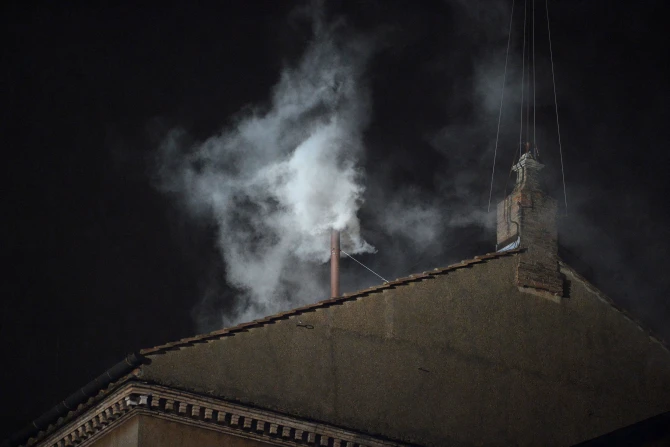
When a new pope is elected, there are two signs that mark that historic moment: the white smoke (“fumata bianca” in Italian) erupting from the chimney of the Sistine Chapel and the formula “habemus papam” pronounced by the cardinal protodeacon from the balcony of St. Peter’s Basilica overlooking the square of the same name.
SIGN UP FOR OUR NEWSLETTER HERE
This is the history of both traditions:
The white smoke
The history of the white smoke, which indicates that the cardinals have elected a new successor of St. Peter, is ancient. In 1274, at the Second Council of Lyons, Pope Gregory X, in a document titled Ubi Periculum, determined the procedure for holding a conclave.
There he specified that the election would be done in isolation and with strict secrecy. For this reason, and to avoid any communication with the outside, the smoke signal was eventually adopted as part of the ritual. The tradition of burning ballots goes back to at least 1417, and likely before then, according to historian Frederic J. Baumgartner. The addition of the white spoke to announce the election of a new pope is more recent, however. Baumgartner traces it to 1914, with the election of Pope Benedict XV.
If the smoke coming out of the chimney of the Sistine Chapel is black, it means that none of the proposed candidates has reached two-thirds of the votes needed to be elected. If the smoke is white, the Church has a new universal pastor.
In ancient times, the method to give the smoke these colors was to burn the ballots used in the voting with a bit of wet straw so that it would come out black, or dry so as to obtain white smoke.
Nowadays, and due to some episodes that caused confusion, special chemical compounds and a procedure that includes two different tubes, one for each color of smoke, are used.
In addition, a bell is rung, part of the ritual introduced when Pope Benedict XVI was elected, which confirms the smoke is white and a new pope has been elected.
Habemus papam
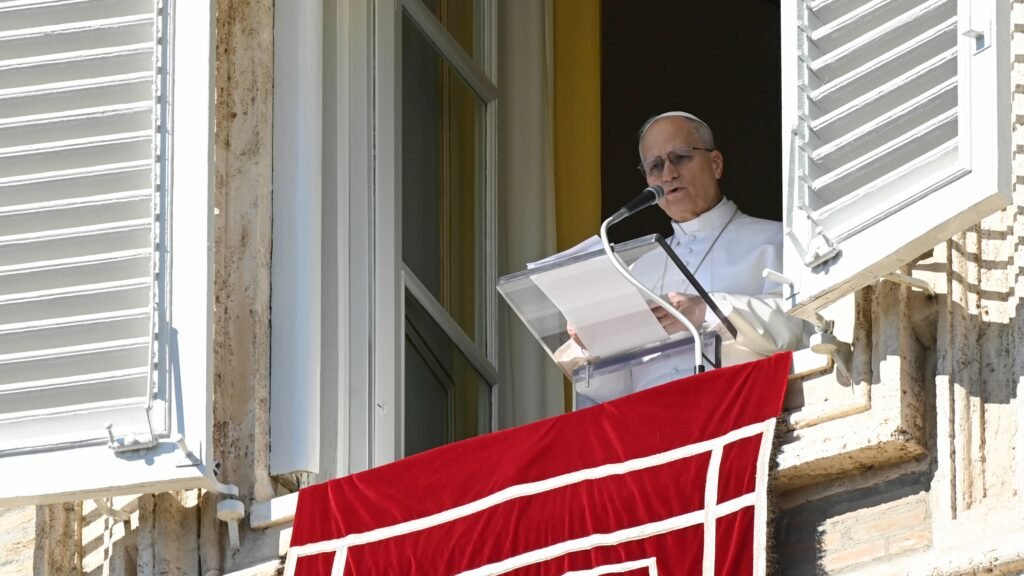
The announcement that a new pontiff has been elected is formulated in Latin, and while its best-known words are “habemus papam,” the expression is officially a bit longer:
“Annuntio vobis gaudium magnum:
Habemus papam;
Eminentissimum ac reverendissimum Dominum, Dominum [prænomen] Sanctæ Romanæ Ecclesiæ Cardinalem [nomen],
qui sibi nomen imposuit [nomen pontificale].”
Translated, the complete formula reads: “I announce to you a great joy: We have a pope! The Most Eminent and Most Reverend Lord, Don [given name], cardinal of the Holy Roman Church [surname], who has imposed on himself the name of [papal name].”
The text is partially inspired by a passage from the Gospel of St. Luke, which reproduces the words of the angel when he announces the birth of Jesus to the shepherds: “Do not be afraid, for I bring you good news that will bring great joy to all: Today in the town of David a Savior has been born to you, who is the Messiah, the Lord” (Lk 2:10-12).
The adoption of this formula dates back to 1417 at the election of Pope Martin V. Those who claimed the papal throne before him were Antipope John XXIII (who had convoked the Council of Constance and appointed most of the electors), Antipope Benedict XIII (the only one appointed a cardinal before the Western Schism) and Pope Gregory XII.
The first two were deposed by the council itself, and Gregory XII abdicated. Two years later, the council elected a new pope. For this reason, the announcement could be interpreted as: “(At last) we have a pope (and only one!).”
A version of this story was first published by ACI Prensa, CNA’s Spanish-language news partner. It has been translated and adapted by CNA.