If “Good King Wenceslas” is one of the Christmas hymns you look forward to each year, you probably know which saint is celebrated today — St. Stephen, the first person to die for the risen Christ. Roman Catholics celebrate his feast on Dec. 26, while Eastern Catholics honor him one day later, on Dec. 27.
Stephen was a Jew who likely became a follower of Jesus while he was still ministering on earth. He may have been among the 70 disciples whom Christ sent out as missionaries, who preached the coming of God’s kingdom while traveling with almost no possessions.
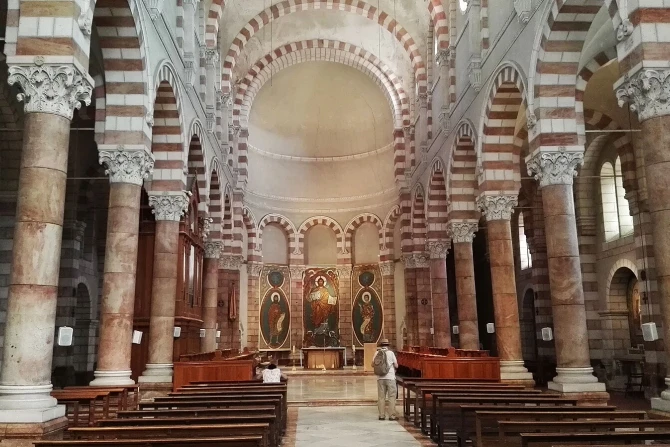
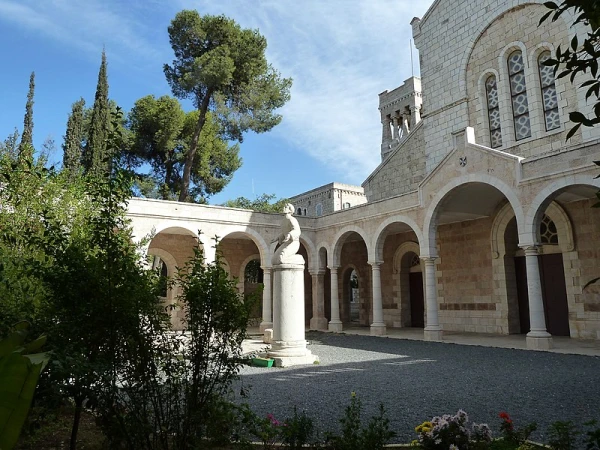
Famously, Stephen was stoned to death near the Damascus Gate in Jerusalem for proclaiming his faith in Jesus. Today, near the site of Stephen’s martyrdom, a grand Catholic church and convent have stood since the year 1900. A chapel of one form or another memorializing Stephen’s martyrdom has existed at the site since at least the fifth century.
Every year, the Church of St. Stephen (Saint-Étienne in French), a minor basilica, celebrates its patron with a Mass and a meal. The current Dominican priory was created in 1882 and the Dominicans today run the École Biblique et Archéologique Française de Jérusalem, a highly respected center of biblical study.
Who was Stephen?
In the Acts of the Apostles, Luke praises Stephen as “a man full of faith and the Holy Spirit” who “did great wonders and signs among the people” during the earliest days of the Church. He may have been among the 70 disciples whom Christ sent out as missionaries, who preached the coming of God’s kingdom while traveling with almost no possessions.
Stephen’s speech immediately before his martyrdom is the longest recorded in the Acts of the Apostles. In it, the saint describes Israel’s resistance to God’s grace in the past and accuses the present religious authorities of “opposing the Holy Spirit” and rejecting the Messiah.
Before he was put to death, Stephen had a vision of Christ in glory. “Look,” he told the Jewish court. “I see the heavens opened and the Son of Man standing at the right hand of God!” He was dragged away and stoned to death.
Stephen’s martyrdom was overseen by a Pharisee named Saul — later St. Paul — who became a disciple after a dramatic vision of Christ and became a martyr himself.
Numerous popes have reflected over the years on the importance of St. Stephen in the life of the Church.
This story was first published on Dec. 26, 2023, and has been updated by CNA.