The pontiff urged “coherence between faith and life” and persistent prayer for peace.
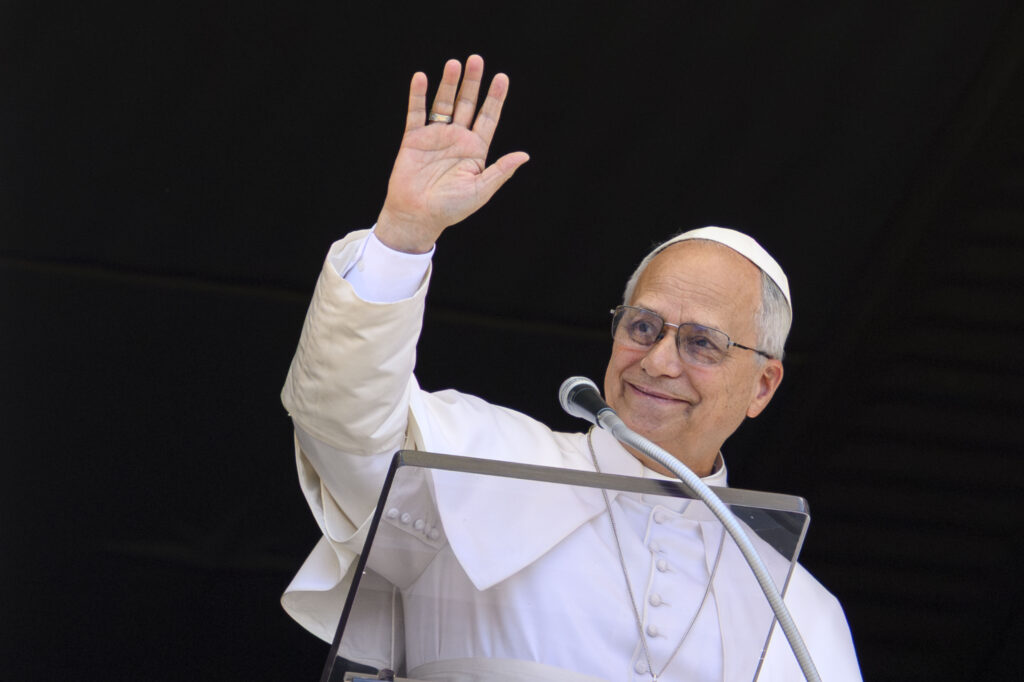
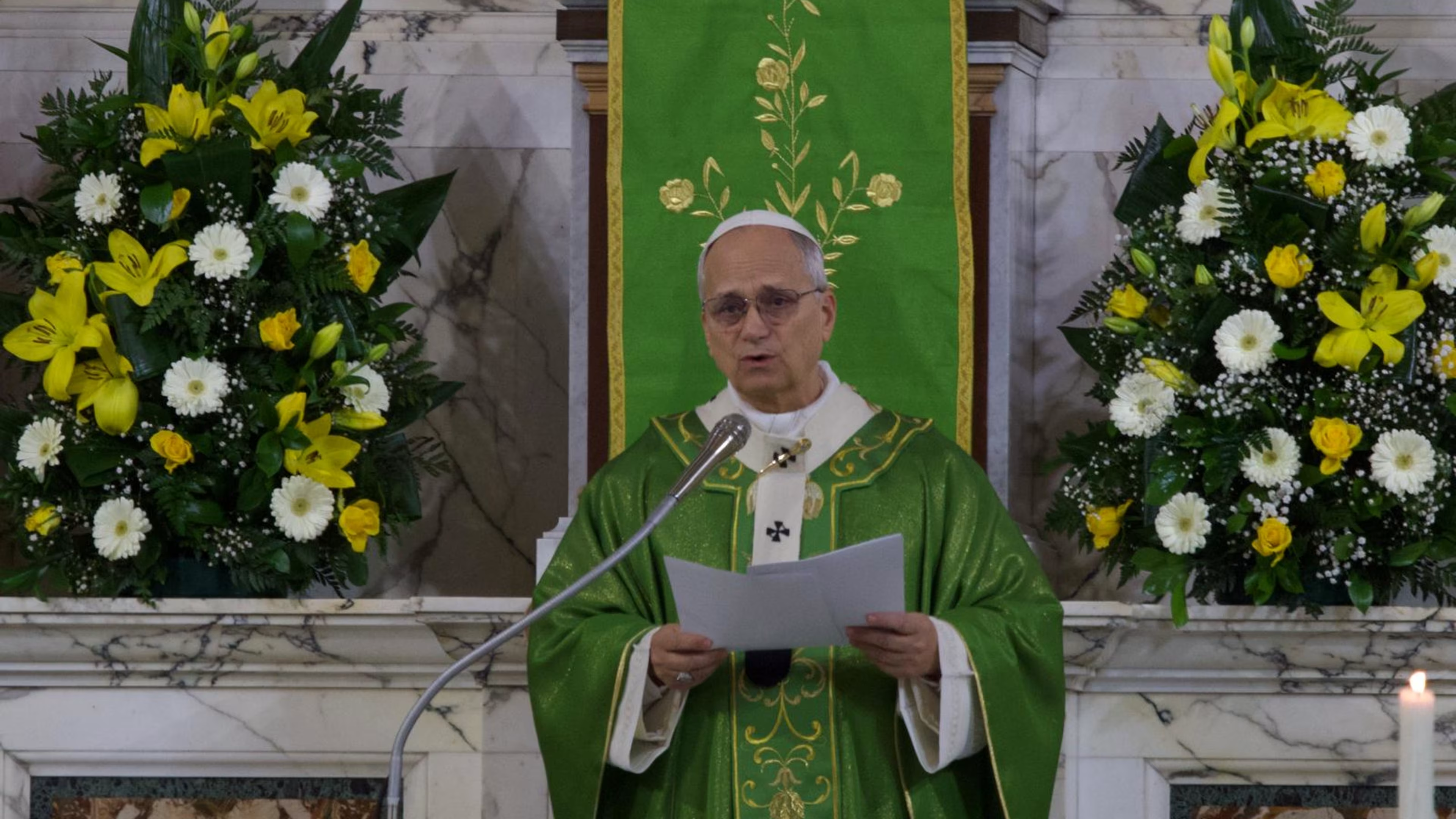
Pope Leo XIV on Sunday made his first visit to a parish in the Diocese of Rome, celebrating Mass at Santa Maria Regina Pacis in Ostia Lido and urging Catholics to cultivate “coherence between faith and life” while opposing violence and injustice with “the disarming strength of meekness” and renewed prayer for peace.
Santa Maria Regina Pacis, located on Rome’s coast and part of the diocese’s southern sector, is the first Roman parish the pope has visited during his pontificate. The pope is expected to visit four additional parishes over the next four Sundays in the diocese’s remaining sectors.
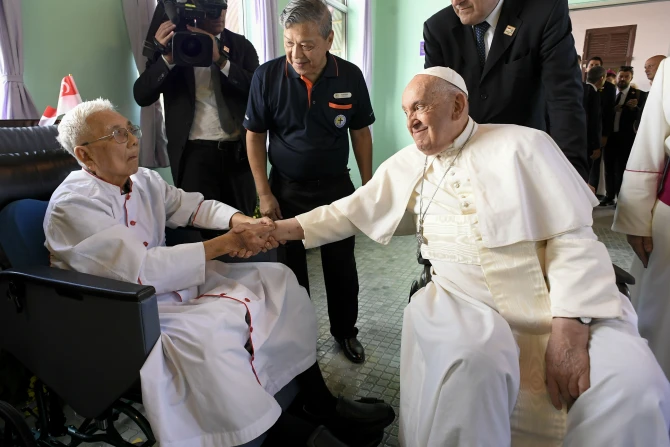
Upon his arrival, Leo was welcomed by Cardinal Vicar Baldassare Reina and Bishop Tarantelli Baccari, vicegerent and auxiliary bishop for the southern sector. Before Mass, the pope greeted children in catechism and young people in a field behind the church, then met with the elderly, the sick, the poor, and Caritas volunteers in the parish gym.
“It is for me a source of great joy,” the pope said in his homily, “to be here and to live with your community the gesture from which Sunday takes its name. It is the Lord’s Day because the risen Jesus comes among us, listens to us and speaks to us, nourishes us and sends us out.”
Reflecting on the day’s readings, Leo said the law God gave his people is not opposed to freedom but is “the condition for making it flourish.” The Lord’s commandments, he added, “are not an oppressive law, but his pedagogy for humanity, which seeks the fullness of life and freedom.”
Pope Leo XIV on Sunday made his first visit to a parish in the Diocese of Rome, celebrating Mass at Santa Maria Regina Pacis in Ostia Lido, and calling upon Mary’s protection of the parish community.
— EWTN Vatican (@EWTNVatican) February 15, 2026
Santa Maria Regina Pacis (Holy Mary, Queen of Peace), located on Rome’s coast… pic.twitter.com/D71XrGTSUa
Jesus’ preaching, he continued, reveals “the authentic and full meaning of God’s law,” pointing to a fidelity to God grounded in respect and care for others “in their inviolable sacredness” — something to be cultivated first “in the heart.” The pope warned that it is in the heart that both “the noblest sentiments” and “the most painful profanations” take root: “closures, envies, jealousies,” by which someone who harbors evil thoughts against a brother is “as if, within, he were already killing him.”
“We must remember,” Leo added, “that the evil we see in the world has its roots precisely there, where the heart becomes cold, hard, and poor in mercy.”
The pope said such realities are felt “also here, in Ostia,” where violence can wound, sometimes taking hold among young people and adolescents, “perhaps fueled by the use of substances,” or through criminal organizations that exploit people and draw them into wrongdoing.
In response, he urged the parish community to continue working “with generosity and courage” to sow “the good seed of the Gospel” in the neighborhood.
“Do not resign yourselves to the culture of abuse and injustice,” the pope said. “On the contrary, spread respect and harmony, beginning by disarming language and then investing energy and resources in education, especially for children and youth.”
Addressing the young in particular, Leo expressed the hope that they would learn in the parish “honesty, welcome, and love that overcomes boundaries,” as well as the ability to help those who do not repay them and to greet those who do not greet them — learning to go toward everyone “freely and gratuitously.”
“Learn coherence between faith and life, as Jesus teaches us,” he said.
In concluding remarks, the pope recalled that Pope Benedict XV gave the church its title, “St. Mary, Queen of Peace,” during World War I, envisioning the community as “a ray of light in the leaden sky of war.” Today, Leo said, “many clouds still darken the world,” including the spread of ways of thinking contrary to the Gospel that exalt “the supremacy of the strongest,” encourage arrogance, and prize “victory at any cost,” deaf to the cry of those who suffer.
“Let us oppose this drift with the disarming strength of meekness,” the pope said, “continuing to ask for peace, and to welcome it and cultivate its gift with tenacity and humility.”
This story was first published by ACI Stampa, the Italian-language sister service of EWTN News, and has been translated and adapted by EWTN News English.