The pope continued his weekly lessons dedicated to the Second Vatican Council, focusing on the dogmatic constitution Lumen Gentium and the theme of unity.
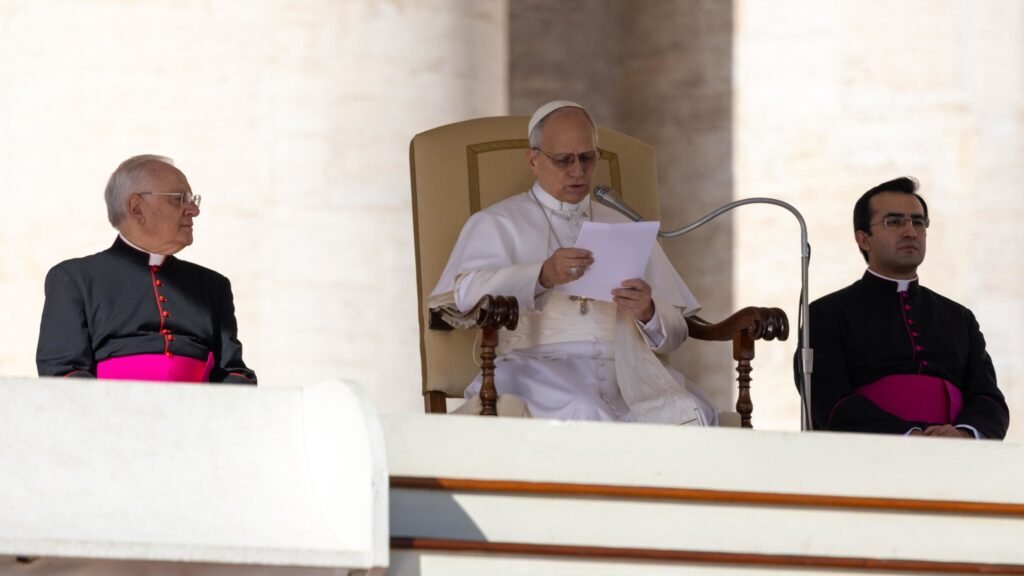
Pope Leo XIV emphasized Wednesday that the Church experiences a part of God’s plan for unity by being together at liturgical celebrations.
The pope stated that God’s plan for the Church has a clear purpose: “to unify all creatures thanks to the reconciliatory action of Jesus Christ,” accomplished through his death on the cross.
“This is experienced first of all in the assembly gathered for the liturgical celebration: There, differences are relativized, and what counts is being together because we are drawn by the love of Christ, who broke down the wall of separation between people and social groups,” he said on Feb. 18.
Leo continued his weekly catecheses dedicated to the Second Vatican Council, focusing on the dogmatic constitution Lumen Gentium, approved on Nov. 21, 1964.
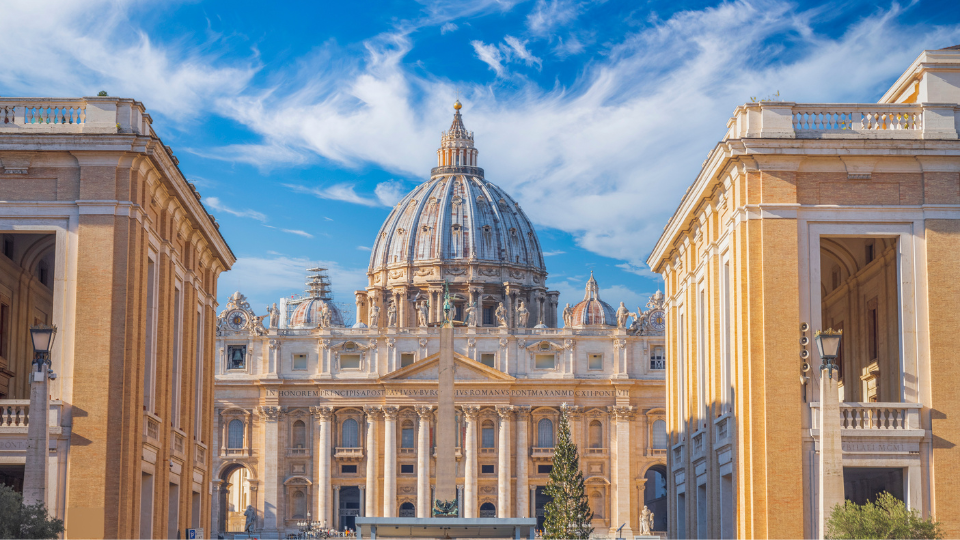
The pope delivered his lesson to thousands of pilgrims in St. Peter’s Square, taking advantage of Rome’s mild temperatures. During the colder winter months, the weekly meeting with the faithful had taken place in the Vatican’s Paul VI Hall.
At Wednesday’s General Audience, Pope Leo XIV begins his reflection on the Second Vatican Council’s Dogmatic Constitution on the Church Lumen gentium, emphasizing that the Church is both “a sign and an instrument of salvation.” pic.twitter.com/utufQ7MBmz
— EWTN Vatican (@EWTNVatican) February 18, 2026
Catechesis on the constitution Lumen Gentium
According to Leo, Lumen Gentium “enables us to understand the relationship between the unifying action of the pasch of Jesus, which is the mystery of his passion, death, and resurrection, and the identity of the Church.”
The pontiff added that the conciliar text also invites gratitude for belonging to the Church, “the body of the risen Christ, and the one pilgrim people of God journeying throughout history, which lives as a sanctifying presence in the midst of a still fragmented humanity, as an effective sign of unity and reconciliation among peoples.”
In explaining the use of the term “mystery” in Lumen Gentium, Leo XIV recalled that it comes from the letters of St. Paul and does not refer to something dark or incomprehensible.
On the contrary, the Holy Father explained that “when St. Paul uses the word, especially in the Letter to the Ephesians, he wishes to indicate a reality that was previously hidden and is now revealed.”
The Church as a sign of unity
The pope stressed that humanity lives in a condition of fragmentation “that human beings are unable to repair, even though the tendency towards unity dwells in their hearts. The action of Jesus Christ enters into this condition through the power of the Holy Spirit and overcomes the powers of division and the divider himself.”
He highlighted the meaning of the word “ekklesia” (Church), understood as the assembly of those called together by God.
“The Church is the mystery made perceptible,” he affirmed, recalling that the council defined the Church as a “sacrament, or as a sign and instrument both of a very closely knit union with God and of the unity of the whole human race.”
For Leo XIV, this means that the Church is not merely a passive sign but an active instrument through which God “achieves the aim of bringing people to him and uniting them with one another.”
The pontiff quoted a passage from chapter 7 of Lumen Gentium that says the risen Christ “is continually active in the world that he might lead men to the Church and through it join them to himself and that he might make them partakers of his glorious life by nourishing them with his own body and blood.”
This story was first published by ACI Prensa, the Spanish-language sister service of EWTN News. It has been translated and adapted by EWTN News English.