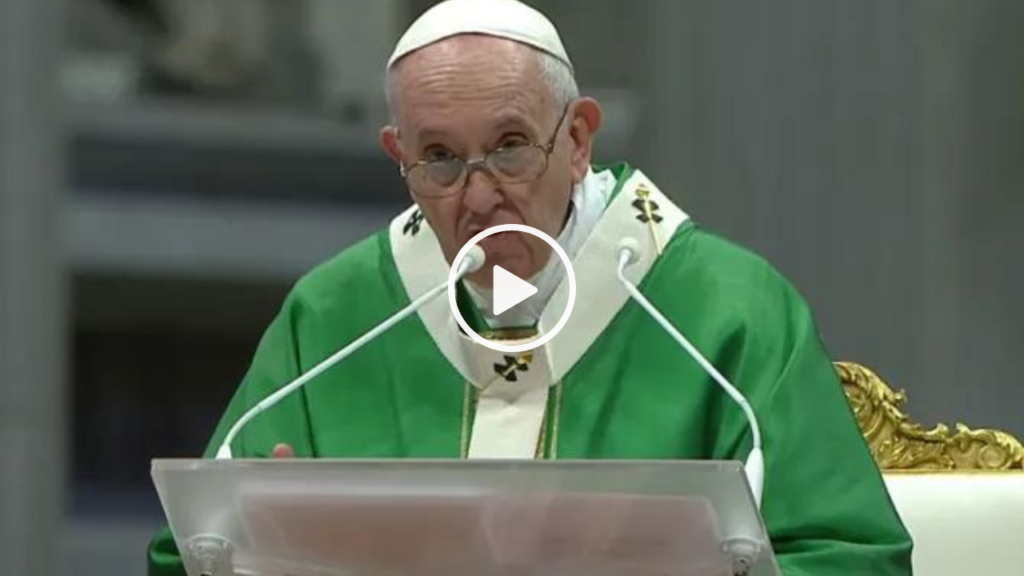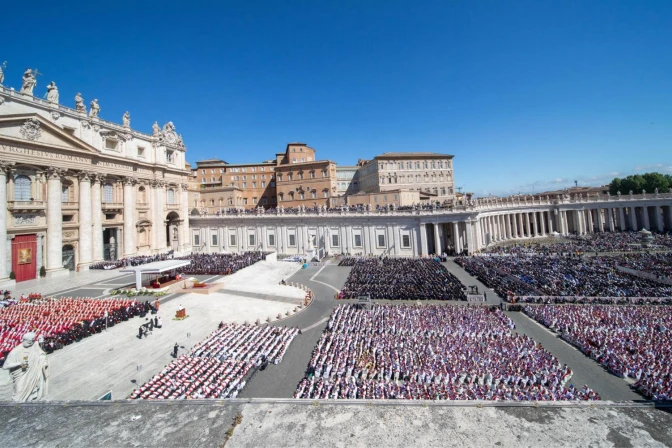
Mass attendees at St. Peter’s Basilica will be able to understand the readings, chants, and prayers live and in their own languages with a new AI-assisted translation system.
This spring, the Vatican will debut a simultaneous translation system assisted by artificial intelligence, allowing people to follow liturgical celebrations in St. Peter’s Basilica in real time in up to 60 languages.
For the first time, the faithful will be able to follow the liturgy in their own language via their smartphones.
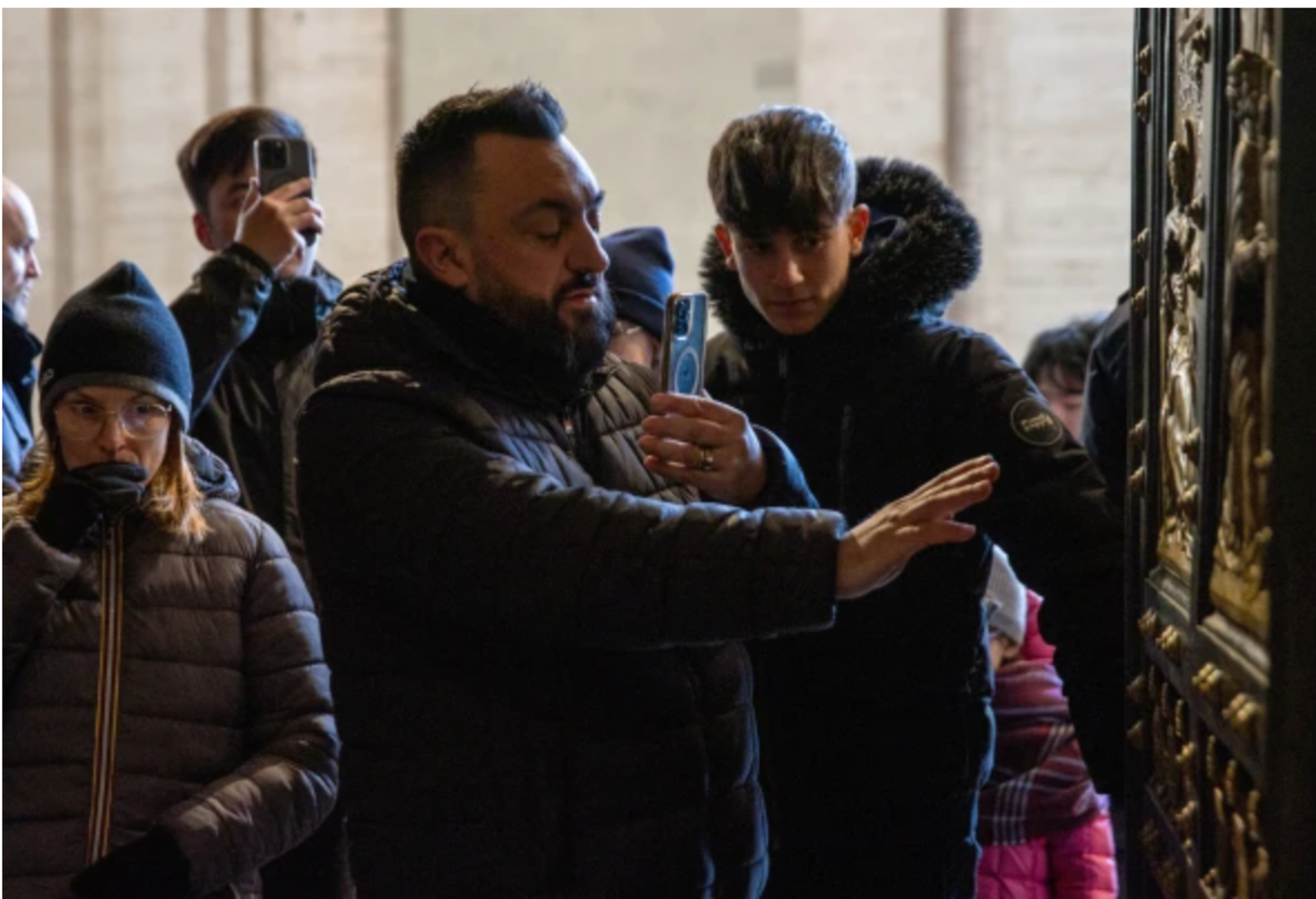
Pilgrims cross the Holy Door of St. Peter’s Basilica in the Vatican in 2025. | Credit: Daniel Ibáñez/EWTN News
The service will operate directly in the device’s browser, without the need to download any applications or use any accessories. In this way, Mass attendees will be able to understand the readings, chants, and prayers in their own language as the celebration unfolds.
The new system is designed to be easy to use. QR codes will be placed at the entrances and designated points within the church, allowing users to connect to a website where they can follow the liturgy with real-time translation, in both audio and text formats.
The system relies on the simultaneous interpretation capabilities of Lara, an artificial intelligence developed by Translated, a world leader in AI-based language solutions, in collaboration with Carnegie-AI LLC, a company specializing in simultaneous interpretation technologies.
Antonio Autorino, head of communications at the Fabric of St. Peter, confirmed to ACI Prensa, the Spanish-language sister service of EWTN News, that the service will be operational this spring. For now, tests have already begun with selected groups of the faithful to assess its functionality.
The initiative, spearheaded by the Fabric of St. Peter in collaboration with the Dicastery for Communication and the technology company Translated, was presented Feb. 16 by the archpriest of the basilica, Cardinal Mauro Gambetti, along with a series of liturgical initiatives and cultural projects in which technology has played a crucial role.
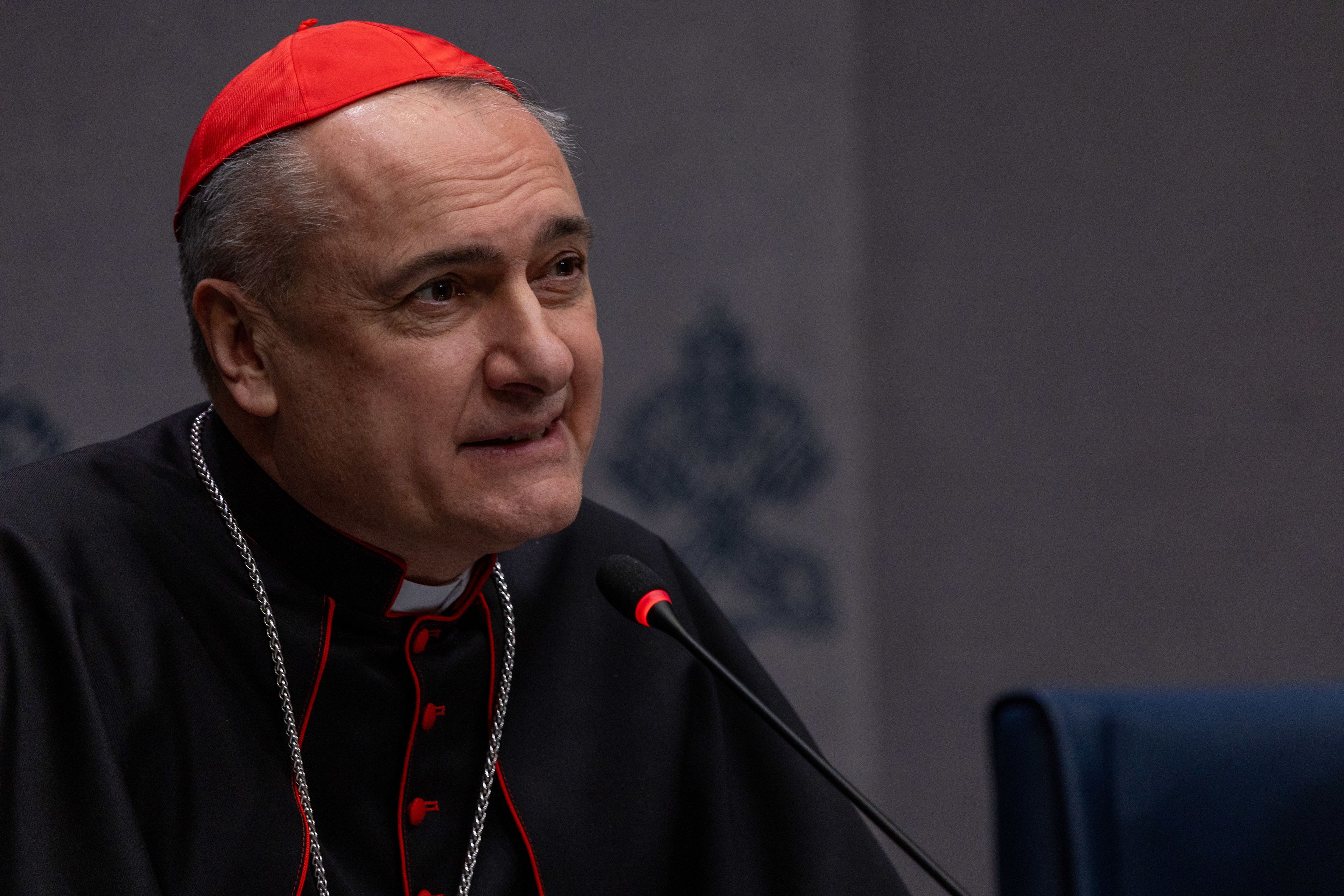
Cardinal Mauro Gambetti is the archpriest of St. Peter’s Basilica. | Credit: Daniel Ibañez/EWTN News
“St. Peter’s Basilica has welcomed the faithful of all nations and languages for centuries. By making available a tool that helps many understand the words of the liturgy, we want to serve the mission that defines the heart of the Catholic Church, universal by its very vocation,” Gambetti emphasized.
The new service is being launched four centuries after the basilica was consecrated in 1626 by Pope Urban VIII, after more than a century of construction. The first stone of the new church was laid on April 18, 1506, after Pope Julius II decided to build a new basilica due to the deterioration of the building constructed during the time of Roman emperor Constantine (d. 337).
Another example of how technology is serving the Vatican is the new digital access system that will be used to better manage the flow of tourists and pilgrims who enter St. Peter’s Basilica every day. Called SmartPass, it is integrated into the basilica’s official website along with a network of sensors that will allow for real-time monitoring of visitor presence and improved security.
In addition, the Vatican has also unveiled a revolutionary technological project with sensors installed in the foundations, facade, dome, and subsoil that will allow for real-time monitoring of the basilica’s structural condition.
The project, dubbed “Beyond the Visible” and financed by the Italian oil company Eni, combines high-precision geophysical, topographic, and structural technologies.
“We have created an integrated information process that will allow us, from today and in the future, to monitor all movements that may occur in this monumental structure and, at the same time, support the technical experts who must make decisions,” explained Claudio Granata, Eni’s head of these projects, during the official presentation of the commemorative initiatives at the Vatican.
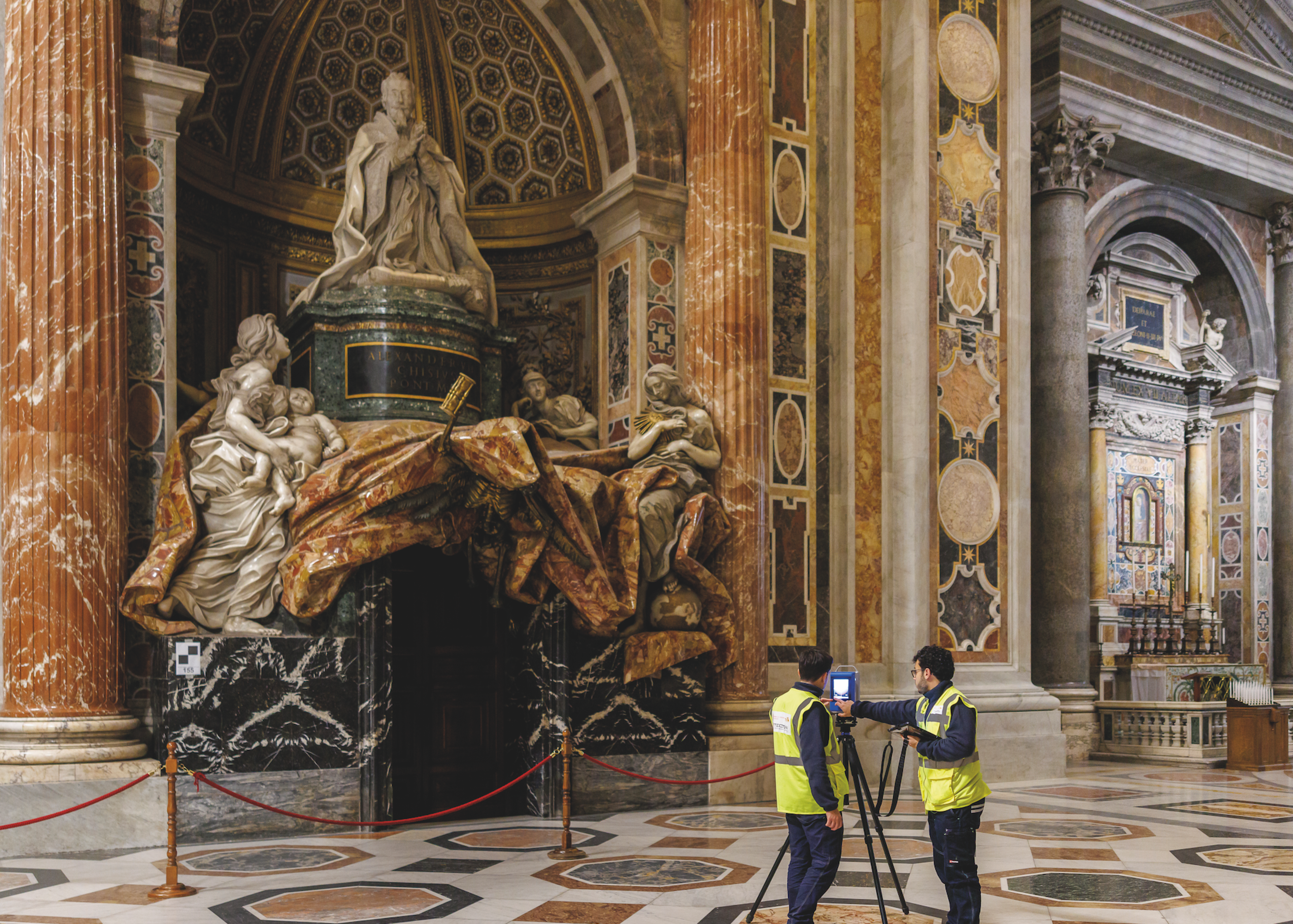
A crew works with the system to monitor the slightest movement in St. Peter’s Basilica. | Credit: Daniel Ibañez/EWTN News
Thanks to this system, it will be possible to detect millimeter displacements and inclinations on the order of ten-thousandths of a degree as well as obtain a complete map of the architecture and geology of the terrain beneath the basilica, with the ability to consult data in real time.
This story was first published by ACI Prensa, the Spanish-language sister service of EWTN News. It has been translated and adapted by EWTN News English.