COMMENTARY: The Holy Father’s bold choice of Bishop Erik Varden as retreat leader speaks volumes.
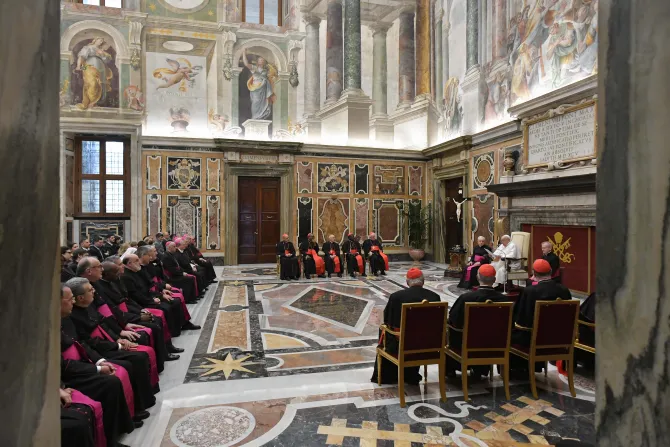
Pope Leo XIV will spend the first full week of Lent on retreat — often termed “spiritual exercises” — with senior officials of the Roman Curia. This retreat is noteworthy in terms of the practice itself, the preacher and the place. All three tell us something about the emerging shape of Leo’s pontificate.
The Practice
The custom of the pope spending a week on retreat with members of the Roman Curia dates back a century, to Pope Pius XI (1922-1939). He held the first such retreat in 1925, and then formalized it with an apostolic letter in 1929.
Canon law requires priests to make an annual retreat, with the particulars left up to the priest. Many dioceses gather all the priests together for a retreat — some annually, some every two or three years.
Pius XI began a similar custom of making the annual retreat a communal practice, held in the Vatican during Advent each year. That continued until St. John XXIII, who broke the Advent tradition in 1962, making the retreat in September to prepare for the opening of Vatican II the following month. His successor, St. Paul VI — elected in 1963 — moved the retreat to the first full week of Lent in 1964.
In 2014, his first full Lent as pope, Pope Francis moved the retreat from the Vatican to a retreat house near Rome; he and the cardinals would arrive by motorcoach, generating a lot of widely circulated photographs. He kept the retreat in that format until 2020, when he could not join due to a cold, and then in 2021 the communal retreat was canceled due to the pandemic. Pope Francis did not hold the retreat at all in 2022, 2023 and 2024, bringing it back in 2025, though he was hospitalized and did not attend. He died only a few weeks later.
Pope Leo XIV has already restored several customs from recent pontificates that Francis had set aside. The Pallium Mass for new archbishops on the Solemnity of Sts. Peter and Paul returned last June, as did the papal Mass on Christmas morning, and now the curial retreat. Pope Leo intends continuity with his predecessor, but he will not be the same.
The Preacher
For the first several decades of the papal retreat, Jesuits were usually chosen as the preachers, given that the retreat followed the Spiritual Exercises of St. Ignatius Loyola. John XXIII invited others in his short pontificate, including an Italian parish priest and a bishop. Each preacher is free to organize his theme and meditations.
Paul VI began to invite prominent ecclesiastics who already enjoyed a wide following to preach. Redemptorist Father Bernard Häring, the moral theologian, was the first Paul VI invited in 1964, a notable choice given some of Father Häring’s positions; he would later dissent from Humanae Vitae and Veritatis Splendor.
Most memorable was Pope Paul’s invitation to the archbishop of Kraków to preach the retreat in 1976. Cardinal Karol Wojtyła was the first cardinal to be so invited, and his meditations, published under the title Sign of Contradiction — Simeon’s words about the infant Jesus at the Presentation — remain in print today. Less than three years after that Lent retreat, Cardinal Wojtyła would revisit the key themes he preached in his inaugural homily as pope in October 1978.
Cardinal Wojtyła’s star turn 50 years ago shifted the Lenten retreat toward more prominent personalities in the Church. Many of the preachers were already cardinals, or were subsequently created cardinals: Blessed Eduardo Pironio, Anastasio Ballestrero, Carlo Maria Martini, Lucas Moreira Neves, James Hickey, Georges Cottier, Ersilio Tonini, Jorge Medina Estévez, Tomáš Špidlík, Christoph Schönborn, François-Xavier Nguyễn Vǎn Thuận, Angelo Comastri, Francis George, Francis Arinze, Albert Vanhoye, Giacomo Biffi, Gianfranco Ravasi, Laurent Monsengwo Pasinya, Angelo De Donatis.
Cardinal Joseph Ratzinger preached the retreat in 1983, and his meditations then were the seeds that later bore fruit in his trilogy of biblical theology, Jesus of Nazareth.
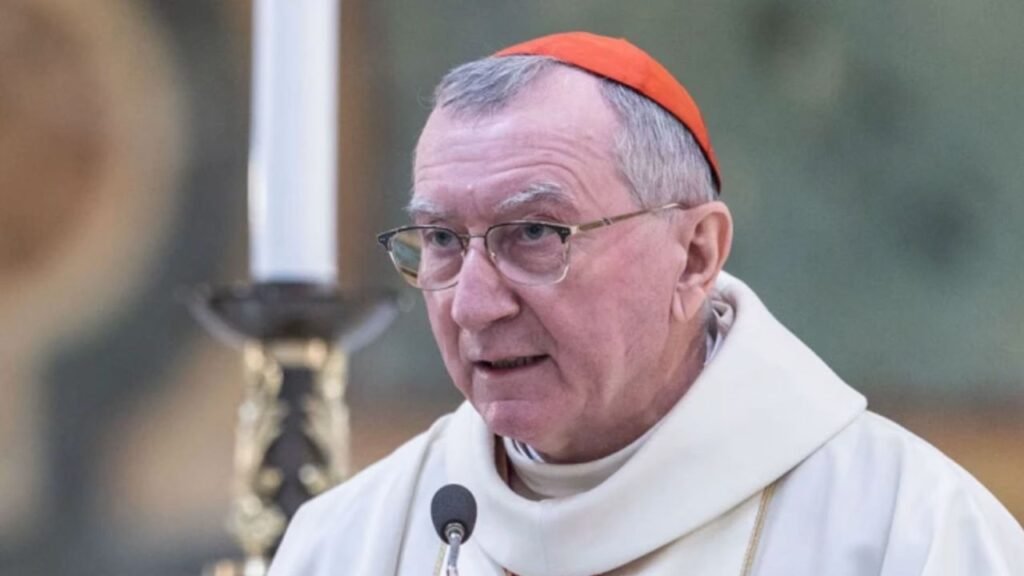
This year, Pope Leo made a bold choice, choosing Bishop Erik Varden of Trondheim, Norway, the Trappist monk who is one of the world’s leading spiritual authors. A Norwegian Lutheran who converted to Catholicism while studying at Cambridge, Bishop Varden was elected abbot of his English abbey at age 39. Pope Francis chose him as the first native Norwegian bishop of Trondheim in 2019, even though he had spent nearly 30 years in England.
Bishop Varden is well known to American Catholics. He spoke at the Napa Institute conference last summer, gave the annual Erasmus Lecture in the fall for First Things, and his most recent book, Towards Dawn: Essays in Hopefulness, was published by Word on Fire (2025). His website, Coram Fratribus, provides regular spiritual reflections to a wide readership.
Known for drawing inspiration from literature in various languages, as well as music and the liturgy, Bishop Varden has been particularly successful in preaching to a disenchanted world. In that light, his eponymous book on chastity was very well received and introduced many readers to him.
The Place
The Lent retreat had long been held in one of the chapels in the Apostolic Palace — the Matilde Chapel. It continued there until 2013, after which Pope Francis took the retreat outside the Vatican.
In 1996, on the occasion of Pope John Paul’s 50th priestly anniversary, the College of Cardinals gave him a monetary gift, which he used to redecorate the Matilde Chapel. The commission was given to the Slovenian Jesuit mosaicist, Father Marko Rupnik, who rendered the entire chapel — floor to ceiling — in a brilliantly-arrayed depiction of the communion of saints in heaven. The chapel was renamed Redemptoris Mater in honor of John Paul’s Marian encyclical of that name.
His work was widely acclaimed and led to Father Rupnik becoming the Catholic Church’s most famous contemporary artist, being granted commissions at the St. John Paul II National Shrine in Washington, DC, the John Paul II sanctuary in Kraków, the basilica at Lourdes, the basilica at Fatima, the shrine of Padre Pio and the Almudena cathedral in Madrid. It seemed that everyone wanted Father Rupnik’s mosaics, and he also received frequent invitations to lecture and preach.
In recent years, revelations that Father Rupnik had sexually abused religious women in his artistic community led to canonical proceedings against him. He was excommunicated (though the penalty was quickly lifted), expelled from the Jesuit order, and is currently awaiting a canonical trial. Given that his sexual misconduct has been linked to his “creative process,” a controversy has arisen about whether his artwork should continue to be displayed.
His mosaics are enormous and embedded in the very walls of the churches, and so are not easy to remove. The John Paul II shrine in Washington and the basilica at Lourdes have decided to cover them. Given all that, it would not have been suitable to hold the retreat in the Redemptoris Mater chapel, covered as it is entirely with Father Rupnik’s mosaics.
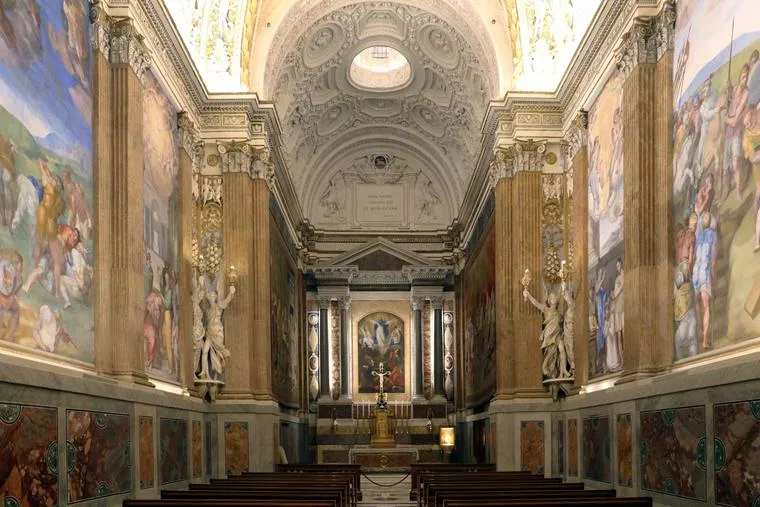
Pope Leo wisely shifted the retreat to the Pauline Chapel, which is officially the pope’s private chapel. The cardinals gather there before processing into the Sistine Chapel for the conclave, and the newly-elected pope goes there to pray immediately after his election. As a bonus, the artwork is superior; Michelangelo’s twin works on the crucifixion of Peter and the conversion of Paul adorn the lateral walls.
During the breaks, though, it might be advisable for the cardinals to stop in to pray privately in the Redemptoris Mater chapel, contemplating the holiness of the Church as depicted by a priest accused of grave crimes. The Roman Curia’s work, in significant part, deals with handling abuses of law, office and morals by bishops and priests. The Redemptoris Mater chapel is a good place to reflect upon how to properly deal with the wheat and the weeds that grow together, often hard to distinguish.
Bishop Varden’s retreat theme is “Illumined by a Hidden Glory.” In the Apostolic Palace, that glory is often hidden behind human weakness, even as it is at the same time made resplendent by Michelangelo.
This article was originally published by EWTN News English.