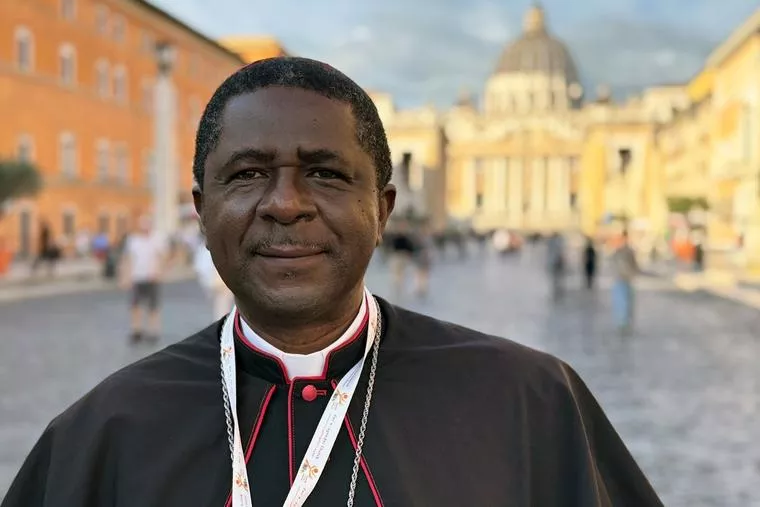
The archbishop of Bamenda is a rising star in the Catholic Church in Cameroon and beyond.
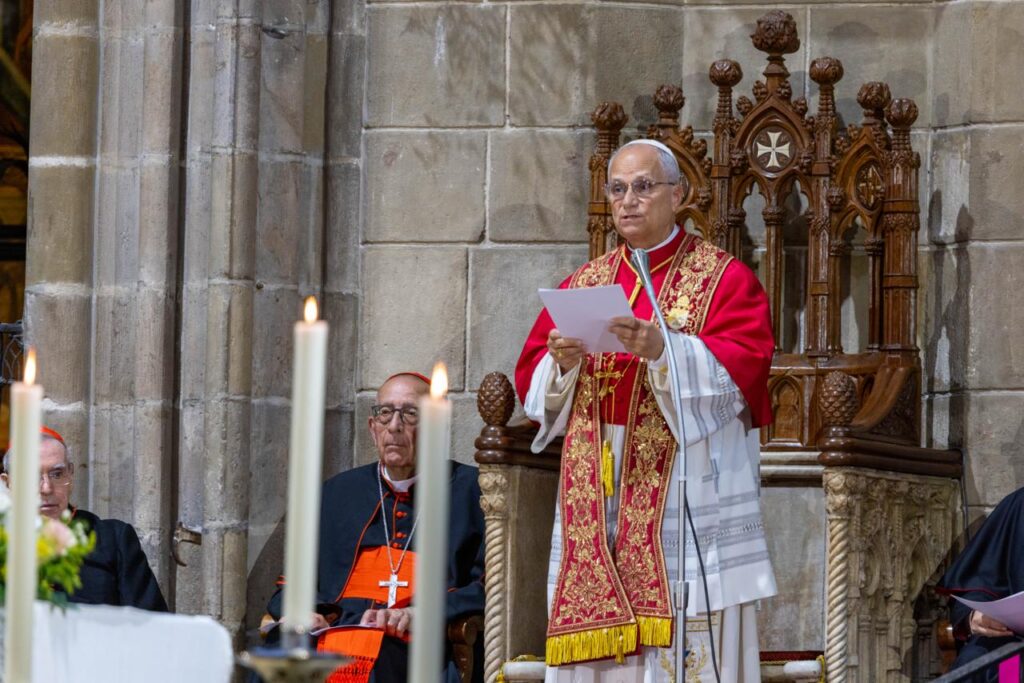
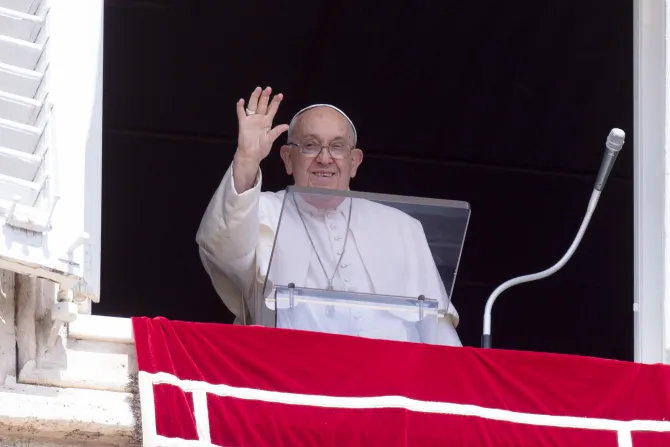
When Pope Leo XIV visits Cameroon April 15-18, he will be greeted in Bamenda by one of the country’s most prominent Churchmen, Archbishop Andrew Fuanya Nkea.
The 60-year-old archbishop is widely regarded in Cameroon as a gifted preacher, an energetic pastor and an unusually visible Catholic leader in a country marked by conflict and widespread human suffering.
He is already well known to Pope Leo, having served during the 2023-24 Synod on Synodality as a member of its 16-member Ordinary Council that played a crucial role in organizing and overseeing the synod’s work. As Cardinal Robert Prevost, the future Pope Leo took part in all phases of that synod and worked with the archbishop.
Since the beginning of 2020, Archbishop Nkea has led the northern Archdiocese of Bamenda, the only ecclesiastical province covering the English-speaking regions of Cameroon. With a flock estimated to number more than 600,000 faithful, it is especially notable for being at the center of the Anglophone conflict that began with peaceful protests in 2016 over marginalization of the English-speaking minority.
The dispute soon escalated into armed fighting between government forces and separatists in the Northwest and Southwest regions. Thousands of people have since been killed, hundreds of thousands displaced, and the conflict has provoked a long-running humanitarian crisis. The fighting is ongoing and both sides remain in a stalemate.
Archbishop Nkea has pushed for dialogue and reconciliation and has insisted that prayer is the only durable path to peace. Repeatedly saying that the Church can facilitate talks but not replace political negotiation, he has met political leaders, supported humanitarian assistance for people affected by the fighting, and urged Cameroonians to stop hiding behind violence and take responsibility for peace.
Local media has credited him for his tireless peace efforts, which include working closely with Caritas and making sure people have their basic needs met. The challenge, he says, is in not showing favoritism to either side but helping the People of God who are suffering. For these people, he insists, “I am ready to give my life — not for separatists, not for the government!”
He has excoriated the fighters in the war for harming the innocent, especially women and children. Recalling the old African saying “When elephants fight, it is the grass that suffers” — meaning that when powerful people or groups clash, ordinary people are the ones who get hurt — he said he often goes around entreating the fighters with a simple message: “Please, they’re your own people. Don’t touch your own people!”
Consecrated Bishop
Born on Aug. 29, 1965, in Widikum, in Northwest Cameroon, Andrew Fuanya Nkea was ordained priest for the western Diocese of Buea in 1992. Pope Francis appointed him coadjutor bishop of Mamfe in 2013 at the age of 47, and he became bishop of the diocese the following year. He took the episcopal motto: “In Spirit and in Truth.” In February 2020 he was promoted to archbishop of Bamenda, during which time he also served as apostolic administrator of Mamfe (2019-2022).
Nkea studied philosophy and theology in Cameroon and completed further studies in canon law in Rome, including at the Pontifical Urban University. His early ministry included work as parochial vicar, parish priest and chancellor of the Buea Diocese, as well as judicial vicar and roles in seminary formation.
Archbishop Nkea was reelected last year for a second term as president of the National Episcopal Conference of Cameroon (NECC). He has also been a key voice in the Symposium of Episcopal Conferences of Africa and Madagascar (SECAM), especially concerning the Synod on Synodality.
The archbishop is known for his orthodoxy and is unafraid to speak his mind. He has spoken firmly against a female diaconate, and, at the end of the first Synod on Synodality in 2023, he made headlines when he told the Register that Africans view marriage as a union between a man and a woman, “and anything short of that is witchcraft.”
He said he and his African brother bishops made clear their firm opposition to same-sex blessings at the synod, saying their position is rooted in biblical teaching, and he expressed his disappointment with Fiducia Supplicans, the Vatican’s 2023 declarationapproving non-liturgical same-sex blessings. That decision, made outside the synod, “was not pleasant,” he told the Register, adding that he and his brother bishops did not want to see it repeated.
In line with many African prelates, the archbishop is nevertheless a keen proponent of synodality. He sees it as reflective of a more communitarian and collegial way of governing that is especially common to Africa.
Overall, his emphasis tends to be on safeguarding doctrinal clarity, strengthening family and community life, and approaching complex situations — such as polygamy or youth pastoral care — with a combination of doctrinal firmness and pastoral sensitivity.
As a gifted preacher, the faithful are often deeply moved by Archbishop Nkea’s homilies, according to Cameroonian Catholic writer Emmanuel Ayuni Tan. “He has a remarkable ability to communicate the Gospel message clearly and effectively to his audience,” Ayuni Tan told the Register, and he is known as a lighthearted, good-humored prelate who likes to dance the samba.
In interviews with the Register over the years, the archbishop has expressed his concerns about Europe, especially its complacency in the face of the spread of Islam. “If you look at the decline of Christianity on the continent, it is met by a corresponding rise in Islam, and this is what must be the worry,” he said in 2023. It is a correlation, he lamented, that is not often noticed.
Europe, he believes, should look to the Church in Africa and apostolic tradition for answers. “If Europe has to save itself, they have to return to the authenticity of the Church’s teachings,” he told the Register in 2024. “Where the Church’s teaching is rigid, people go in; where the Church’s teaching is fluid, people go out. And this is what Europe must realize if they have to maintain Christianity.”
He is known to be skilled at navigating complex issues and has the qualities of a capable diplomat, but this latter trait has occasionally drawn criticism, leading some Cameroonians to see him as more of “a politician in clerical attire” than a spiritual leader.
Archbishop Nkea dismisses such criticisms, believing it is important to keep channels of dialogue open with political leaders, but also to keep such relations “quiet” so that he can be welcomed back. “I don’t go around telling people whom I meet,” he said in an interview with ABS News Network last month. “I don’t want popularity; I want results.” He sees the lack of truth as the “biggest problem” in Cameroonian politics and “in our communities,” and he has called on those in public life “to build a world based on truth.”
Eucharistic Devotion
The archbishop has a deep devotion to Jesus in the Eucharist and in 2022-23 held a Year of the Eucharist in his diocese, during which he asked each parish of the archdiocese to establish a perpetual adoration chapel. He made clear that this was not a devotional optional extra but an integral way of putting Christ at the center of a battered local Church.
In practice, this meant dozens of new or renovated chapels, high lay participation and a striking youth presence, to the point that international outlets treated Bamenda as a kind of laboratory for Eucharistic renewal. He has consistently presented adoration as a place where people who arrive “totally depressed” by war and poverty can “leave totally converted.” Before the Blessed Sacrament, he said, “we find the strength to continue.”
Widely seen as an innovator and a natural leader, Archbishop Nkea has significantly transformed his diocese. As well as constructing adoration chapels, he has been praised for renovating Bamenda’s cathedral and improving schools and hospitals — all at a time of conflict and great suffering. “He is regarded as a man of the people and a friend to everyone, including those living on the streets,” said Ayuni Tan. “He does not discriminate and makes people feel comfortable in his presence.”
Those close to him say he is also strict and highly disciplined but eminently likeable. They regard him as a humble and simple man, as well as an accessible, pragmatic leader. A hard worker, he does not shy away from challenges but will see initiatives through to completion.
“He remains a loved and respected figure among his flock and a well-known personality across Cameroon,” said Ayuni Tan. “The affection and loyalty he enjoys among his faithful remain largely undiminished,” he added, and many people “continue to look to him for guidance and leadership.”
Being a qualified canonist also places him in good stead, given Leo XIV’s preference to appoint canon lawyers to prominent positions in the Church in order to restore law and order to the institutional Church. Some Cameroonians are speculating Leo could even nominate him a cardinal during the upcoming visit.
As the archbishop’s profile rises, more and more people are coming to know this genial, approachable and appealing youthful African prelate and believe he is destined for higher office.
Archbishop Nkea, however, plays down the prognostications and public commentary. “Ninety-nine-point nine percent of people who talk about me don’t even know me,” he observed last month. “They go to social media and say things.” For now, he remains focused on the important tasks the Lord has given him and has pledged to do them to the best of his ability, speaking “truth to power” whenever he can.
This article was originally published by EWTN News English.