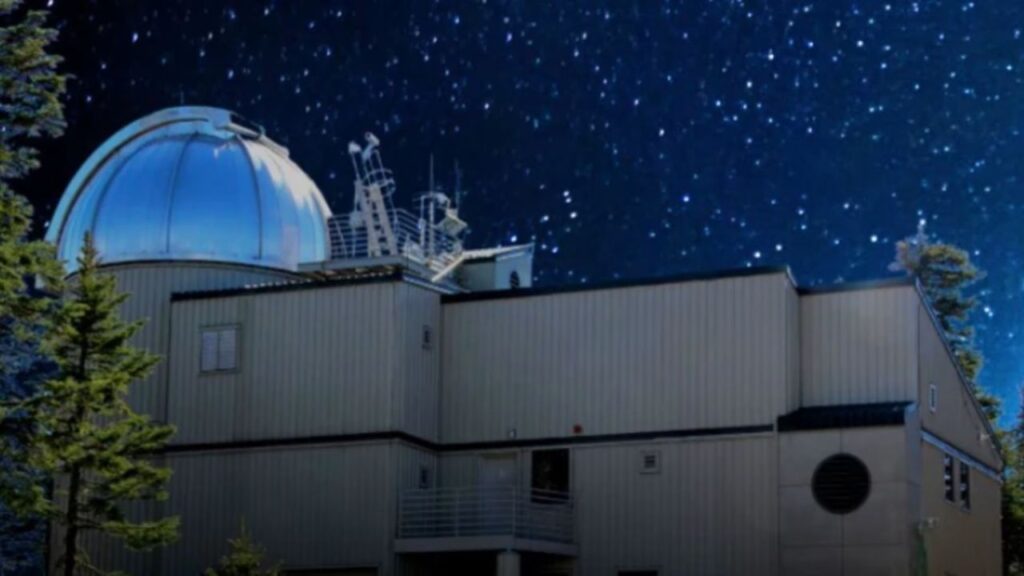
Thanks to donations, the telescope is now operable remotely by students at Jesuit universities and has already been used by astronomers at the Vatican’s observatory in Castel Gandolfo, Italy.
A new automation system for the telescope at the Holy See’s astronomical observatory in Arizona will allow students from Jesuit universities to use it remotely for scientific research.
Mount Graham in Arizona is home to the Vatican Advanced Technology Telescope (VATT), one of the most important observatories managed by the Vatican Observatory (Specola Vaticana).
According to a statement issued by the Governorate of Vatican City State, the robotization and automation of the telescope were recently completed successfully thanks to donations from the Thomas Lord Charitable Trust philanthropic foundation.
The automation was also made possible thanks to donations from Kim Bepler, who specifically supports various Jesuit initiatives and serves on the board of trustees of Fordham University.
Astronomers will now be able to operate the telescope remotely, without the need to be physically present on the mountain. In fact, astronomers from the Vatican observatory at Castel Gandolfo in Italy are already making use of this new feature.
The new automation system is named “Don” in memory of Donald Alstadt, a renowned figure in the field of philanthropy dedicated to supporting scientific research, particularly through the Thomas Lord Charitable Trust.
The idea to automate the telescope emerged following a meeting held last January between Bepler; the director of the Vatican Observatory, Father Richard D’Souza; and the president of the Vatican Observatory Foundation, Brother Guy Consolmagno.
Their objective was to develop a program to connect the VATT with Castel Gandolfo and enable its use at Jesuit universities worldwide, particularly those that normally lack access to an advanced research telescope.
To launch the project, Bepler offered “a generous contribution in honor of Father Joseph M. McShane, president emeritus of Fordham University and a member of the development committee of the Vatican Observatory Foundation.”
This story was first published by ACI Prensa, the Spanish-language sister service of EWTN News. It has been translated and adapted by EWTN News English.