Skip to content

Mercedes-Benz marks long history of making cars for the pope

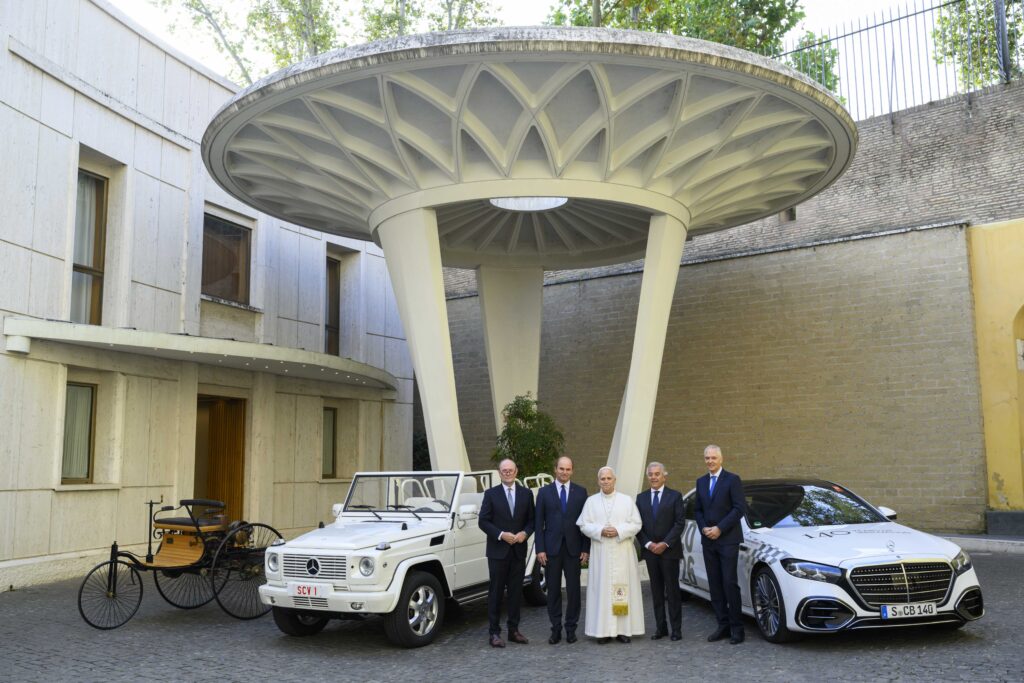
Pope Leo XIV with some executives of Mercedes-Benz after his private audience with them at the Vatican on Oct. 28, 2026. | Credit: Vatican Media

Pope Leo XIV also met with the executives of the German auto company on Wednesday.

Mercedes-Benz, the German luxury automaker, celebrated nearly 100 years of producing the popemobile — the pope’s personal vehicle.

To mark the occasion, Pope Leo XIV held a private audience with Mercedes-Benz executives on Wednesday. That same day, the exhibit “A Century of the Popemobile” opened at the Vatican Museums, featuring the first popemobile, gifted to Pope Pius XI in 1930, and the one in which St. John Paul II was shot on May 13, 1981.

Evolving transportation for the successors of Peter

In his address to Mercedes-Benz, the pope praised the company for its enduring partnership with the Vatican and reflected on how papal transportation — from St. Peter to the present — has evolved.

“Over the decades, the Popemobile has evolved from a means of transportation into an instrument of encounter, enabling the pontiff to draw closer to the faithful during pastoral visits and public celebrations,” Leo said.
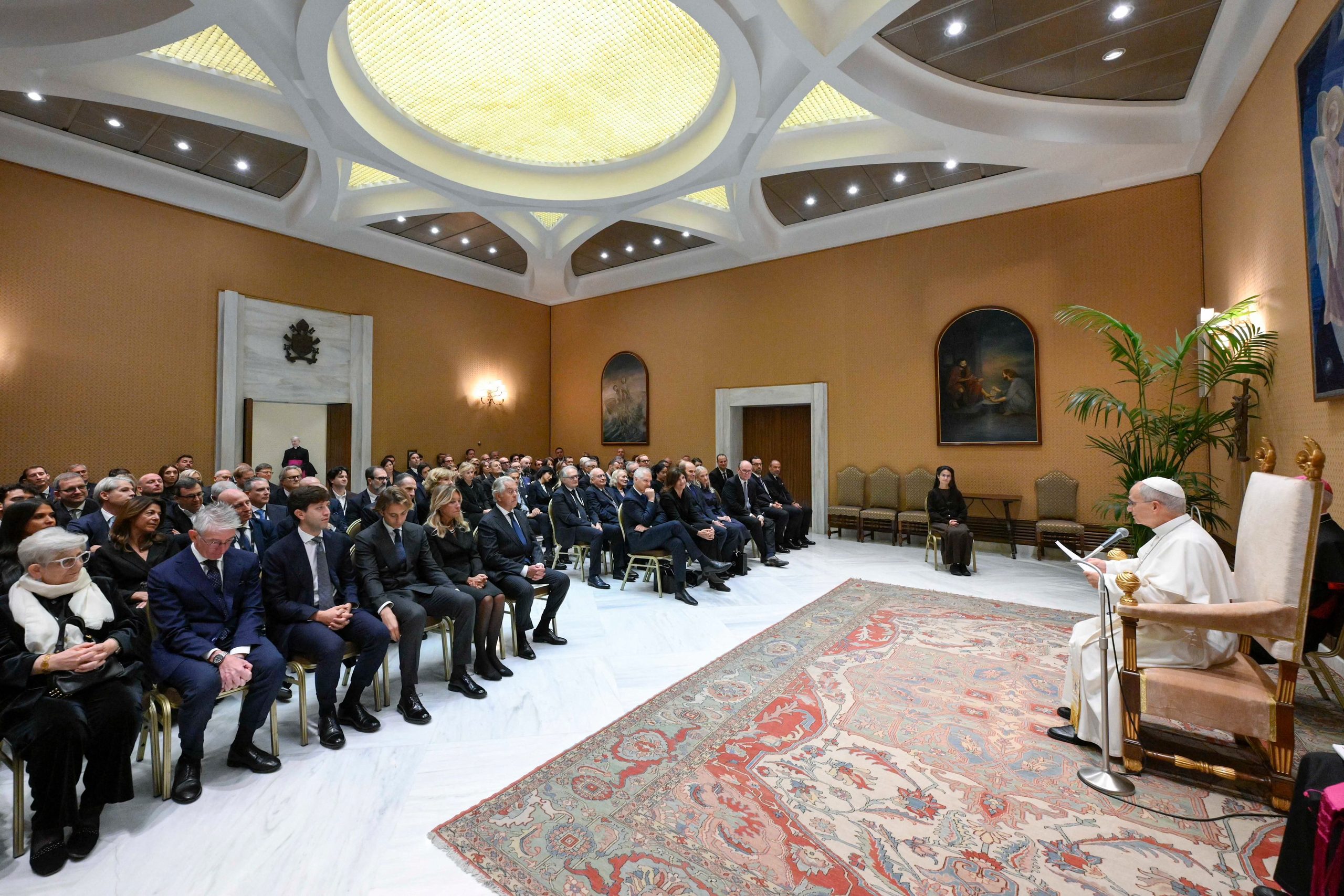
Pope Leo XIV addresses the executives of Mercedes-Benz during a private audience at the Apostolic Palace at the Vatican on Oct. 28, 2026. | Credit: Vatican Media

“In this way, your work has helped facilitate the Church’s mission of reaching out to people and bringing a message of faith, of hope, and of charity to the world.”

The pope also encouraged them to direct their innovations toward a more sustainable world, placing their “technological innovation at the service of human dignity, care for creation, and the common good.”

Carriages, the ‘sedia gestatoria,’ and modern transport

Papal transportation has evolved since the late Roman Empire, when popes were carried on the “sedia gestatoria” — ornate, ceremonial thrones carried by 12 footmen during processions and major liturgical celebrations.
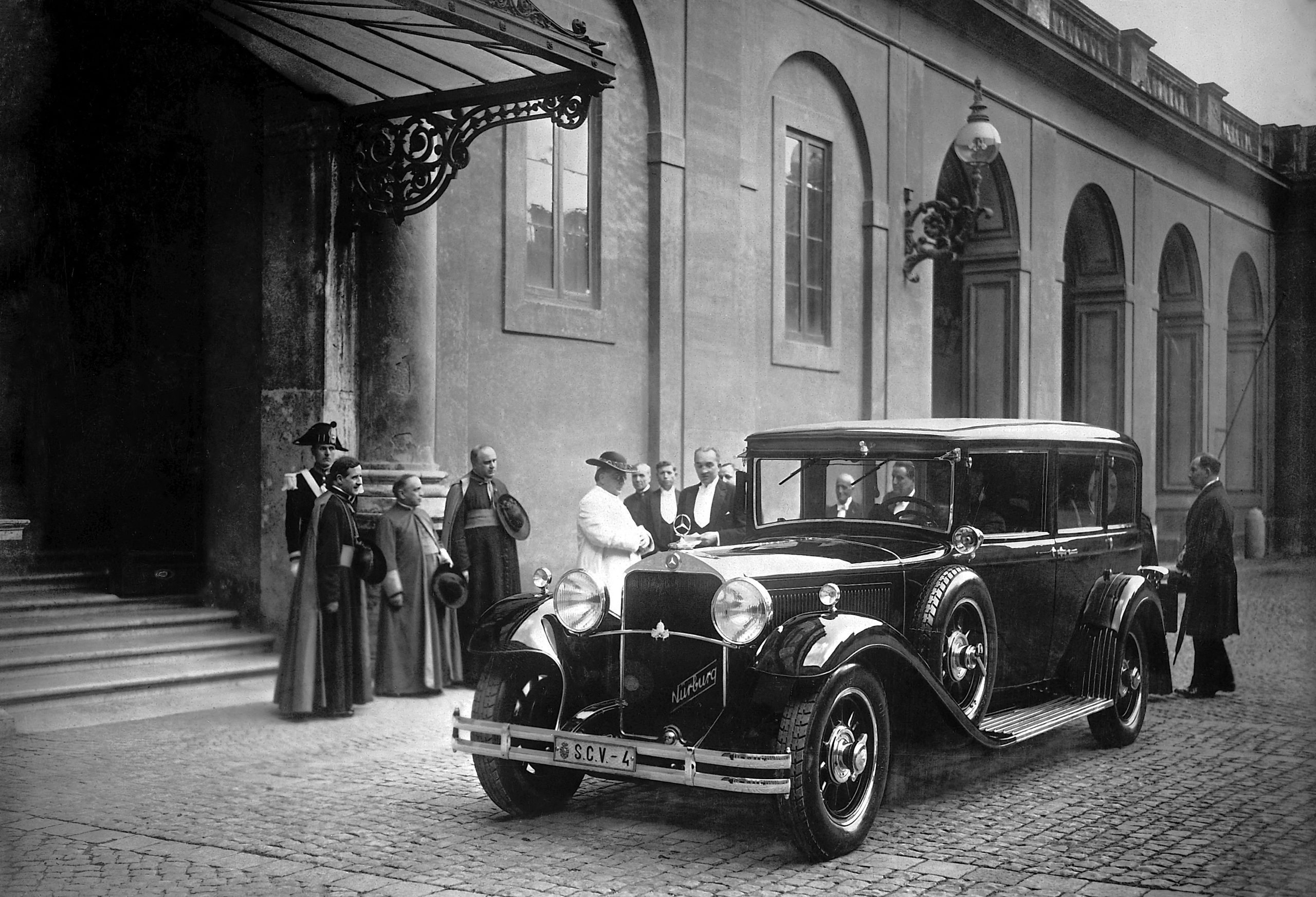
Pope Pius XI used the Nürburg 460 Pullman, made by Mercedes-Benz, as the first official automobile to transport the pope. | Credit: Photo courtesy of the Vatican Museums

From the late 19th century onward, popes increasingly chose modern forms of transportation, with Blessed Pius IX using the first papal train in 1859. The Nürburg 460 Pullman, made by Mercedes-Benz and given to Pope Pius XI in 1930, was the first official automobile used to transport the pope.
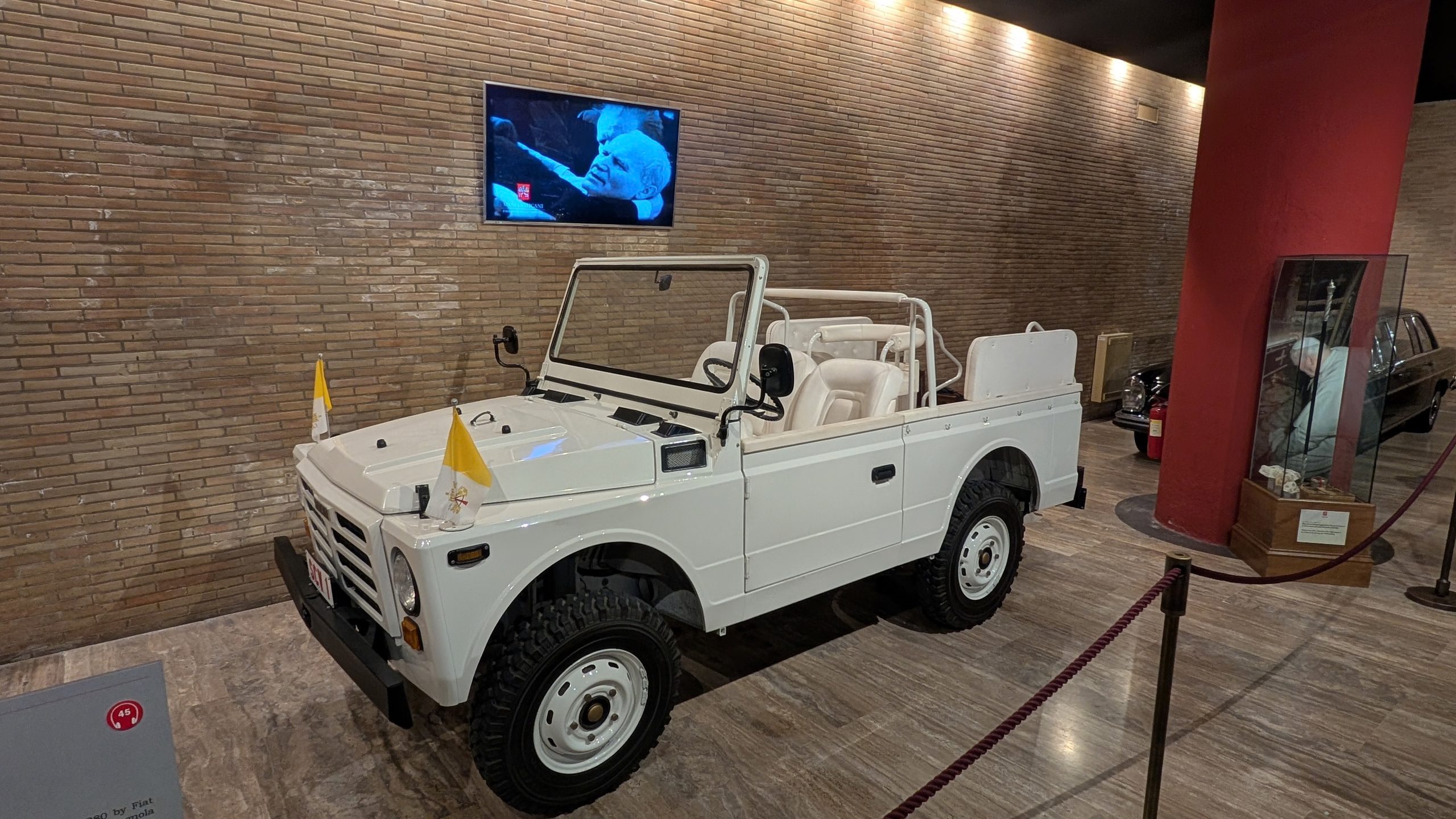
The Fiat 1107 - Nuova Campagnola, in which St. John Paul II was shot on May 13, 1981. | Credit: Ishmael Adibuah/EWTN News
The Fiat 1107 – Nuova Campagnola, in which St. John Paul II was shot on May 13, 1981. | Credit: Ishmael Adibuah/EWTN News

The word “popemobile” was first used to describe a custom-made Lincoln Continental for St. Paul VI’s 1965 visit to the United States. Popes since St. John Paul II have used the popemobile, with Mercedes-Benz adapting future models for security since his 1981 shooting.

A duty to ensure the pope’s safety

Speaking on the sidelines of the launch of the exhibit “A Century of the Popemobile,” the Mercedes-Benz executives spoke with EWTN News, reflecting on the near-century-long partnership with the Vatican.

Marc Langenbrinck, CEO of Mercedes-Benz Italy, described the partnership as a privilege, especially as a Catholic.

“[This day] is just simply the most beautiful day of my career because I am Catholic and I believe, and for me it is something which is a project of a lifetime,” Langenbrinck told EWTN News.

Marcus Breitschwerdt, executive vice president of Mercedes-Benz, explained the security and accessibility measures implemented in the popemobile.

“Well, first of all, a vehicle has to move safely, comfortably, but also safely in terms of traffic and accident risks,” Breitschwerdt said to EWTN News. “It has to be safely conceived and executed in terms of the current modern risks you face if you are in big crowds.”
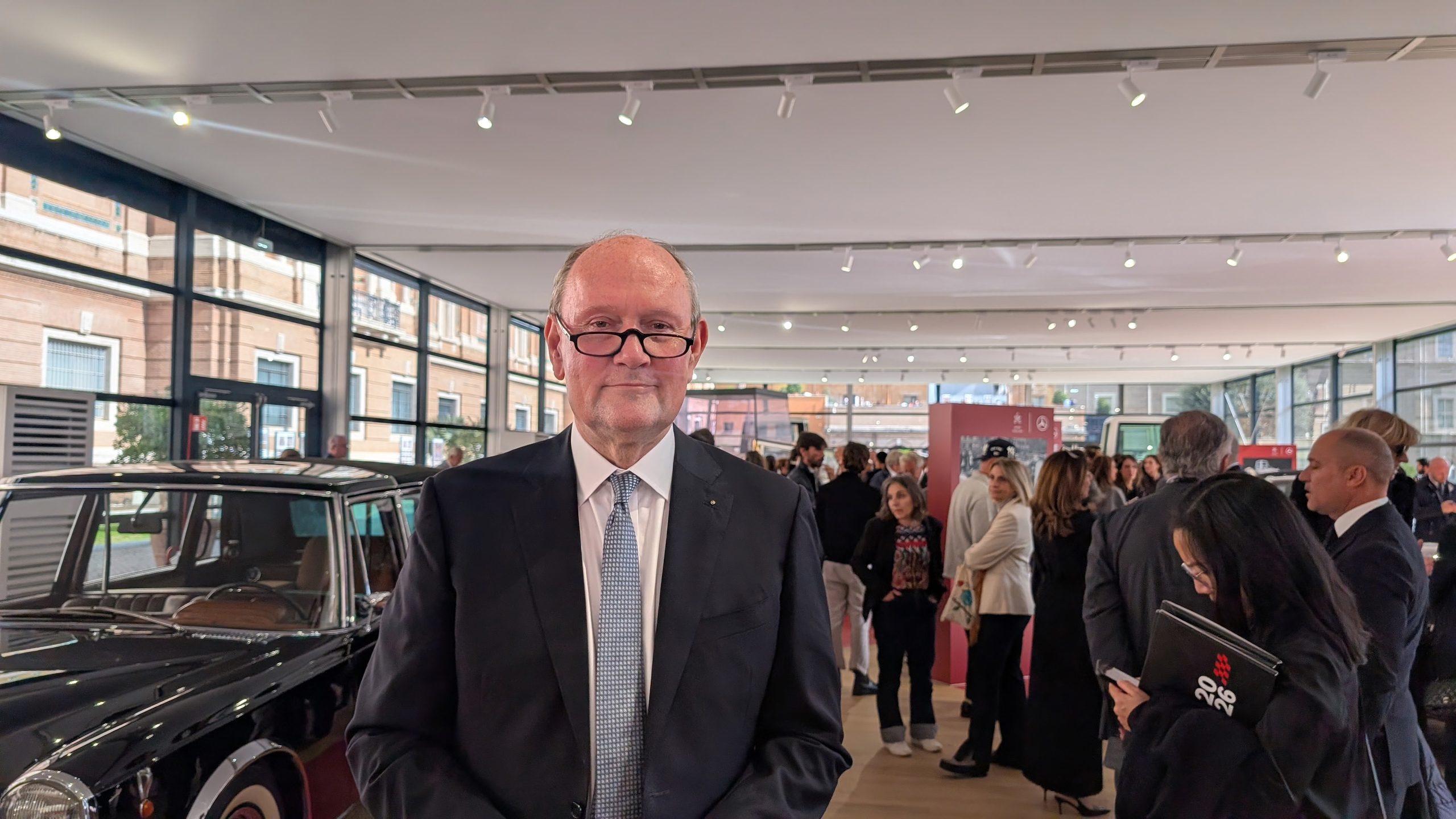
Marcus Breitschwerdt, executive vice president of Mercedes-Benz, at the exhibition “A Century of the Popemobile” at the Vatican Museums on Oct. 28, 2026. | Credit: Ishmael Adibuah/EWTN News

“So we have armored versions; we have the secured glass Popemobiles, which are very, very sophisticated,” Breitschwerdt added.

Breitschwerdt, in a speech for the exhibit launch, also said that no Mercedes-Benz employee is ever allowed to sit on the pope’s seat in the Popemobile.

“There is a strict rule that no one — not even the mechanics who maintain the vehicles or our CEO — is allowed to sit in the popeʼs seat,” Breitschwerdt said.

This article was originally published by EWTN News English.

Receive the most important news from EWTN Vatican via WhatsApp. It has become increasingly difficult to see Catholic news on social media. Subscribe to our free channel today

Share

Would you like to receive the latest updates on the Pope and the Vatican

Receive articles and updates from our EWTN Newsletter.

I agree that EWTN will keep me informed about news, faith stories and how to best support their work. You will never receive e-mails from us that you do not want to receive. You can unsubscribe any time. For more information on how to unsubscribe, our privacy practices, and how we are committed to protecting and respecting your privacy, please review our Privacy Policy.

More news related to this article

Pope Francis appoints Cardinal Tagle as special envoy to National Eucharistic Congress

Pope Francis has appointed Cardinal Luis Antonio G. Tagle, pro-prefect of the Dicastery for Evangelization, as his special envoy to the National Eucharistic Congress in the United States, which will be celebrated in Indianapolis July 17–21.

Pope Leo XIV says unity is necessary for evangelization

VATICAN CITY — “Being a Christian … is a life in union with Christ,” and true evangelization stems

Towards a Synodal Future: Insights From Cardinal Grech

In an exclusive interview, Cardinal Mario Grech shares insights on the Synod on Synodality, highlighting its focus on mission, communion, and the Church’s identity as the holy people of God.
WYD Sydney - July 15 - 20, 2008 | Vatican Media

Benedict XVI describes ‘Protestantization’ of the Eucharist in posthumous publication

Pope Benedict XVI’s essay on the Eucharist is part of a series of texts the pope emeritus wrote

Laudato Si’ launches initiative to help Ukraine

The Catholic group Laudato Si’ has launched a new initiative called “An Economy of Peace” which aims to

Young Adults’ Eucharistic Devotion The Inspiration Behind ‘24 Hours For The Lord’ Event

Now in its 12th year, the Church’s “24 Hours for the Lord” Lenten initiative is believed to have been inspired by the Eucharistic devotion of a group of young Catholics in Rome.

LIVE
FROM THE VATICAN

Be present live on EWTNVatican.com