Skip to content

Restoration to begin on important chapel of Marian basilica in Rome

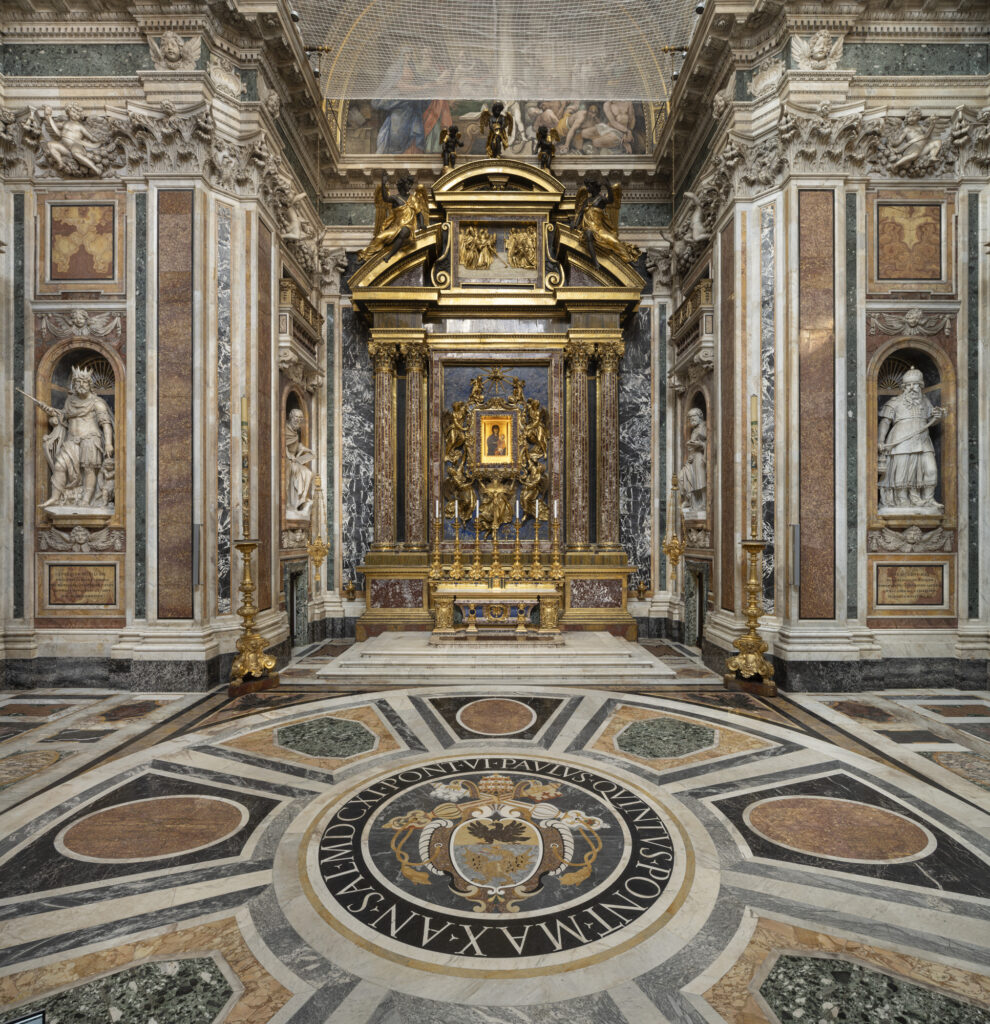
The Pauline Chapel at the Papal Basilica of St. Mary Major in Rome. | Credit: Photo courtesy of the Papal Basilica of St. Mary Major

Work in the Baroque-styled chapel, which houses the ancient “Salus Populi Romani” icon, will begin on Nov. 16.

The Papal Basilica of St. Mary Major in Rome will begin restoration of its Pauline Chapel, a significant work of early Baroque architecture.

The basilica announced plans to restore the chapel’s artwork in a press release on Nov. 6. The project, set to begin on Nov. 16, is one of several in an extensive conservation campaign. During work, the chapel will be closed to the public for 90 days.
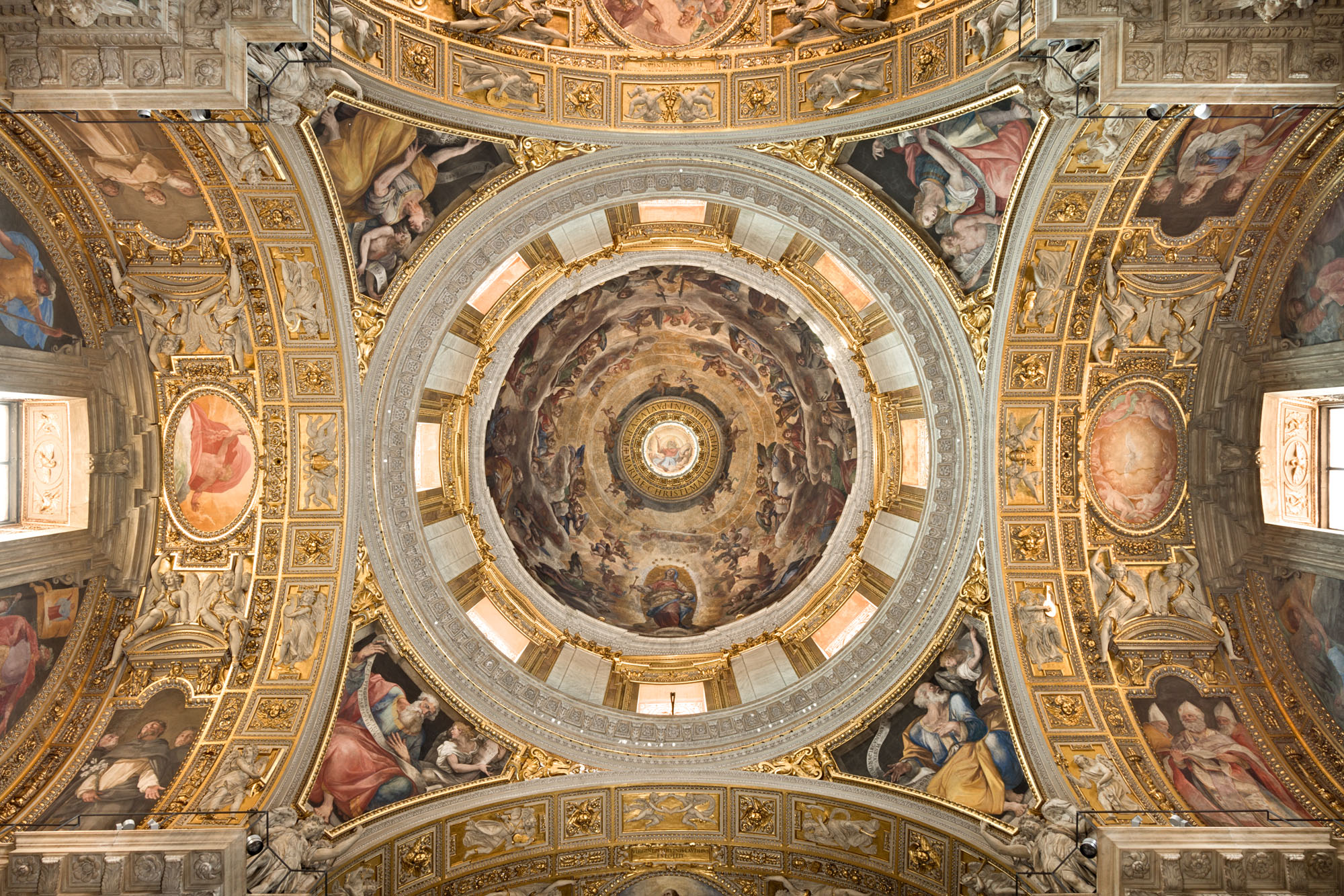
Ceiling of the Pauline Chapel at the Papal Basilica of St. Mary Major in Rome. | Credit: Photo courtesy of the Papal Basilica of St. Mary Major

As one of Rome’s four major basilicas, the basilica is reputed to be the oldest shrine dedicated to the Virgin Mary in the Western Hemisphere, built shortly after the Council of Ephesus in A.D. 431, which defined the doctrine of Mary as Mother of God.

The project will also be carried out in collaboration with the Governorate of Vatican City State and will focus on the chapel dome and its surrounding frescoes.

Papal devotion and the ‘Salus Populi Romani’ icon

The Pauline Chapel also houses the ancient Marian icon “Salus Populi Romani” (“Salvation of the Roman People”), depicting Mary and the Christ child.

Tradition holds that St. Luke the Evangelist made the icon. Since its creation, popes have venerated it with liturgical processions and ornate decorations, including St. Gregory the Great and Venerable Pius XII. In 1615, Pope Paul V built an ornate chapel in St. Mary Major to house the icon and solemnly transferred it there.
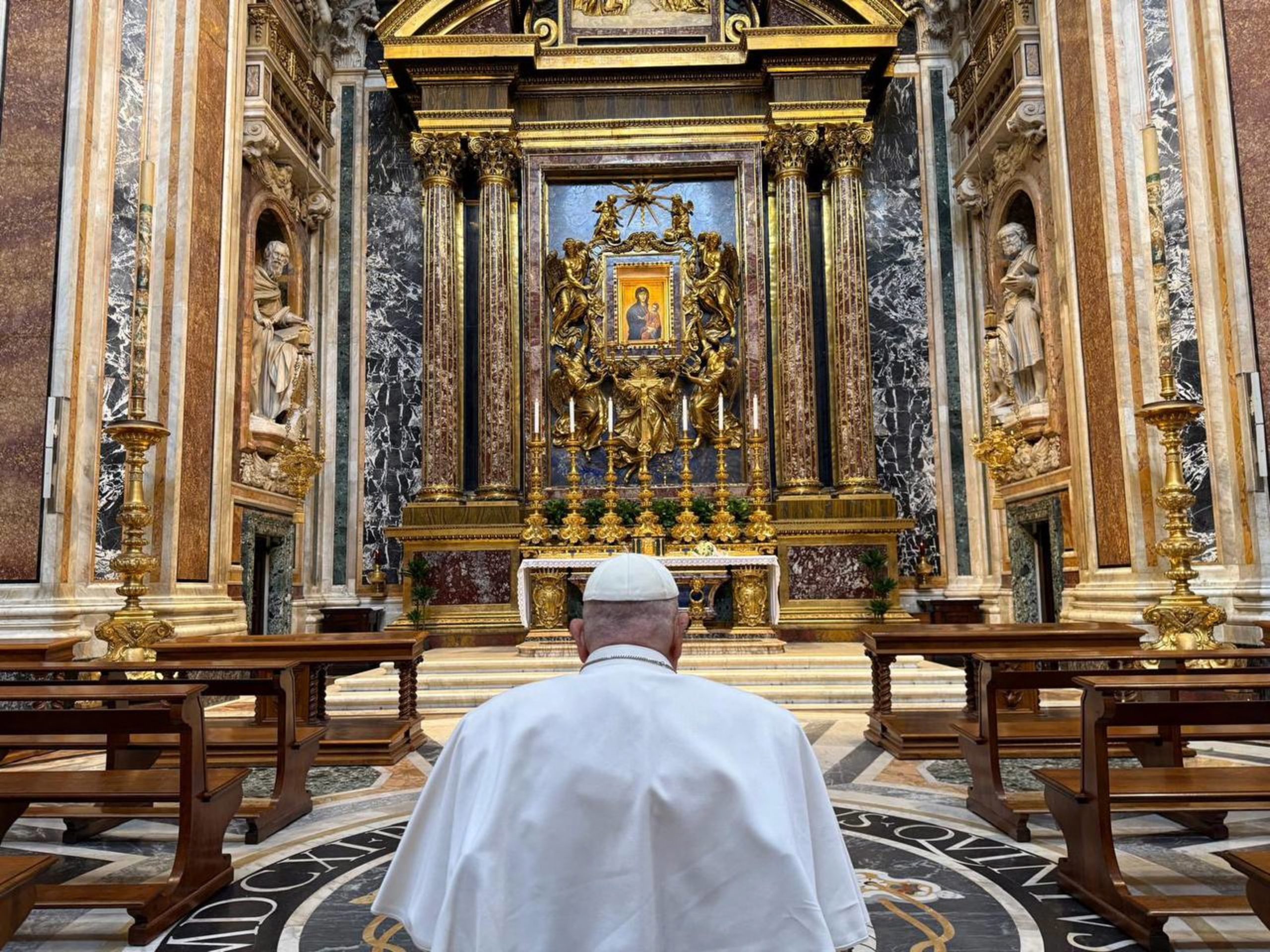
Pope Francis kneels in prayer before the revered Marian icon “Salus Populi Romani” at the Basilica of Santa Maria Maggiore in Rome, April 12, 2025. | Credit: Holy See Press Office

Pope Francis was noted for venerating the icon before and after every apostolic journey, visiting it 126 times in his 12-year pontificate. His tomb, placed near the chapel, was made at the pope’s express request to be buried near the icon.

A project to restore Baroque architecture

According to the basilica’s press release, Paul V, after whom the Pauline chapel is named, commissioned notable artists in 17th-century Rome to decorate the chapel.

A pictorial cycle surrounding the “Salus Populi Romani” icon centers on the Virgin Mary as mother of the Church. Created from 1610–1612, it involved artists Giovanni Baglione, Lodovico Cardi, Guido Reni, and Giuseppe Cesari.

A prominent feature of the cycle is Cardi’s “Assumption of the Virgin.” Here, the Virgin stands atop a naturalistic moon, inspired by telescopic images by renowned astronomer Galileo Galilei in 1610.
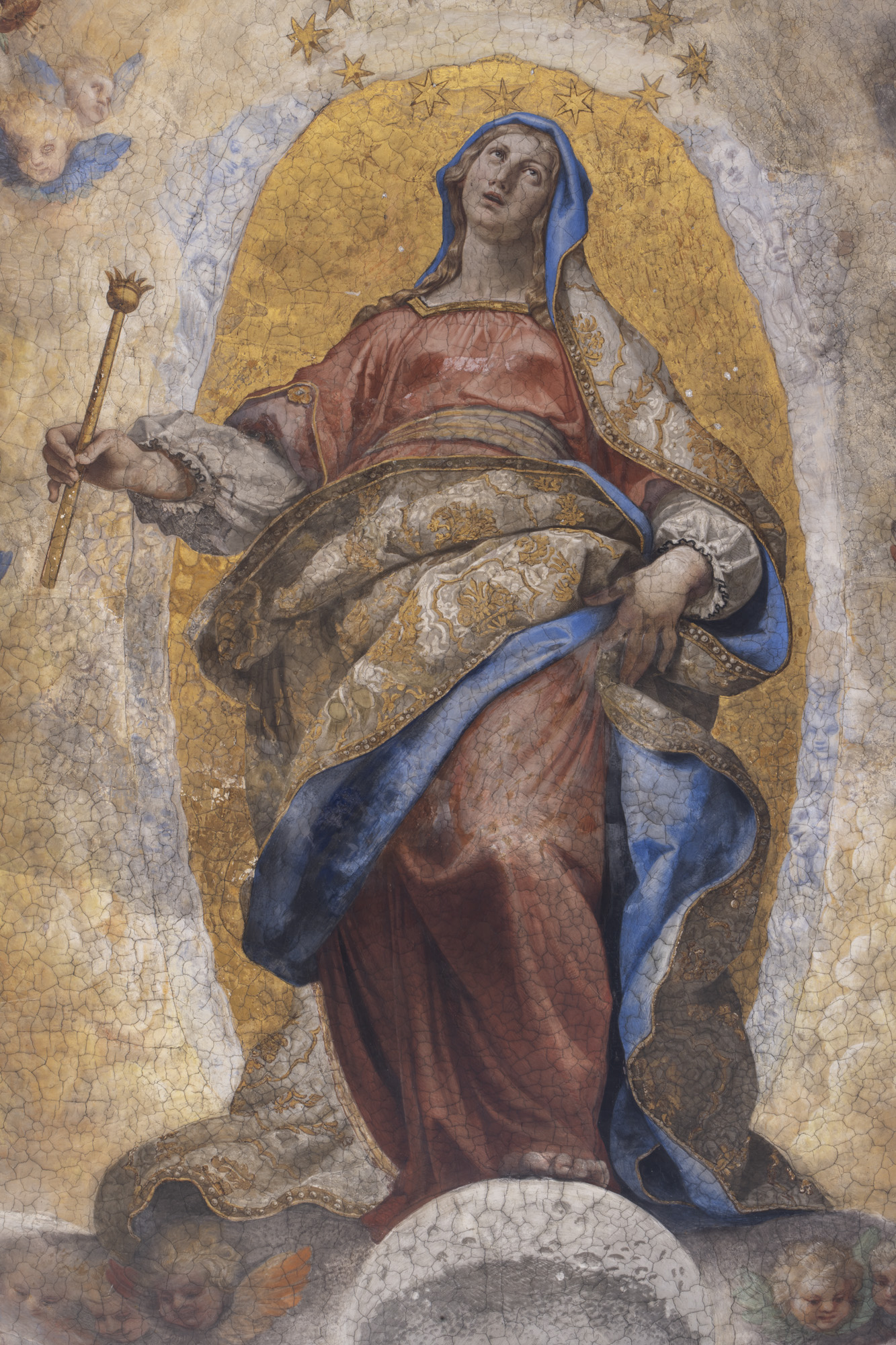
“The Assumption of the Virgin,” created by Lodovico Cardi, is on the ceiling of the Pauline Chapel at the Papal Basilica of St. Mary Major in Rome. | Credit: Photo courtesy of the Papal Basilica of St. Mary Major

The basilica is also undergoing restoration of the “Confessio” chapel beneath the high altar. As a result, the reliquary of the Holy Crib — containing pieces of wood reputed to come from the manger where Christ was born — has been moved to a side chapel in the right aisle for veneration from Oct. 15 to Dec. 24.
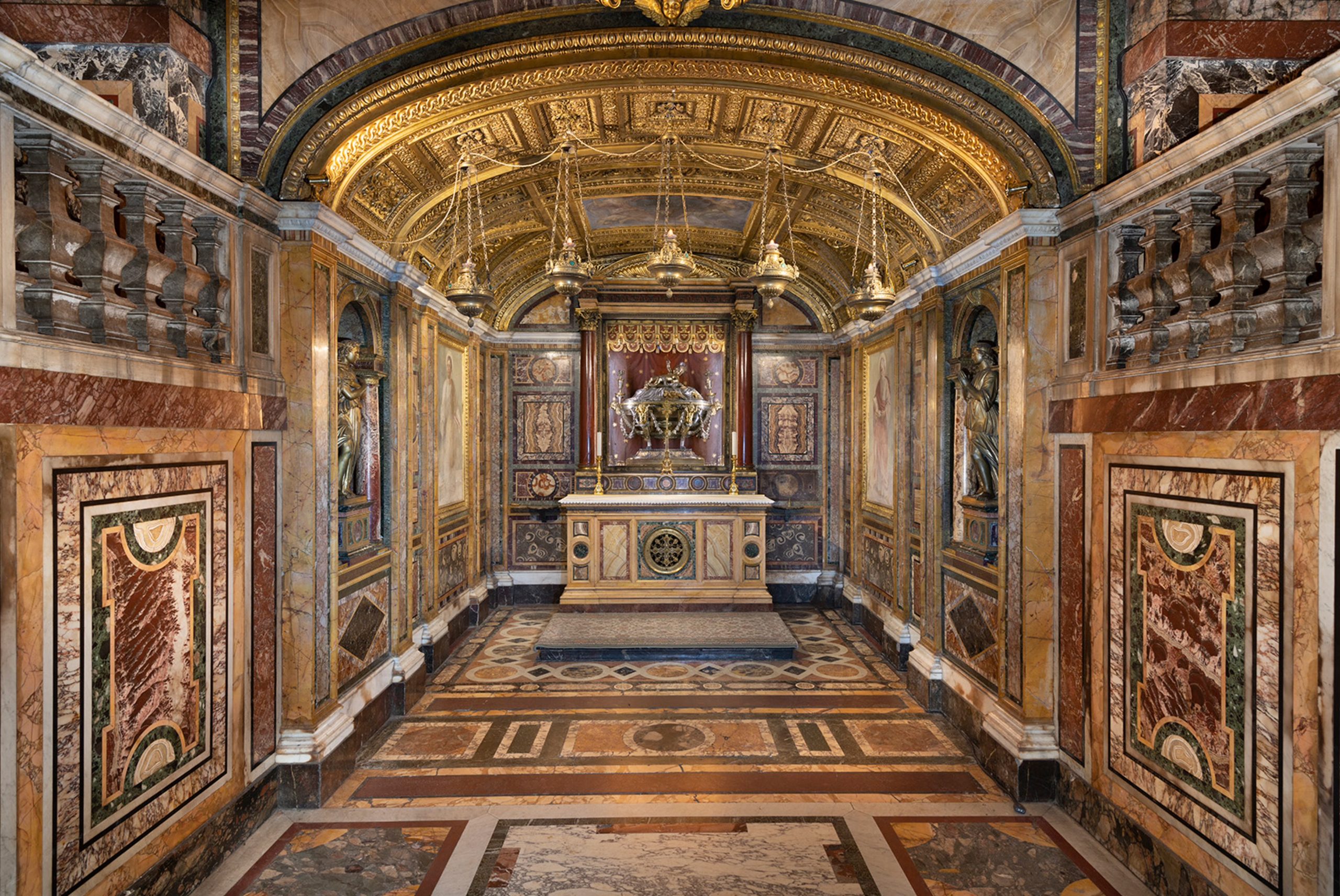
Chapel of the Confessio, which houses a reliquary of the Holy Crib, under the high altar of the Papal Basilica of St. Mary Major in Rome. | Credit: Photo courtesy of the Papal Basilica of St. Mary Major in Rome

Learn more about the Pauline Chapel, the chapel that houses the Salus Populi Romani:

Salus Populi Romani

This article was originally published by EWTN News English.

Receive the most important news from EWTN Vatican via WhatsApp. It has become increasingly difficult to see Catholic news on social media. Subscribe to our free channel today

Share

Would you like to receive the latest updates on the Pope and the Vatican

Receive articles and updates from our EWTN Newsletter.

I agree that EWTN will keep me informed about news, faith stories and how to best support their work. You will never receive e-mails from us that you do not want to receive. You can unsubscribe any time. For more information on how to unsubscribe, our privacy practices, and how we are committed to protecting and respecting your privacy, please review our Privacy Policy.

More news related to this article

This Is Pope Francis’ Prayer Intention For The Month Of April

Pope Francis’ prayer intention for the month of April is for the use of new technologies.

How This Friar Became the Pope’s Personal Preacher

After a remarkable 44 years of preaching done by Raniero Cantalamessa, last December Father Roberto Pasolini was appointed as the new Preacher of the Papal Household.

Pope Leo entrusts his pontificate to Our Lady of Montserrat: May she ‘guide us to Jesus’

After visiting a prison, Pope Leo headed to the Abbey of Montserrat northwest of Barcelona and nestled among

Pope Leo makes surprise visit to children’s Christmas concert at Castel Gandolfo school

Pope Leo XIV enjoyed a special Christmas concert this week dedicated to him by students of the Paul

Winter In War-torn Ukraine

As the winter months bring freezing cold temperatures across war-torn Ukraine, EWTN reporter Colm Flynn visits some of

Pope Leo XIV introduces significant reform to Holy See’s investments

Last week, Pope Leo XIV introduced a significant reform to the financial architecture of the Holy See. With the motu

LIVE
FROM THE VATICAN

Be present live on EWTNVatican.com