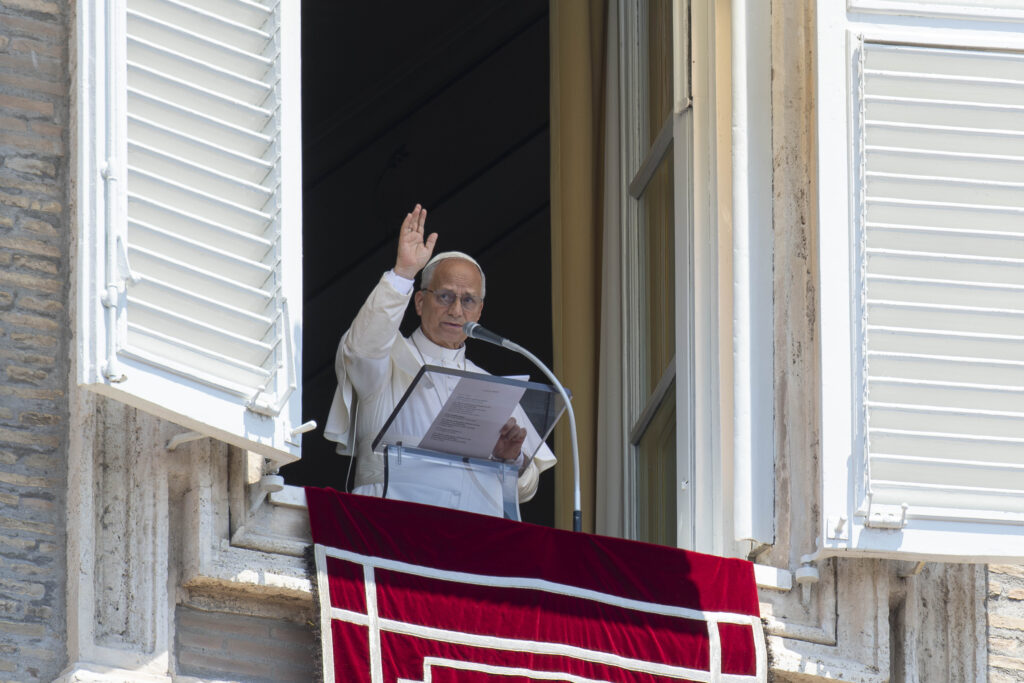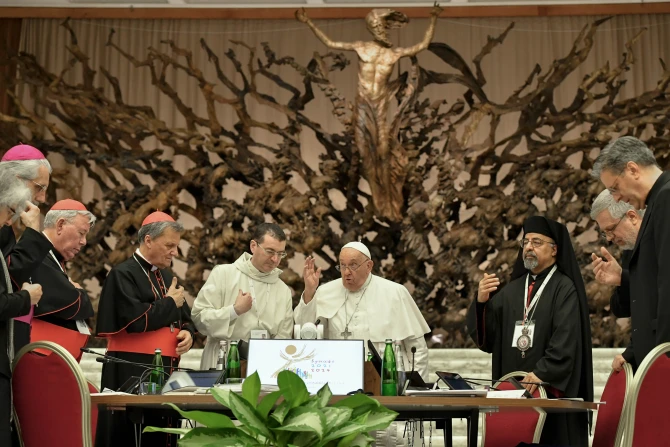
On Saturday, Pope Francis made the unprecedented decision to accept the final document from the Synod of Synodality as authoritative Church teaching.
The 52-page text includes a theological reflection on the nature of synodality, which it says is the fulfillment of the reforms of Vatican II, as well as proposals for how to apply synodality to relationships, structures, and processes within the Catholic Church.
The end goal is to make the Church more effective at evangelization by making it more participatory and inclusive.
Here are answers to the big questions about the Synod on Synodality’s final document:
1. How did Pope Francis make this document magisterial?
Pope Francis immediately approved the final document after synod members voted on it. According to reforms he made in 2018, the Synod on Synodality’s final text is therefore part of his ordinary magisterium.
This decision is a break from previous practice, which usually sees the pope use a synod’s final document as a basis for drafting his own apostolic exhortation on the topic (think Amoris Laetitia after the 2015 Synod on the Family). The fact that a synod body whose membership was 27% non-bishops just produced a magisterial text will certainly leave theologians and canonists with much to talk about.
2. How does the document relate to Vatican II?
The document says that the Synod on Synodality was the product of “putting into practice what the council taught about the Church as mystery and the Church as people of God.”
Therefore, the document says, the synodal process “constitutes an authentic further act of the reception” of Vatican II, “thus reinvigorating its prophetic force for today’s world.”
3. What does the final report say about the role of women in the Church (including so-called “deaconesses”)?
The final text says that women “continue to encounter obstacles” in living out their “charisms, vocation, and roles” in the Church.
The synod calls for women to be accepted into any role currently allowed by canon law, including leadership roles in the Church.
Regarding the question of “women’s access to diaconal ministry,” the text says the question “remains open” and that “discernment needs to continue.” A separate Vatican study group is currently considering that topic, with its final report expected in June 2025.
4. What does the text say about “decentralization?”
The document calls for episcopal conferences to play a greater role in enculturating the faith in their local context and asks for clarification about their current level of doctrinal authority. However, it does emphasize that bishops’ conferences cannot override a local bishop’s authority nor “risk either the unity or the catholicity of the Church.”
The document also calls for more plenary and provincial councils, and for the Vatican to accept these bodies’ conclusions more speedily.
5. Does the text mention LGBTQ inclusion?
While it does condemn the exclusion of others because of “their marital situation, identity, or sexuality,” the text doesn’t use the term “LGBTQ.”
6. What does the final document say about changes in Church decision-making?
The final document calls for a “synodal” reform of canon law, including removing the formula that consultative bodies have “merely a consultative” vote. It calls for the greater participation of lay people in “decision-making processes” and to do so through new synodal structures and institutions.
Church authorities, the document states, may not ignore conclusions reached by consultative, participatory bodies.
7. What does the document say about the “sensus fidei”?
The document describes the “sensus fidei” as the “instinct for truth of the Gospel” received through baptism. It also notes that the people of God cannot err “when they show universal agreement in matters of faith and morals.”
Interestingly, the final document does not include additional language about the need for “authentic discipleship” to maturely exercise the sensus fidei, which was included in last year’s synthesis document and is found in an important Vatican documenton the subject.
8. In what concrete ways might the Church change after the Synod on Synodality?
Depending on how it’s implemented, the synod’s final document could concretely impact everything from how bishops are selected to how governance decisions are made in parishes, dioceses, and the Vatican, with a greater emphasis on widespread consultation. It could also create new synodal bodies, like continental assemblies and a council of Eastern Catholic leaders to advise the pope.
9. Which paragraphs received the most pushback?
Over 27% of delegates voted against continuing to explore the possibility of women deacons.
Thirteen percent voted against the paragraph emphasizing the significance of episcopal conferences, which also appears to bind a bishop to decisions made by his conference.
Twelve percent voted against establishing a study group to look into making liturgical celebrations “more an expression of synodality,” including what may be a reference to lay preaching during the liturgy.
And 11% of delegates opposed the proposal to revise canon law “from a synodal perspective.”
10. One more time: What does synodality mean?
The final document describes synodality as “a path of spiritual renewal and structural reform that enables the Church to be more participatory and missionary, so that it can walk with every man and woman, radiating the light of Christ.”
The model of synodality, the document states, is Mary because she “listens, prays, meditates, dialogues, accompanies, discerns, decides, and acts.”
This article was originally published on Catholic News Agency.