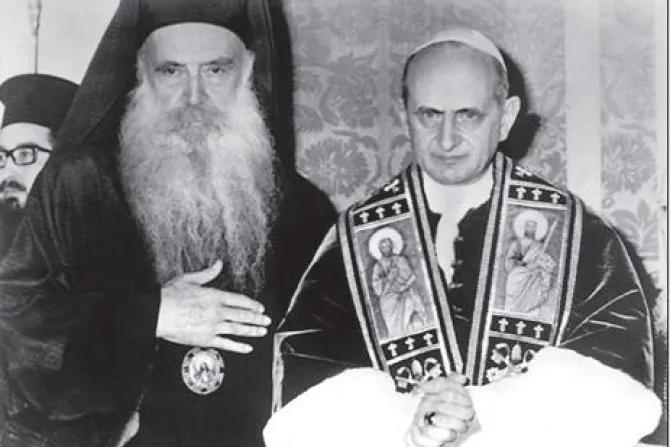
On July 25, 1967, Pope Paul VI set foot on Turkish soil — the first papal visit to the city of Istanbul since it was called Constantinople.
After traveling to Istanbul for a celebration at the Cathedral of the Holy Spirit, the pope visited the Orthodox Patriarchal Church of St. George with the Ecumenical Patriarch, Athenagoras I, Orthodox archbishop of Constantinople, three years after exchanging a kiss of peace together during a pilgrimage and peace tour of the Holy Land. Jerusalem was the only place in the world where the heads of the Eastern and Western churches could meet 910 years after the Church split in 1054.
On the first day of his two-day visit, July 25, Paul VI also met the Armenian patriarch and the leaders of the Muslim and Jewish communities as well as the Turkish authorities, who welcomed his visit in a warm and cordial manner. He also met then-president of the Turkish republic Cevdet Sunay, with whom he discussed problems in the Middle East and Cyprus. Sunay underlined the Holy Father’s efforts in favor of peace.
The following day, after celebrating Mass at the Basilica of St. Anthony in Istanbul, the pope’s journey continued to Smyrna (Izmir), where he first met with authorities, the local population, and the faithful before moving on to Ephesus, where he visited the house of the Virgin Mary, addressing the faithful of Ephesus as well as representatives of the Eastern Orthodox churches. It is noteworthy that Mary is mentioned some 50 times in the Koran and is also venerated by Muslims.
A celebration at St. John’s Cathedral in Izmir brought the official trip to a close. The only blemish on the trip was Paul VI’s prayer at the Hagia Sophia museum — the first official prayer there by a Christian leader since 1453. The Muslim world was taken aback, and the act was described as a “gaffe.”
Despite that, the visit truly marked the renewal of ecumenical relations between the Catholic world and the Orthodox Patriarchate of Constantinople — a fundamental step toward unity between the two churches.
The “Charter of the Unity of the Churches of the East and West,” a basic ecumenical document, was read out in Istanbul’s Holy Spirit Cathedral on July 25 in the presence of the pope and Patriarch Athenagoras.
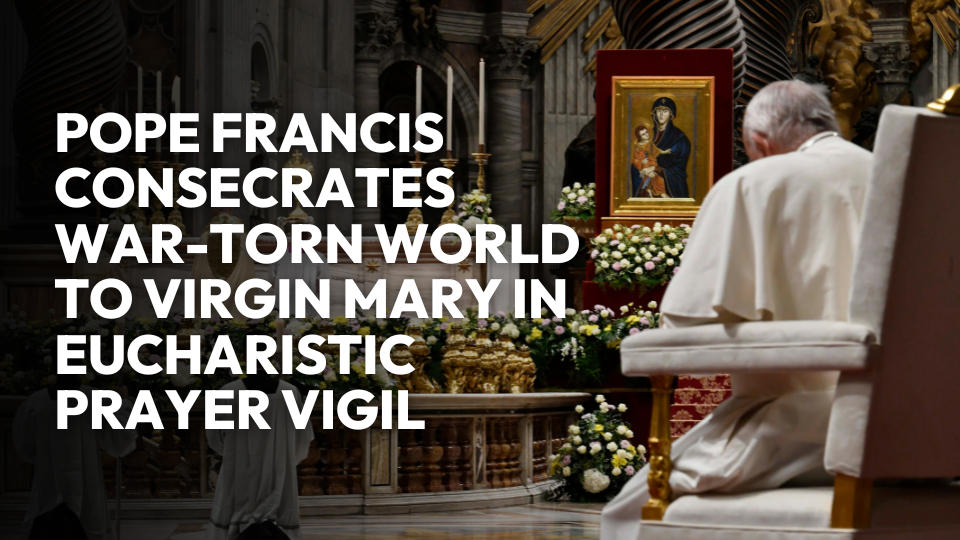
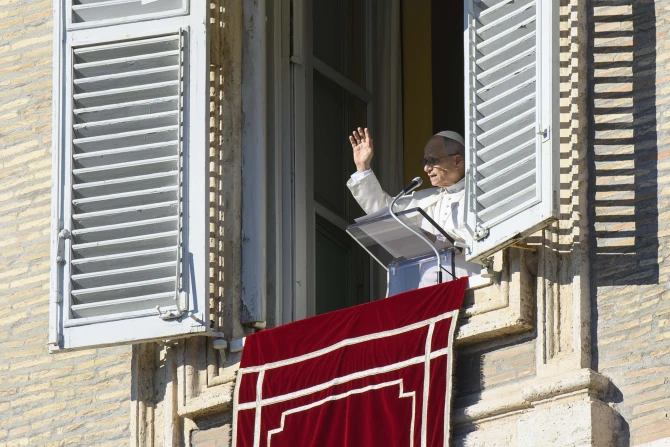
Now, decades later, Pope Francis and Patriarch Bartholomew I, the archbishop of Constantinople and ecumenical patriarch, have been working in a committed fashion toward unity, as evidenced by their numerous meetings since 2013 (in Jerusalem and Rome), followed by the patriarch’s invitation to Francis to attend the feast of St. Andrew in Istanbul in 2014.
In addition, on the occasion of the 1,700th anniversary of the Ecumenical Council of Nicaea, which will be celebrated in 2025, Bartholomew I has once again invited Francis to the historic celebration. At the end of June, Francis declared: “This is a trip I wish to make with all my heart.”
This story was first published by ACI Mena, CNA’s Arabic-language news partner, and has been translated and adapted by CNA.