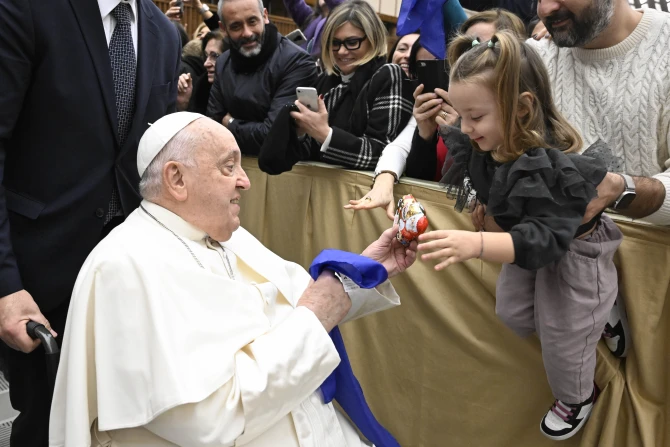
Pope Francis during his Wednesday general audience invoked the intercession of St. Stanislaus, patron saint of Poland, for peace in Ukraine and Israel.
Addressing Polish pilgrims in St. Peter’s Square at the Vatican, the pope said: “Today you celebrate the solemnity of St. Stanislaus, bishop and martyr, patron of your homeland.”
“St. John Paul II wrote of him,” Francis went on, “that from high in heaven, he shared in the sufferings and hopes of your nation, sustaining its survival, especially during the Second World War.”
Francis prayed that the intercession of St. Stanislaus “obtain, even today, the gift of peace in Europe and throughout the world, especially in Ukraine and the Middle East.”
What does Poland have to do with these wars?
This comes as the wars in Ukraine and Israel continue to drag on, currently with no end in sight. With both wars raging in highly populated areas, civilians, including children, have had to suffer the effects of bombings, drone strikes, and starvation.
The Polish people, meanwhile, have been instrumental in bringing humanitarian aid to the people of Ukraine as well as in helping to feed, clothe, and shelter the nearly 20 million Ukrainian refugees who have crossed the Polish border since the start of the war.
Francis has previously praised Poland as an example of charity in response to tragedies for their efforts to help the Ukrainian people.
“You were the first to support Ukraine, opening your borders, your hearts, and the doors of your homes to Ukrainians fleeing the war,” the pope told Polish pilgrims in a 2022 audience. “You are generously offering them everything they need to live in dignity, despite the current tragic situation. I am deeply grateful to you, and I bless you!”
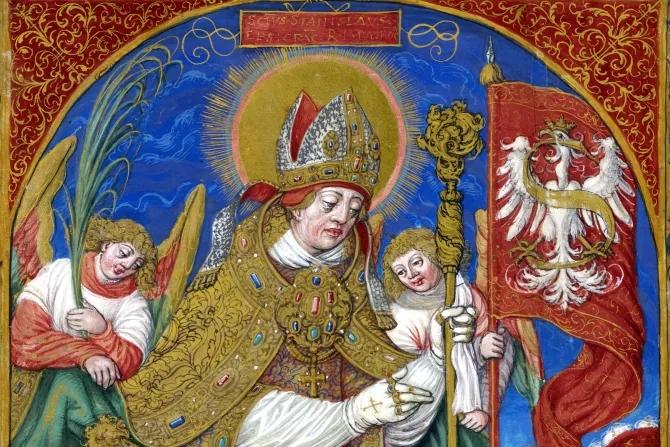
Why St. Stanislaus?
Poland, a country that is known for its religious fervor (it is 85% Roman Catholic), has a deep devotion to St. Stanislaus.
St. Stanislaus was born Stanislaus Szczepanowski near Krakow in 1030. After his parents’ deaths, Stanislaus gave away his wealth to the poor and became a priest.
As a priest and then bishop of Krakow, Stanislaus became known as a vigorous preacher against immorality at all levels of society. He was an early spreader of the faith in Poland, encouraging Polish King Boleslaus to establish more monasteries throughout the country.
Eventually, he incurred the wrath of Boleslaus for speaking out against his sexual immorality and occasional cruelty toward his people. Enraged, the king is said to have personally killed Stanislaus, striking him down while he was celebrating Mass. Stanislaus was proclaimed a martyr and canonized in 1253, becoming the first native-born Pole to be made a saint.
Before becoming pope, then-Archbishop Karol Wojtyla filled the “See of Stanislaus” as head of the Archdiocese of Krakow. St. John Paul II often praised Stanislaus and hailed him as a “champion of true freedom” and a saint for “turbulent times.”
“There is a deep spiritual bond between the figure of this great patron of Poland and the multitude of saints and blesseds who made an immense contribution of goodness and holiness in the history of our homeland,” John Paul II said.
In a letter to the people of the Archdiocese of Krakow on the 750th anniversary of Stanislaus’ canonization, John Paul II said: “At the dawn of our history God, Father of peoples and nations, showed us through this holy patron that the moral order, respect for the law of God and the just rights of every person, are fundamental conditions for the existence and development of every society.”
Today, Stanislaus continues to be an inspiration of bravery in pursuit of human rights and service to God. His burial site, within the Archcathedral Basilica of Saint Stanislaus and Saint Wenceslaus in Krakow, is a popular pilgrimage site and a symbol of Polish identity.
This article was originally published on Catholic News Agency.