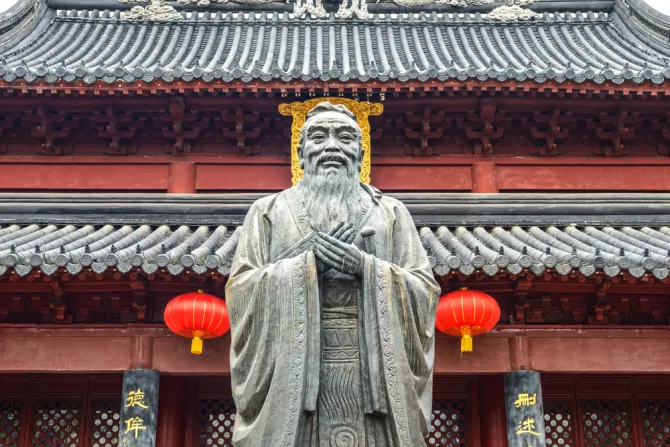
The Vatican sponsored a dialogue in Taiwan this week as the Catholic Church prepares to release official guidelines for engagement with Confucianism, one of the most influential religious philosophies in the history of China.
Father Paulin Kubuya, the undersecretary for the Vatican Dicastery for Interreligious Dialogue, traveled to New Taipei City for the meeting at Fu Jen Catholic University. He told CNA in an interview on March 12 upon his return to Rome that the guidelines could help Catholics in East Asia to navigate living out the faith amid their cultural traditions.
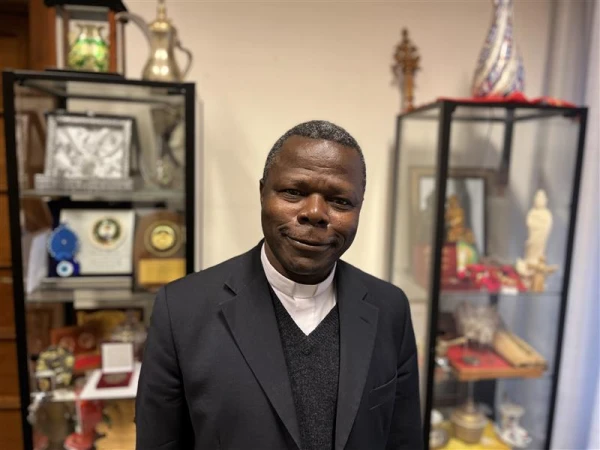
Kubuya is from the Democratic Republic of Congo and is fluent in Chinese after serving as a Xaverian missionary in Taiwan. During his time as a missionary, he saw how converts to Catholicism wrestled with what to do with the traditions and rituals that they grew up with, such as veneration of one’s ancestors.
“Confucianism, until the 19th century, provided Chinese, Korean, Japanese [societies] with guidelines on how to conduct themselves,” the priest explained, adding that “The Analects of Confucius” still informs basic formation and education in Taiwan.
“For Asian Christians … this dialogue, these guidelines will be helpful, because it will enable them to dialogue with themselves,” he said.
The Vatican is drafting the guidelines with the goal of providing a valuable resource for individuals, organizations, and communities both within and beyond the Catholic Church that seek to engage in dialogue with followers of Confucianism, according to the dicastery.
The workshop in Taiwan was the fruit of more than two years of preparation. The Vatican’s interreligious dialogue office invited experts in Confucianism from around the world to share their insights in a series of online meetings leading up to the in-person meeting in Taiwan.
More work and study are required, according to Kubuya, who expects the guidelines to be finalized and published sometime next year.
“Hopefully by engaging Confucianism in a dialogue … a Christian coming from Asia and who is coming from that background, he will know the position of the Church, he will know how he can put together his cultural tradition and the faith that he has received and live in peace with it,” Kubuya said.
The Vatican’s current dialogue with Confucianism builds upon the work of pioneering Catholic missionaries in Asia in centuries past, like Venerable Matteo Ricci, the 17th-century Jesuit known for introducing Christianity to China’s imperial Ming Dynasty.
Ricci saw in Confucianism “a high culture” and engaged with the literati in the heart of the Imperial City of Beijing.
Later missionaries in China took issue with Confucian practices, particularly in what they saw as ancestor worship, giving rise to the Chinese Rites Controversy, explained Kubuya, who is the author of the book “Meaning and Controversy Within Chinese Ancestor Religion.”
The Vatican intervened in the matter on numerous occasions in the 17th and 18th centuries with Clement XI and Benedict XIV both banning Chinese rites. Two centuries later, Pius XII issued a decree in 1939 allowing Chinese Catholics to observe ancestral rites.
“In Taiwan, the Catholic community is tiny. It’s a minority community, but I always say that they are few, but very ripe because they are well determined and their Christian identity is very strong,” Kubuya said.
African priests witnessing to the Gospel in Asia
As a Xaverian missionary priest, Kubuya is aware that he is part of the continuation of the Church’s missionary legacy in Asia.
The Xaverian order was founded by St. Guido Maria Conforti, a 19th-century Italian missionary who was inspired to carry on the missionary work of St. Francis Xavier, the 16th-Jesuit missionary in Asia who died before realizing his dream of evangelizing China.
Kubuya recalls that he was one of 12 Congolese priests serving as missionaries in Taiwan before he was called upon to serve in the Roman Curia.
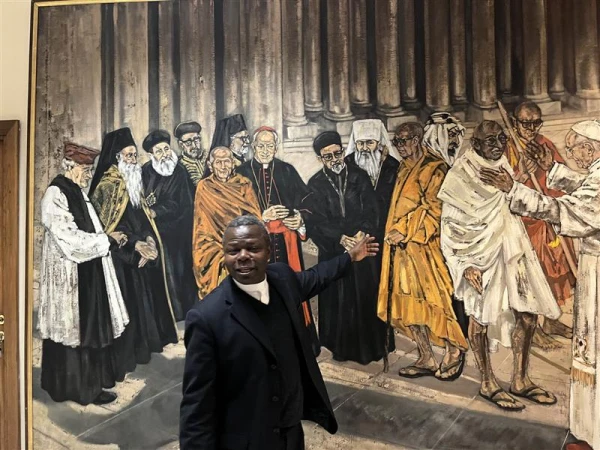
In Taiwan, “the idea that many Buddhists, Taoists, Confucians have is they think that Christian priests, missionaries are all foreigners, meaning Westerners, Americans, or Europeans, so by seeing us from Africa, they started understanding that actually the Church is very complex, is rich, and does not exclude. This was my experience,” he said.
“I think that our presence [in Asia] displays the catholicity of the Church, that the Church will work beyond colors, beyond languages,” he said. “That the Catholic Church is universal because we are coming from everywhere.”
Vatican’s ongoing dialogue with Taoism
The dialogue on Confucianism in New Taipei City, titled “Christians Fostering Dialogue with Confucians: Guidelines and Prospects,” was one of two workshops in Asia sponsored by the Vatican’s Dicastery for Interreligious Dialogue this week.
A second event on dialogue with Taoism is taking place in Hong Kong March 11–13, organized by the Vatican dicastery and titled “Cultivating a Harmonious Society through Interreligious Dialogue.”
Taoism is different from Confucianism in that it involves the worship of deities. The Vatican’s Taoism colloquium in Hong Kong focused on the themes of “Christian and Taoist Scriptural Foundations for Cultivating a Harmonious Society,” “Cultivating Harmony Through Worship and Liturgy,” “Tao/the Way and De/Virtue in Dialogue and Practice,” “Holiness in Taoism and Christianity,” and “Transmitting Religious Beliefs and Values in a Globalized World.”
Cardinal Stephen Chow, the bishop of Hong Kong, told Vatican News that he hopes the recognition of a shared spirit of service between Christianity and Taoism will help “the value and meaning of religion [to be] better appreciated in China.”
“The vision of the Taoist religion is to foster a movement of the world toward peace and unity, where humanity and the Way — we would say the ‘Logos’ — are connected,” the Jesuit cardinal said.
Christianity and Taoism “share the values of mercy, simplicity, and not striving for worldly achievements,” Chow said.