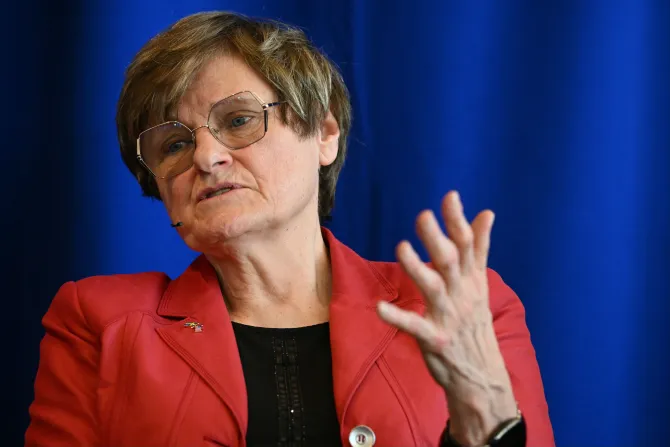
A Nobel-prize winning biochemist and researcher who helped develop the mRNA technology used to create the Pfizer and Moderna COVID-19 vaccines — Katalin Karikó — is one of the newest members of the Vatican’s Pontifical Academy for Life.
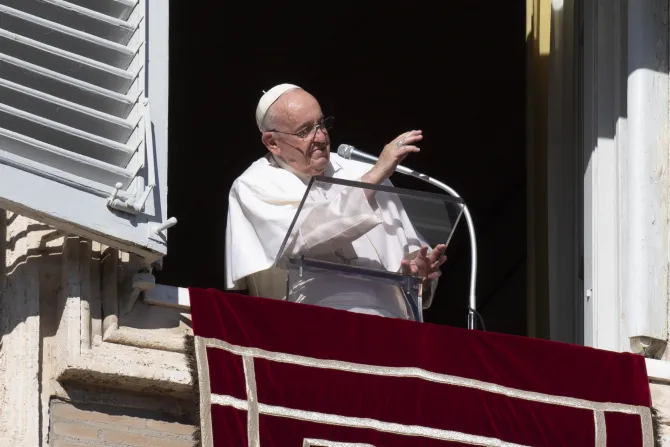
Pope Francis announced the appointment of Karikó, who lectures at the University of Szeged in Hungary, in a news release on Feb. 10. The pontifical academy, which St. John Paul II established in 1994, studies and provides input on the use of biomedicine in the protection of life.
Karikó, who was born in Szolnok, Hungary, received the 2023 Nobel Prize in Physiology or Medicine for her work to develop mRNA technology. The Nobel Assembly at the Karolinska Institute issued a news release saying she and co-researcher Drew Weissman received the award “for their discoveries concerning nucleoside base modifications that enabled the development of effective mRNA vaccines against COVID-19.”
“Through their groundbreaking findings, which have fundamentally changed our understanding of how mRNA interacts with our immune system, the laureates contributed to the unprecedented rate of vaccine development during one of the greatest threats to human health in modern times,” the news release noted.
She thanked the pontiff in a post on X, formerly known as Twitter.
“I am deeply honored that Pope [Francis] appointed me to be [a] member of the Pontifical Academy for Life,” Karikó said. “Last year, I gave a lecture in the Vatican on emerging biotechnologies. It was exciting to meet Pope [Francis] [in] a private audience with my family [and] he blessed my grandchildren.”
In a video message following her appointment, Karikó commented on her mRNA work.
“Together with my colleagues, we built upon discoveries of scientists who came before us and we created optimal RNA suitable for therapy,” she said. “Never in a million years [would I] have imagined that it would have been used to create a vaccine to combat [a] global pandemic and eventually save millions of lives.”
Karikó also noted in her video message, which was posted on Feb. 11, that it was the International Day of Women and Girls in Science.
“I also think about all the young girls who may become inspired and want to be a scientist,” she said. “I would like to encourage them [to pursue those aspirations] and make better the world around them.”
Karikó, like some of the pope’s other appointments to the Pontifical Academy for Life, is not Catholic herself. When John Paul II established the academy through a motu proprio in February 1994, the then-pontiff wrote that he would appoint individuals who represent various branches of the biomedical sciences “that are most closely related to problems concerning the promotion and protection of life.”
“[The academy] will have the specific task to study and provide information and training about the principal problems of law and biomedicine pertaining to the promotion and protection of life, especially in the direct relationship they have with Christian morality and the directives of the Church’s magisterium,” John Paul wrote.