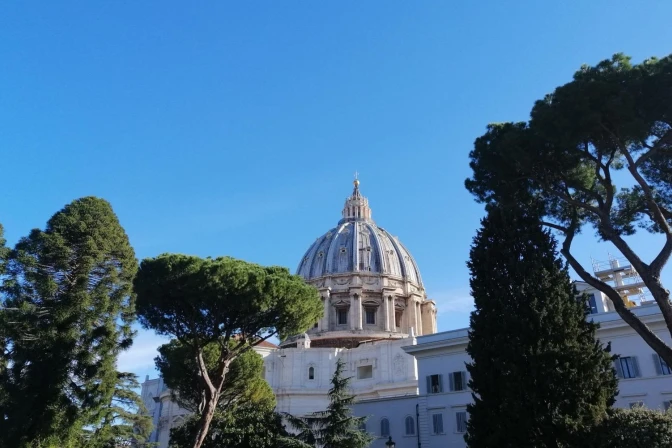
The Basilicas of Saints Peter and Paul, esteemed as trophies of the martyrdom of these apostles, were erected over their tombs. Their dedication is commemorated every November 18th, a day celebrated in the Roman Missal as a symbol of the unity and apostolicity of the Church of Rome. These basilicas, both solemn and rich in art, aptly metaphorize the apostles Peter and Paul, embodying the regality of the Roman Church. This regality is immediately perceived by visitors and pilgrims upon beholding St. Peter’s Basilica, with its vast square and Gian Lorenzo Bernini’s famous colonnade. Entering this space, one feels a tender, austere, delicate, and eloquent embrace – a welcoming gesture from the Mother Church to every child. The entire architectural complex of the basilica, known as the Reverenda Fabrica Sancti Petri, represents the immense creative effort that gave life to St. Peter’s sublime beauty.
The history of the basilica is as monumental as its structure, a tapestry of experiences that intertwine in the church’s grand narrative and the succession of St. Peter’s successors. Approximately thirty-one pontiffs contributed to the works of the Reverenda Fabrica Sancti Petri, each adding their unique touch to this magnificent project.
The construction of the new St. Peter’s Basilica began on April 18, 1506, under Pope Julius II, with Donato Bramante as the overseeing architect. Bramante’s initial plan, though subject to various modifications, envisioned a square layout with a Greek cross, leading to four protruding apses crowned by a hemispherical dome. Bramante’s tenure as the architect lasted until his death in 1514, the same year as Pope Julius II’s passing. Successive architects, including Raphael Sanzio and Antonio da Sangallo the Younger, each proposed different designs, contributing to the evolving vision of the basilica. However, it was Michelangelo Buonarroti, appointed as the architect in January 1547, whose influence was pivotal. Michelangelo’s design, referring back to Bramante and Raphael’s plans, culminated in the grand dome completed by his student Giacomo Della Porta in 1590.
The Creation and Symbolism of the Baldacchino
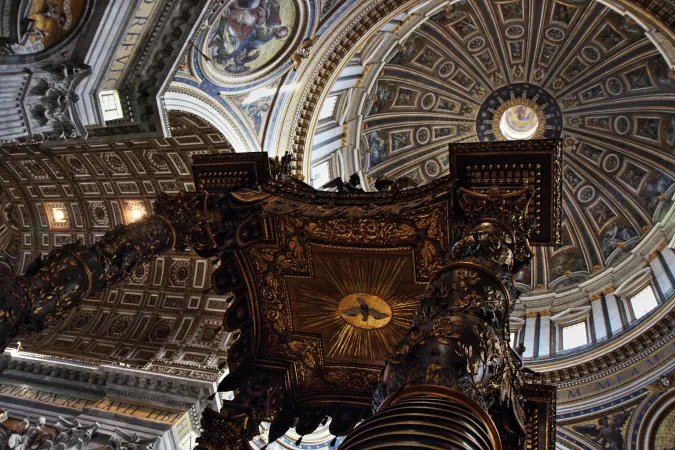
Inside the basilica lies Bernini’s Baldacchino, a work that captivates all who enter. Linked to the apocryphal tale of plundering bronze from the Pantheon for its construction, the Baldacchino is the centerpiece of the basilica’s interior. Commissioned by Pope Urban VIII, Bernini began the Baldacchino in 1624, completing it in 1633. Standing nearly 30 meters high, it covers the main altar under Buonarroti’s dome. Adorned with twisted bronze columns, festive cherubs, laurel branches, lizards, and bees, each element symbolizes different aspects such as poetry, resurrection, and the Barberini family who commissioned it. Bernini, along with his assistant Francesco Borromini and numerous other artists, spent a decade completing this iconic structure.
The Baldacchino’s inauguration in 1633 marked the culmination of a project that not only showcases artistic genius but also reflects the enduring spiritual and historical significance of the Basilicas of Saints Peter and Paul in the heart of Rome.