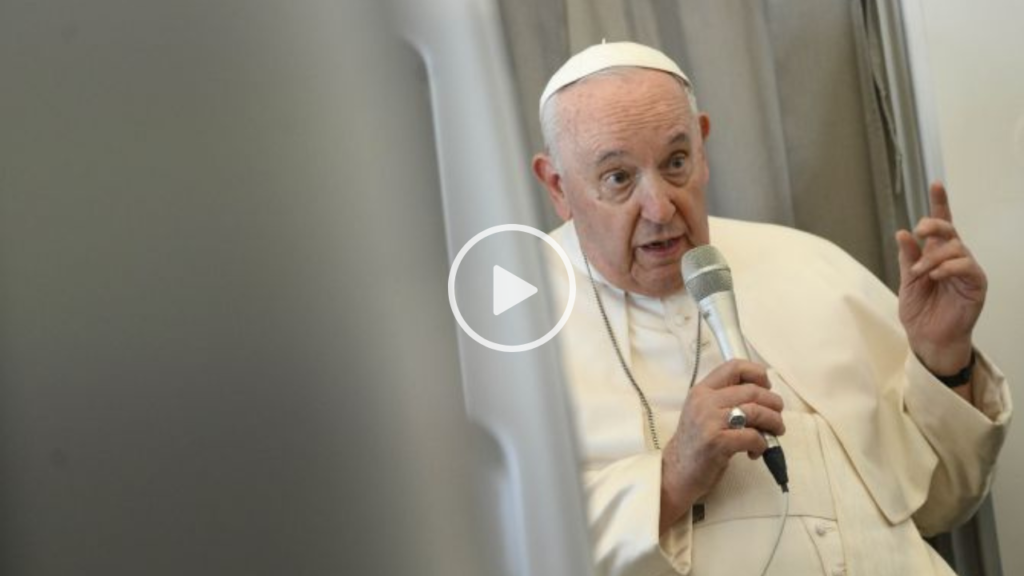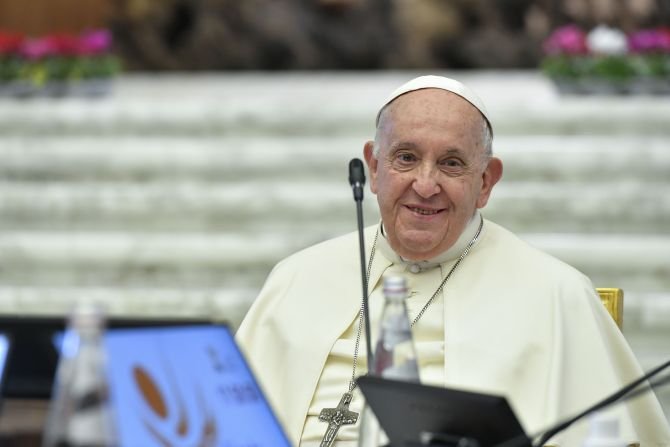
Pope Francis, who is known as “the pope of the peripheries,” has suggested the possibility of traveling to somewhere no pope has gone before — the South Pole.
In a new interview published on Oct. 17, the pope said that he plans to visit his native Argentina, adding: “Somebody said that if I go to Argentina, I should stop at Rio Gallegos, then head to the South Pole, land in Melbourne, and visit New Zealand.”
“It would be a rather long journey,” he joked.
The 86-year-old pope does not currently have any international trips on his official schedule, but he recently made a 4,000-mile journey to Mongolia and visited the French city of Marseille.
Pope Francis would not be the first religious leader to visit Antarctica. Russian Orthodox Patriarch Kirill visited an Antarctic research station — and walked with penguins — in 2016 as part of a trip to Latin America, which included a historic meeting with Pope Francis in Cuba.
Antarctica is home to a handful of Catholic chapels, mostly within Argentina’s territorial claims on the continent. Argentine Jesuit Father Felipe Lleida offered the first Catholic Mass in Antarctica on Feb. 20, 1946, in the Stella Maris chapel of Argentina’s Orcadas Antarctic Base.
After the Mass, the priest sent a telegram to Pope Pius XII: “First Mass celebrated. Cross erected. Cult of Virgin Mary established. Antarctic Continent, Orkney Islands, Republic of Argentina. Father Lérida, Jesuit, Buenos Aires, requests blessing.”
Priests of Argentina’s military bishopric continue to minister to researchers who work on the globe’s southernmost continent. Last week, children received their first sacrament of Communion on the Esperanza Base, one of two civilian settlements in Antarctica.
Australia holds the largest Antarctic territory among the seven sovereign states with territorial claims on the continent, including Norway and New Zealand.
In the interview with Argentina’s national news agency, Télam, Pope Francis also expressed an interest to visit Oceania.
“When it comes to more distant countries, I still haven’t visited Papua New Guinea,” he said.
Papua New Guinea is an island country north of Australia and shares a land border with Indonesia. Pope John Paul II became the first pope to visit Papua New Guinea in 1984.
In response to the pope’s comment on the possibility of a papal visit to Australia and other nations of Oceania, Archbishop Anthony Fisher of Sydney told CNA that the trip the pope described from Argentina to the South Pole and then on to Australia would be quite the trip.
“It’s very exciting news for Australians,” he said. “[Pope Francis] is not very mobile at the moment, but who knows? He’s a very determined man.”
This article was originally published on CNA.