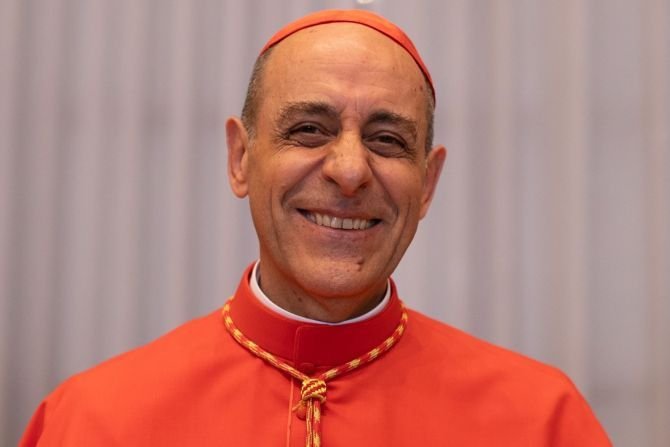
In 1703, precisely 320 years ago, Carlo Tommaso Maillard de Tournon, who was dispatched directly by Pope Clement XI, arrived in India after a two-year journey that would lead him to China as the first papal legate in the country. Prior to his departure, he addressed the issue of the Malabar rites. This situation bears some resemblance to contemporary events, where Pope Francis recently dispatched a Greek Catholic archbishop as a commissioner to India.
De Tournon’s voyage to China, which tragically ends with his imprisonment in Macao, where he passed away at the age of 41 – following his elevation to cardinal by the Pope – is recounted in a recent book by Rui Zhang, a young Chinese scholar. Zhang, who teaches history in Shanghai and has lived in Italy for several years, collaborated with the Pontifical Urban University. The book is titled “The Mission of the First Papal Legate Maillard de Tournon: The Origin of Relations between the Holy See and China (1622 – 1742)” and is published by the Urbaniana University Press.
The book, encompassing an extensive historical framework and drawing from diverse sources, adeptly contextualizes the mission of the papal legate. This mission originated while the Jesuits were present in China, operating within the Beijing court. Concurrently, the Franciscans were also active, with the bishop of Beijing hailing from their order. However, the missionaries themselves occasionally appear to be entangled in a web of national and nationalist issues. The Jesuits were divided between the French and the Portuguese, while the mendicant orders advocated an alternative approach to spreading the Gospel. Meanwhile, various nations – namely France and Portugal – sought to carry out distinct national missions, with Portugal even acquiring a padroado from the Holy See.
Amidst these complexities, Clement XI selected the young, yet physically frail, de Tournon as his legate. Coming from a noble background, possessing diplomatic acumen, and radiating an appealing human touch, de Tournon was ordained a bishop with the title of Patriarch of Antioch. He was subsequently sent to China as the Pope’s special emissary.
The mission, deemed dramatic by many due to its tragic outcome, bears multifaceted dimensions. The book adeptly reconstructs the feelings of envy and positions adopted by active religious organizations in China and, in fact, these groups, in defending their positions, inadvertently hindered Maillard’s challenging mission. De Tournon, at times, appears heedless to requests, particularly when he chose to conduct the funeral of a member of his entourage using liturgical vestments, diverging from Chinese traditions and surpassing even the compromise reached by the missionary fathers regarding the rite.
Another facet concerns the gifts that Emperor Kangxi, known for his wisdom, intended to send to the Pope. Regrettably, these gifts were lost at sea along with two Jesuits entrusted with their delivery. The Jesuits had embarked on separate ships due to passport issues. The delivery of gifts had been deferred twice due to the rumors surrounding the legate’s mission.
This scenario raises the significant theme of the contemporary contact between the Holy See and Beijing. A profound cultural misunderstanding and a wholly distinct perspective on matters have persisted over centuries, resulting in mutual incomprehension. This underscores the substantial gap between the two worlds, exceeding the reach of diplomatic resolution.
Certainly, the book presents diverse viewpoints, striving to harmonize sources despite their diversity. It’s crucial, however, to bear in mind the challenges encountered during the mission in China, which since the 18th century has posed both challenges and rewards for successive Popes.
Zhang consolidates primary sources, including the Acta Pekinensia by Jesuit Kilian Stumpf, alongside numerous manuscripts and documents amassed by Gian Giacomo Fatinelli, de Tournon’s agent and representative in Rome. These materials are housed at the Casanatense Library within the Dominican convent of Santa Maria sopra Minerva.
Nevertheless, Zhang specifies his inclination towards Tournon’s perspective, the central figure of the volume, who experienced and grappled with conflicts among the missionaries firsthand. De Tournon spent his final three years imprisoned in Macao, expelled from China, and died there in 1710 at the age of 41. His demise was marked by profound humiliation and prostration, despite having received the cardinal’s biretta from the Pope as recognition of his loyalty.
This prompts a natural inquiry: which perspective holds greater validity? Is it the youthful legate’s perspective, motivated by his sacred commitment to fulfill the mission, or the practical view of problem management?
Furthermore, the dialogue between Emperor Kangxi and de Tournon unveils a passage where the Emperor deliberates on the responsibility for occurrences within China, including the activities of missionaries; this contrasts with the Pope’s universal religious jurisdiction. The debate also touches upon the significance of Chinese customs and the consequences of internal divisions within the Church.