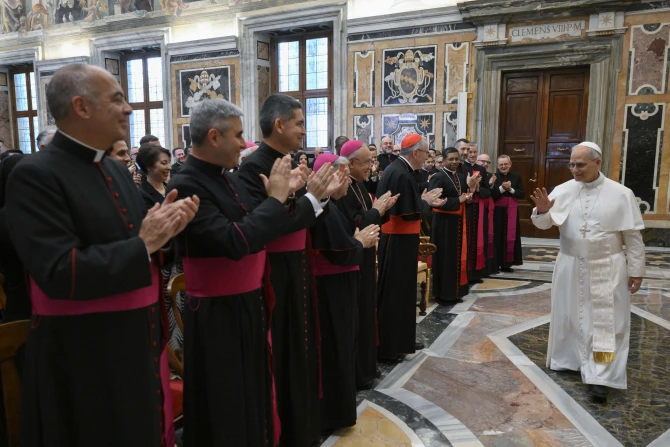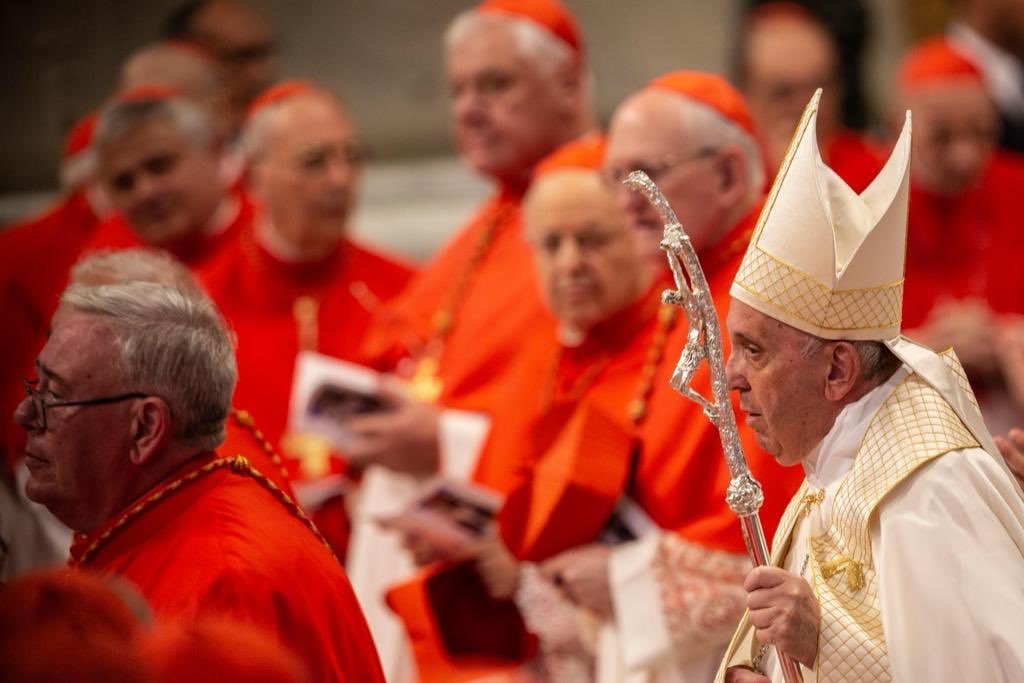
Pope Francis is a surprising Pontiff in his choices, but nonetheless methodical in terms of consistory timings: the Pope, in fact, has often conferred the cardinal’s red hat on bishops of non-traditionally cardinal seats but has wanted to celebrate one consistory per year, except for the break in 2021. He has presided over eight of them, creating a total of 121 cardinals, of whom 95 were electors at the time of their appointment, coming from 56 different nations.
Pope Francis’ first consistory dates back to February 22, 2014, 11 months after his election to the throne of Peter. The Pope creates 19 cardinals, 16 of whom are electors. Among them are Pietro Parolin, Secretary of State; Gherard Mueller, Prefect of the Congregation for the Doctrine of the Faith; Mario Aurelio Poli, Metropolitan Archbishop of Buenos Aires and immediate successor of Cardinal Jorge Mario Bergoglio; Gualtiero Bassetti, Metropolitan Archbishop of Perugia-Città della Pieve who would become President of the Italian Episcopal Conference three years later, and Haitian Chibly Langlois, Bishop of Les Cayes.
On February 14, 2015, Francis celebrates his second consistory, distributing the cardinal’s red hat to 20 new cardinals, 15 of whom are electors. The only Curial member is Dominique Mamberti, Prefect of the Supreme Tribunal of the Apostolic Signatura. The list also includes Burmese Charles Maung Bo, Metropolitan Archbishop of Yangon; Francesco Montenegro, Metropolitan Archbishop of Agrigento, whose territory includes the island of Lampedusa, which is a destination for hundreds of migrants crossing the Mediterranean, and the Bishop of Tonga Soane Patiti Paini Mafi.
The third consistory takes place at the conclusion of the Jubilee of Mercy: it is November 19, 2016, and Pope Francis creates 17 new cardinals, 13 of whom are electors. Among them are the Apostolic Nuncio in Syria Mario Zenari; Dieudonnè Nzapalainga, Metropolitan Archbishop of Bangui; Carlos Aguiar Retes, then Metropolitan Archbishop of Tlalnepantla; the Redemptorist Joseph William Tobin, Metropolitan Archbishop-elect of Newark, and the octogenarian Ernst Simoni, Albanian priest and martyr of the communist regime.
On June 28, 2017, the Pope presides over the fourth consistory, creating five cardinals, all electors. Among them are Anders Arborelius, Bishop of Stockholm and the first cardinal from Scandinavia, and Gregorio Rosa Chavez, Auxiliary Bishop of San Salvador and a close collaborator of Monsignor Oscar Romero.Exactly one year later, on June 28, 2018, Pope Francis proceeded with the fifth consistory, creating 14 Cardinals, of whom 11 were electors. Among those appointed to the Sacred College were Angelo De Donatis, Vicar General of His Holiness for the Diocese of Rome; Konrad Krajewski, Almoner of His Holiness; Luis Francisco Ladaria Ferrer, Prefect of the Congregation for the Doctrine of the Faith; and Giovanni Angelo Becciu, then Substitute for General Affairs of the Secretariat of State and subsequently Prefect of the Congregation for the Causes of Saints, who, however, lost his cardinalate rights by the Pope’s will in 2020 following his involvement in the process for the London Palace.
On October 5, 2019, the sixth consistory of the pontificate took place. Pope Francis created 13 Cardinals, of whom 10 were electors. Among them were Fridolin Ambongo Besungu, Metropolitan Archbishop of Kinshasa; Michael Czerny, Undersecretary with delegation for migrants of the Dicastery for Promoting Integral Human Development, who would later lead it; and Matteo Maria Zuppi, Metropolitan Archbishop of Bologna and future President of the Italian Episcopal Conference.
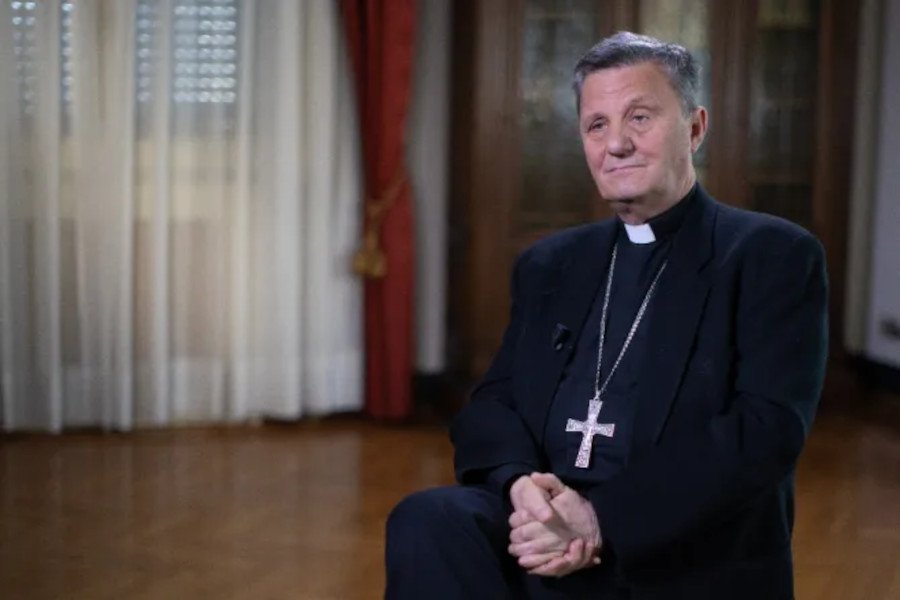
In the midst of the Covid-19 pandemic, on November 28, 2020, Francis presided over his seventh consistory, assigning 13 new red hats, 9 of whom have voting rights in a conclave. Among the new Cardinals, the Pope chose Mario Grech, Secretary General of the Synod of Bishops; Marcello Semeraro, Prefect of the Congregation for the Causes of Saints and former Secretary of the Council of Cardinals for the reform of the Roman Curia; Augusto Paolo Lojudice, Metropolitan Archbishop of Siena-Colle Val d’Elsa-Montalcino; and the octogenarian Franciscan Preacher of the Papal Household, Raniero Cantalamessa.
The latest consistory dates back to August 27, 2022: the Pontiff assigns 20 red berets, 16 to prelates under the age of 80 and 4 to octogenarians. Once again, the Pope surprises. Apart from the three Curial Cardinals Fernando Vergez, Arthur Roche, and Lazarus You Heung-sik, respectively at the helm of the Governorate and the Dicasteries for Divine Worship and the Discipline of the Sacraments, Francis chose Oscar Cantoni, Bishop of Como, whose diocese is suffragan to Milan, which remains without a red hat even this time. The same goes for Robert McElroy, Bishop of San Diego, a suffragan diocese of Los Angeles. It is worth noting the creation of the youngest Cardinal: 48-year-old missionary Giorgio Marengo, Apostolic Vicar of Ulan Bator in Mongolia. Among the octogenarians, Pope Francis chose the Jesuit Gianfranco Ghirlanda, one of the drafters of the Apostolic Constitution Praedicate Evangelium, which reformed the structure of the Roman Curia.
In his 8 consistories, Pope Francis has appointed for the first time to the Sacred College 21 Cardinals from countries that had never been represented before: Haiti, Dominica, Myanmar, Panama (although Cardinal Lacunza was born in Spain), Cape Verde, Tonga, Central African Republic, Bangladesh, Papua New Guinea, Malaysia, Lesotho, Mali, Sweden, Laos, El Salvador, Luxembourg, Rwanda, Brunei, East Timor, Singapore, and Paraguay.