
Though many Catholics may associate the liturgical season of Lent more with the practice of fasting and abstaining from food, many families around the world use the 40-day season to prepare specific homemade delicacies to remind them of the life of Jesus Christ as he made his way to the cross.
Mexico
Capirotada, which is similar to a bread pudding, is a treat served by many Mexican families on the Fridays of Lent. Though recipes may vary from one family to the next, the traditional sweet and savory ingredients carry rich religious symbolism linked to Jesus’ crucifixion.
Bread rolls used in the dish represent the body of Christ; honey or piloncillo syrup, made from cane sugar, is meant to symbolize the blood of Christ; whole cloves are used to represent the nails of the crucifixion; cinnamon sticks are used to symbolize the wooden cross of Christ; and the melted cheese coating the pudding represents the shroud used for Jesus’ burial.

Aguas fresca — a drink made with still water, fresh fruits of your choice, sugar, oats, and other cereals, seeds, and floral teas — are prepared and served by families to passersby in Oaxaca on Good Friday. Though not solely a Lenten beverage, this Good Friday tradition is an opportunity for Oaxaca families to quench the thirst of Jesus on his way to Jerusalem — just like the Samaritan woman at Jacob’s well (cf. Jn 4:4-42) — by serving a fellow neighbor.

Ecuador
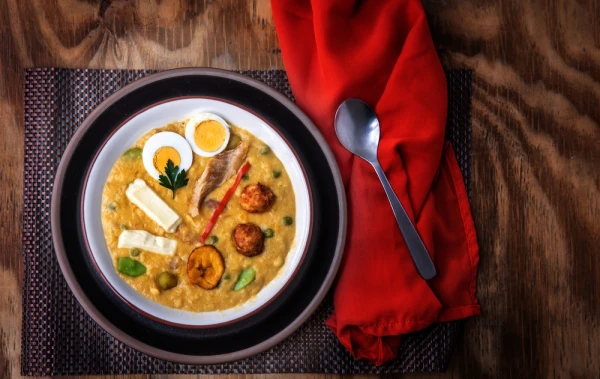
Fanesca, a soup eaten during Lent and Holy Week made with cod and 12 kinds of beans and legumes, is said to represent Jesus Christ and the Twelve Apostles at the Last Supper.
The dish’s religious significance dates back to the 16th century and is believed to be connected to a monastery in Quito, Ecuador, during the Spanish colonization of the Americas.
Some families take advantage to make this lunch dish together — preparing the fish and shelling the many beans and legumes — with a spirit of prayer, contemplating the Last Supper in the upper room just hours before Jesus began his passion in the Garden of Gethsemane.
Malta
Kwareżimal, which derives its name from the Latin word “Quadragesima,” meaning the “40 days of Lent,” are sweet cakes made with almond paste, honey, and orange rind.
This Lenten sweet treat is also given to children who want to embark upon a one-day, 14-church pilgrimage to remember Jesus’ 14 Stations of the Cross.
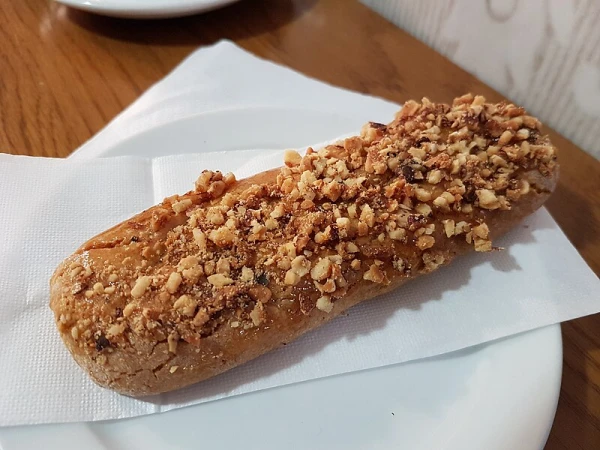
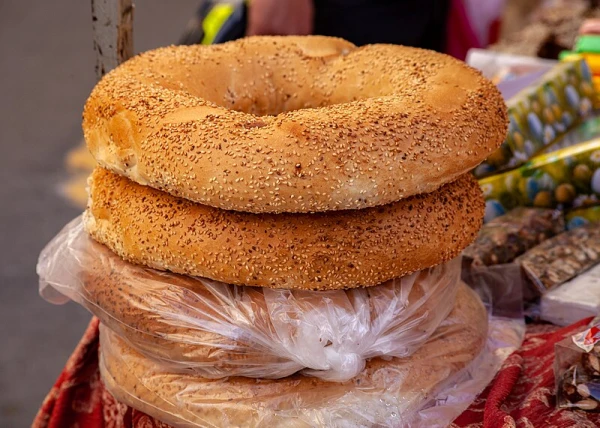
Qaghaq tal-appostli or “Apostles’ Rings” are sweet, savory, unleavened circular bread loaves topped with almonds and sesame seeds eaten on Holy Thursday.
The treat is associated with the events of Holy Thursday when Jesus made his apostles priests and instituted the Eucharist and the celebration of the Mass.
Lebanon
Zenkoul, a dish of bulgur wheat balls (or pumpkin balls) combined with chickpeas, rice, garlic, onion, and pomegranate molasses, is eaten by Lebanese families during Lent and Good Friday.
Some families add vinegar to their Zenkoul instead of lemon juice to remind them when Jesus told the Roman soldiers “I thirst” (cf. Jn 19:28) before dying on the cross and fulfilling the prophecy “for my thirst they gave me vinegar” (cf. Ps 69:22).
Iraq
Christ’s Feast is a traditional dish shared and eaten together in Iraqi villages on Good Friday. Made with habbiyeh wheat, several types of grains, and a variety of beans and legumes, the most distinctive ingredient of the dish is “akoub,” a prickly plant that grows abundantly during spring.
By combining all the ingredients with a little water, Christ’s Feast is turned into a soup and cooked slowly until it is ready to be mashed and served to families on Good Friday.
For some Iraqi Christians, the difficulty in preparing the dish — particularly removing the thorns of the akoub — is a form of participating in Jesus’ passion. The prickly plant is also said to symbolize the crown of thorns placed on Jesus’ head before he was condemned to death by Pontius Pilate.
Germany, Luxembourg, France, and Belgium
Pretzels, the iconic bread twist simply made with salt, yeast, flour, and water linked to several parts of Europe, are believed to have been invented specifically as a Lenten food by an Italian monk in the early Middle Ages, according to a Vatican Library document.
With the purpose of helping Catholics to live the penitential season with prayer and simplicity, the treat’s shape resembles hands in prayer, forming three holes representing the Father, Son, and Holy Spirit.

United Kingdom, Australia, and New Zealand
Hot cross buns are believed to have first been distributed to poor English Catholics on a Good Friday between the 12th and 14th centuries. Today, the sweet-spiced buns are eaten in England and in Commonwealth countries such as Australia and New Zealand during Lent and Holy Week.
While some historic accounts suggest the buns — traditionally made with flour, eggs, yeast, currents, and cardamom — have ancient pagan origins, other records hint that medieval monks Christianized the recipe by baking the buns with distinct crosses to represent the crucifixion of Jesus Christ and using different spices to symbolize his burial.

This article was originally published on Catholic News Agency.