Skip to content

5 powerful quotes from St. Augustine’s most famous work, the ‘Confessions’

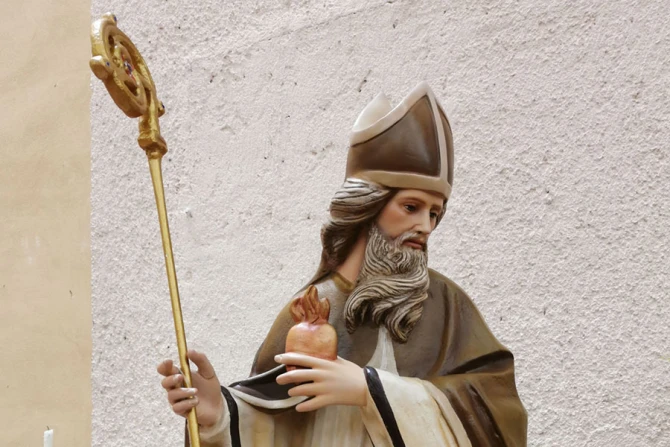
The Catholic Church honors St. Augustine of Hippo, an early Church Father, doctor of the Church, and foundational theologian, on Aug. 28.

The Catholic Church honors St. Augustine of Hippo, an early Church Father, doctor of the Church, and foundational theologian, on Aug. 28.

Augustine was brought up as a Christian in his early childhood but drifted from the Church, fathering a child out of wedlock and falling into the heresy of Manichaeism. His mother, Monica, a woman of deep faith who was later canonized herself, never stopped praying for his return to the Church.

Of the more than 5 million words that St. Augustine wrote during his lifetime (A.D. 354–430), his “Confessions” have had a particularly lasting influence as a philosophical, theological, mystical, and literary work. Written in about A.D. 400, “Confessions” details how God worked in Augustine’s life and reads not just as a story but as a prayer.

Here are five powerful quotes from St. Augustine’s “Confessions”:  

  1. “Thou hast made us for thyself, O Lord, and our heart is restless until it finds its rest in thee” (Book I).
  2. “To Carthage I came, where there sang all around me in my ears a cauldron of unholy loves. I loved not yet, yet I loved to love, and out of a deep-seated want, I hated myself for wanting not … For within me was a famine of that inward food, Thyself, My God” (Book III).
  3. “But what am I to myself without Thee, but a guide to mine own downfall?” (Book IV).
  4. “I cast myself down I know not how, under a certain fig-tree, giving full vent to my tears; and the floods of mine eyes gushed out an acceptable sacrifice to thee” (Book VIII).
  5.  “Late have I loved you, O Beauty ever ancient, ever new, late have I loved you! You were within me, but I was outside, and it was there that I searched for you. In my unloveliness I plunged into the lovely things which you created. You were with me, but I was not with you. Created things kept me from you; yet if they had not been in you they would have not been at all. You called, you shouted, and you broke through my deafness. You flashed, you shone, and you dispelled my blindness. You breathed your fragrance on me; I drew in breath and now I pant for you. I have tasted you, now I hunger and thirst for more. You touched me, and I burned for your peace” (Book X).


SIGN UP FOR OUR NEWSLETTER HERE

This CNA story was first published on Aug. 28, 2024, and has been updated.

Receive the most important news from EWTN Vatican via WhatsApp. It has become increasingly difficult to see Catholic news on social media. Subscribe to our free channel today

Share

Would you like to receive the latest updates on the Pope and the Vatican

Receive articles and updates from our EWTN Newsletter.

I agree that EWTN will keep me informed about news, faith stories and how to best support their work. You will never receive e-mails from us that you do not want to receive. You can unsubscribe any time. For more information on how to unsubscribe, our privacy practices, and how we are committed to protecting and respecting your privacy, please review our Privacy Policy.

More news related to this article

Controversial Iraqi Christian didn’t meet with Pope Francis privately, Vatican confirms

An Iraqi Christian figure involved in a dispute with the leader of the Catholic Church in the country

Pope Francis offers condolences after 9 die in northern Italy floods

Pope Francis at his general audience in St. Peter's Square on May 17, 2023.
Left: Detail of Antique wooden Old Russian icon "St. Nicholas the Wonderworker," southwestern Russia. Early 19th century on an 18th-century panel. Credit: Public Domain. Right: Merry Old Santa Claus by Thomas Nast, conversion of style by AI. Credit: ChatGPT

From Saint to Santa: The True Story of St. Nicholas of Bari

Everyone knows Santa Claus—the jolly, gift-bearing figure who arrives on Christmas Eve to delight children around the world.

‘Don’t let the algorithm write your story,’ Pope Leo XIV exhorts young people

Pope Leo XIV on Thursday urged young people to cultivate their “interior life” and to listen to their
Historic footage and the Abbey of Montecassino. Credit: EWTN Vatican

Montecassino: The Abbey That Rose Again and Again

MONTECASSINO, Italy — Rising above the Liri Valley, the Abbey of Montecassino has stood for nearly 1,500 years

Naples’ new cardinal sees red hat as call to ‘embrace the cross of the weakest’

Archbishop Domenico Battaglia of Naples, Italy said he sees the appointment not as a personal honor but as “a call to dream together of a Church that gets its hands dirty."

LIVE
FROM THE VATICAN

Be present live on EWTNVatican.com