On September 30th, Pope Francis is set to appoint 21 new cardinals in the Vatican. To help you better understand these prominent figures in the Catholic Church, we’ve compiled six essential facts about these often-referred-to “princes” of the Church.
They Serve as a Vital Link in the Church
The title of cardinal has its origins in the pontificate of Pope Sylvester I (314-335). Etymologically, the term “cardinal” traces back to the Latin word “cardo,” meaning “hinge.” This nomenclature signifies that cardinals occupy a pivotal role within the Church, supporting the Pope as the Vicar of Christ.
The Significance Behind the Purple Attire
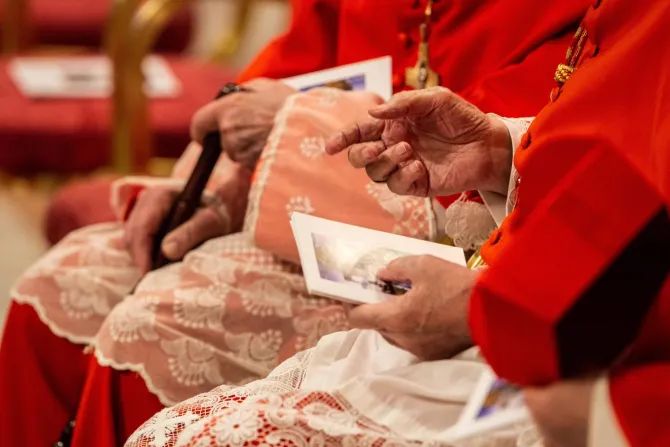
Cardinals are also known as “purpurate” due to the purple color of the biretta they receive from the Holy Father during their elevation in a consistory. This hue is emblematic of blood and symbolizes their unwavering readiness to lay down their lives for the Catholic faith. The ceremony’s rite elucidates this significance: “It is red as a sign of the dignity of the cardinal’s office, signifying their preparedness to act with courage, even to the extent of shedding their blood for the advancement of the Christian faith, peace, and harmony among God’s people, and for the liberty and expansion of the Holy Roman Catholic Church.”
A Bond with the Church
Upon their elevation, cardinals are entrusted with two significant symbols: the biretta and the cardinal’s ring. The latter symbolizes their deep commitment to the Church of Rome and the universal Church. In 2012, Pope Benedict XVI modified the ceremony, specifying that the cardinal’s ring should be conferred on the same day as the consistory, instead of during the Mass held on the following day.
Cardinals are integral members of the College of Cardinals, responsible for electing a new Pope in a conclave following the passing or resignation of the incumbent Pontiff. Additionally, they provide crucial support to the Holy Father in his global ministry to the Church. According to the Code of Canon Law, “The cardinals of the Holy Roman Church constitute a special college that facilitates the election of the Roman Pontiff in accordance with special law. The cardinals assist the Roman Pontiff either collectively when summoned to address matters of great importance or individually as they aid the Roman Pontiff in their various offices, particularly in the daily administration of the universal Church” (c. 349).
Three Orders of Cardinals: Episcopal, Presbyteral, or Diaconal
As outlined in Canon Law (c. 350), the College of Cardinals comprises three orders: the episcopal order, which includes cardinals to whom the Roman Pontiff assigns the title of a suburbicarian church and Eastern patriarchs who have been admitted to the college of cardinals; the presbyteral order, and the diaconal order. The Roman Pontiff designates a title or diaconia in Rome for each cardinal of the presbyteral or diaconal orders.
The Youngest and the Oldest
Currently, Cardinal Giorgio Marengo holds the distinction of being the youngest cardinal at the age of 49, having received his biretta on August 27, 2022. As the Apostolic Prefect in Ulaanbaatar, he played a significant role in Pope Francis’s recent visit to Mongolia. On the opposite end of the spectrum, the title of the oldest cardinal goes to Archbishop Emeritus of Luanda in Angola, Cardinal Alexandre do Nascimento, who has reached the venerable age of 98.
This article, originally published on October 3, 2019, has been updated for contemporary readership.