In an undelivered consistory address, the prefect for the Dicastery for Divine Worship and the Discipline of the Sacraments reiterated that the 1969 Missal of Paul VI should be ‘the sole expression’ of the Roman Rite liturgy.
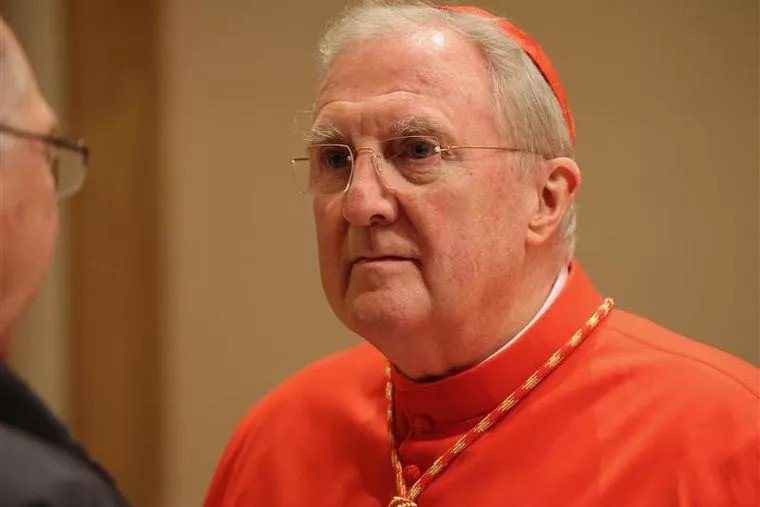
In an undelivered address to cardinals last week, Cardinal Arthur Roche planned to voice opposition to the traditional Roman Rite, which he sees as a concession that needs to be eventually phased out in favor of the post-Vatican II liturgy as the unique expression of the Latin Rite.
In a two-page text on Traditionis Custodes (Guardians of the Tradition), Pope Francis’ 2021 decree restricting the pre-conciliar traditional liturgy, the prefect of the Dicastery for Divine Worship and the Discipline of the Sacraments argued that without “legitimate progress” in the liturgy, “the Tradition would be reduced to a ‘collection of dead things,’ not always all healthy.”
His comments were to be part of a discussion on the liturgy during last week’s extraordinary consistory of cardinals, but the topic was omitted due to time constraints. The cardinal’s text was obtained by journalist Diane Montagna, who reported on its contents on Jan. 13.
According to his planned address, Cardinal Roche intended to tell the cardinals that the liturgy had always undergone reforms, and he gave various examples from Church history.
The liturgy, he said, “is in itself characterised by cultural elements that change in time and places,” and its history is one of “continuous reforming in a process of organic development.”
As part of his argument, he quoted Pope Benedict XVI’s words from a 2006 general audience, where Benedict said Tradition is not the transmission of “a collection of dead things” but “the living river that links us to the origins, the living river in which the origins are ever present.”
Cardinal Roche said the “liturgy wanted by the Second Vatican Council is not only in full syntony with the true meaning of Tradition, but constitutes a singular way of putting itself at the service of Tradition.”
The Church, he maintained, has always had “this dynamic vision” of “maintaining solid tradition” and “opening the way to legitimate progress,” and he added that these cannot be understood as “two separable actions.” “The primary good of the Church cannot be achieved by freezing division but by finding ourselves in the sharing of what cannot but be shared,” Cardinal Roche said.
The English cardinal quoted from Pope Francis’ document “on the liturgical formation of the People of God,” Desiderio Desideravi, adding: “We cannot go back to that ritual form which the Council fathers, cum Petro et sub Petro, felt the need to reform, approving, under the guidance of the Holy Spirit and following their conscience as pastors, the principles from which was born the reform.”
Unity, Cardinal Roche stressed, further quoting Francis, can only be achieved by having one form of the Roman Rite — that which proceeded from Vatican II.
Furthermore, the cardinal maintained that allowing the pre-reformed liturgy during the pontificates of Paul VI and John Paul II was only a “concession” and not meant as a promotion, and he reiterated Francis’ wish that the reformed liturgy be “the sole expression” of the Roman Rite liturgy.
He ended by again quoting Desiderio Desideravi, in which Francis said the problems over the liturgy are “primarily ecclesiological,” and the Pope expressed his incredulity that someone could recognize the validity of the Council and yet not accept the liturgical reforms “born out of” the Council.
Responses to Cardinal Roche
Responding to the paper, liturgist Father John Zuhlsdorf said the cardinal was erroneously claiming the reformed liturgy represents an “organic development.” Cardinal Joseph Ratzinger, he recalled, had described the liturgical reform as a “fabrication, a banal product of the moment” — a rite, Father Zuhlsdorf wrote, produced by committees and “justified ex post facto by appeals to history and pastoral need.” Such a process, he added, “cannot easily be squared with the Church’s prior understanding of liturgical tradition as something received, not made.”
He also criticized the paper for “redefining key terms such as reform, tradition, unity, and legitimacy, in ways that predetermine the outcome.” For Father Zuhlsdorf, the “scope, method, and assumptions of the reform” must be first addressed, otherwise appeals to authority and unity will close down debate rather than act as instruments of communion.
Catholic commentator Gavin Ashenden said Cardinal Roche’s undelivered paper bore the marks “not of serious theological analysis but rather of propaganda” — a “piece of partisanship” that tried to “present a version of the truth.” Placing the paper in historical context, Ashenden concluded it was an attempt to steer the cardinals toward further restrictions on the traditional liturgy by offering a revisionist history of the post-conciliar reform.
According to Catholic commentator Austen Ivereigh, who was a collaborator of the synod secretariat during the last synod, the Holy Father had asked Cardinal Roche to prepare the paper. “He was one of four cardinals asked to prepare briefings on the four topics Leo had chosen,” Ivereigh wrote on X.
The four topics were trimmed to two at the beginning of the consistory due to time constraints, but the liturgy is likely to be discussed at a forthcoming consistory; the next one is scheduled for the end of June.
Although all the discussions in the consistory were meant to remain confidential, two other addresses, which were delivered to the assembly, were reported by Italian journalist Nico Spuntoni in Il Giornale and published in full by the website Messa in Latino.
Cardinal Fernández’s intervention
In his address, Cardinal Víctor Fernández, prefect of the Dicastery for the Doctrine of the Faith, spoke on one of the two topics discussed at the consistory: Pope Francis’ 2013 apostolic exhortation Evangelii Gaudium.
The Argentinian cardinal argued that the document remains a programmatic text for the Church and did not “expire” with the previous pontificate, because its focus was on proclaiming God’s saving love as something beautiful and attractive rather than a mere list of doctrines or moral norms.
“Often, we end up speaking about the same doctrinal, moral, bioethical and political questions,” he said, adding that these come with risks: that the Gospel message “does not resound” or “only certain themes are put forward outside the wider context of the spiritual and social teaching of the Church.”
Cardinal Fernández therefore derived from Francis’ document two concrete demands for the Church: ongoing reform and continual purification of preaching so that the truth of God’s infinite love takes precedence; and that the “call to live the first commandment of brotherly love” resounds above all, especially in the Church’s moral teaching.
Speaking on the second topic of the consistory, “Synod and synodality,” Cardinal Mario Grech, general secretary of the Synod Secretariat, argued that the recent synodal process showed how a more synodal style of Church life could serve as an effective instrument to assist the Petrine ministry in discernment, without in any way limiting or relativizing papal primacy. Synodality is not a counterweight to primacy, he contended, but a mode in which the prophetic function of the People of God and the discernment of the episcopal college converge to offer the Pope more reliable help in making decisions for the whole Church.
A fourth address that made it into the media but was not delivered due to time constraints was that of Cardinal Fabio Baggio, undersecretary of the Dicastery for Promoting Integral Human Development. His speech, on Praedicate Evangelium, Pope Francis’ 2021 document reforming the Roman Curia, stressed its importance in making evangelization the center of the Church’s governance, how it decentralized some decision-making from Rome to local bishops, and that it made the curia more synodal with an emphasis on listening and discernment.
This article was originally published by NCRegister.