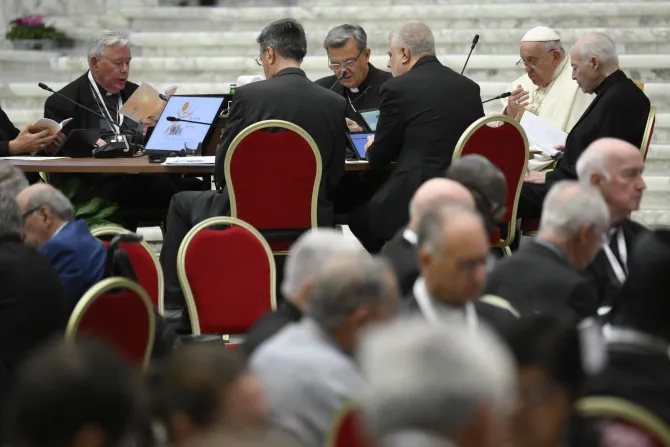
While not exactly a dress rehearsal for an upcoming conclave, the Synod on Synodality provides a setting for numerous cardinals to interact, build alliances, and ascertain their stances on complex issues.
A glance at the attendees reveals the synod’s potential to shape the dynamics of a forthcoming conclave, albeit not determinative.
A numerical gaze: the cardinals at the Synod on Synodality
With 64 cardinals actively engaged in discussions in the Paul VI Hall and mingling in Rome’s more relaxed ambiance after meetings, the synod could establish a foundation for the eventual conclave.
However, media restrictions at the synod keep these cardinals largely removed from public view, and their number is fewer than half of those currently eligible to vote in a future conclave.
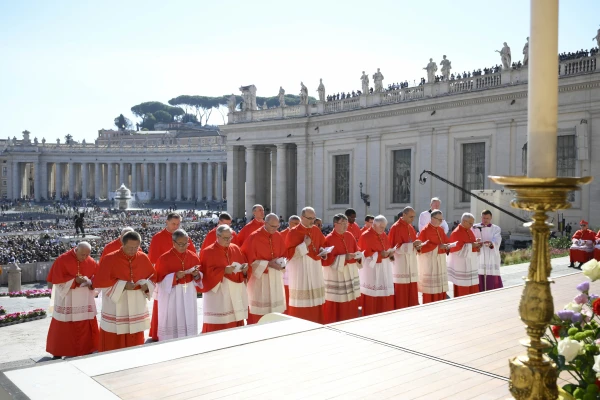
Among them, only eight donned the scarlet on Sept. 30, which suggests that the pope did not choose the cardinals thinking of the synod, and vice versa — the members of the synod thinking of the cardinals.
Initially, 54 cardinals were listed as synod participants, including the secretary general of the Synod on Synodality, Cardinal Mario Grech, and its relator general, Cardinal Jean-Claude Hollerich.
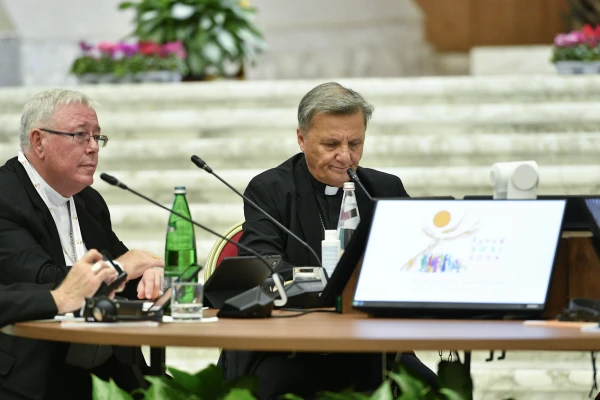
There are four cardinals that head “sui iuris” — self-governing — churches from the Eastern Catholic Churches, such as Cardinal Bechara Boutros Rai, the Maronite Church patriarch.
Twelve cardinals are residential bishops chosen by their episcopal conferences. Another 12 cardinals partake in the synod as leaders of dicasteries in the Roman Curia.
Thus, Pope Francis directly appointed 10 cardinals, all of whom are members of the synod’s ordinary council.
Of the eight ordained as cardinals on Sept. 30, three lead dicasteries in the Roman Curia, and five are papal appointees. Hence, Pope Francis’ selections comprise 15 cardinals among synod participants, matching the 15 heads of Roman Curia departments.
Intriguingly, in terms of sheer numbers, the pope’s personal choice of red hats for the gathering equals that of the Roman Curia.
The synodal chessboard: notable figures and their roles
Pope Francis, aiming for balance, permitted the U.S. Church to send five representatives, including a single cardinal, Timothy Dolan, the archbishop of New York. He then personally selected four other cardinals from the U.S. — Cardinals Robert McElroy, Wilton Gregory, Sean O’Malley, and Blase Cupich — who will also be joined by Cardinal Joseph Tobin, an ordinary member of the synod secretariat.
The selection indicates a subtle effort to harmonize ecclesiastical interests across the American episcopate.
Furthermore, his invitation extended to Cardinal Victor Fernández, prefect of the Dicastery for the Doctrine of the Faith, along with the immediate past prefects, Cardinals Luis Ladaria Ferrer and Gerhard Müller, is noteworthy.
Although Ladaria could not attend, the gesture of including all three showcases a deliberate inclusivity that also raised eyebrows.
Potential papal candidates emerging from the synod
The crucial question remains whether any “papabili” — potential candidates for the papacy — may emerge from this assembly. The presence of Cardinal Cristóbal López, archbishop of Rabat, is intriguing, as his name has occasionally been mentioned as one such potential candidate.
Similarly, Archbishop Claudio Gugerotti, already holding the rank of cardinal, might bolster the candidacy of the current prefect of the Dicastery of Oriental Churches, who enjoys significant esteem in some quarters.
Cardinal Matteo Zuppi, a synod ordinary council member, holds an important role in the mission in Ukraine and Russia, making him a well-known cardinal and potentially a viable candidate.
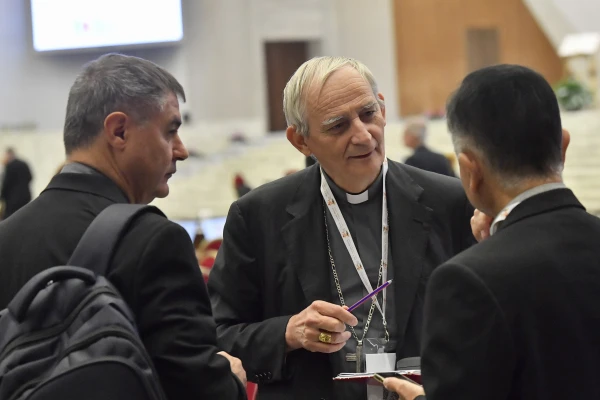
The interventions of these cardinals, as well as their actions during the assembly, will likely be closely observed by their peers but may only be known among their synod confreres, given the limited public communication about the discussions.
The absence of a potential candidate, Cardinal Péter Erdő — who served as the general relator of the Synods on the Family 2014-2015 and enjoys particular esteem among his purple confrères — is rather conspicuous and raises questions. Could his absence lead many to think of other candidates, or could it be a point in his favor instead?
Assessing the synod’s significance in the papal election process
This Synod of Bishops seeks to emulate the collaborative spirit of the Second Vatican Council, where prelates and cardinals from around the globe convened to discuss Church affairs and monitor the council’s advancements.
The cardinals attending the gathering are tasked with getting acquainted, conversing, meeting privately, and, ultimately, understanding one another.
Although it remains to be seen how decisive the interactions of the cardinals will be in the election of the next pope, this synod represents a unique platform for many of them to be in Rome, at the heart of Christianity, and grasp its inner workings.
However, the synod’s success — and whether it will be decisive in paving the way for a papal candidate — will hinge on the quality of the synodal debate, as it will either revitalize the Church or simply be a self-reflective discussion that does not lead to renewal.
This article was originally published on CNA.