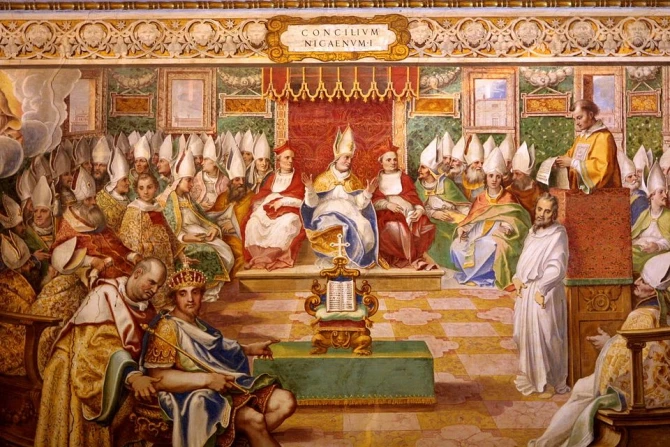
Cardinal Kurt Koch and Patriarch Bartholomew I, Eastern Orthodox ecumenical patriarch of Constantinople, addressed the 1,700th anniversary of the Council of Nicaea being celebrated in 2025 during the Rimini Meeting held Aug. 22–27.
In his presentation, Koch, the prefect of the Dicastery for Promoting Christian Unity, highlighted the importance of the doctrinal issues addressed by the council.
“With it, the Fathers professed their faith in ‘one God, the Father almighty, creator of all things visible and invisible’ … And in the letter of the Synod to the Egyptians, the Fathers announced that the first real object of study was the fact that Arius and his followers were enemies of the faith and opposed to the law, and therefore affirmed that they had ‘unanimously decided to condemn with anathema his doctrine contrary to the faith, his blasphemous statements and descriptions, with which he insulted the Son of God,’” he noted.
“These statements,” he added, “delineate the context of the creed formulated by the council, which professes faith in Jesus Christ as the Son of God, ‘consubstantial with the Father.’ The historical context is that of a violent dispute that erupted in Christianity at the time, especially in the eastern part of the Roman Empire; it follows that, by the beginning of the fourth century, the Christological question had become the crucial issue of Christian monotheism.”
The Council of Nicaea placed Jesus’ prayer to the Father at the center of the profession, Koch said, adding: “The Christological creed of the council has become the basis of the common Christian faith. The council is of great importance, especially because it took place at a time when Christianity was not yet torn apart by the numerous divisions that would later arise. The Nicene Creed is common not only to the Oriental Churches, the Orthodox Churches, and the Catholic Church, but also to the ecclesial communities born of the Reformation; therefore, its ecumenical importance must not be underestimated.”
Only in this way is unity in the Church possible, he continued: “In fact, to restore the unity of the Church, there must be agreement on the essential contents of the faith, not only among the Churches and ecclesial communities of today but also with the Church of the past and, in particular, with its apostolic origin. The unity of the Church is founded on the apostolic faith, which in baptism is transmitted and entrusted to each new member of the body of Christ.”
He continued: “Since unity can be found only in the common faith, the Christological confession of the Council of Nicaea is revealed to be the foundation of spiritual ecumenism.”
“The ecumenical movement,” the cardinal noted, “has been a movement of prayer from its origins. It was prayer for Christian unity that paved the way for it. The centrality of prayer highlights that ecumenical commitment is, above all, a spiritual task, undertaken with the conviction that the Holy Spirit will complete the work he has begun and show us the way.”
Ecumenism can only progress “if Christians return together to the source of faith, which is found only in Jesus Christ, as the Council Fathers of Nicaea professed… Christian ecumenism can be nothing other than the adherence of all Christians to the Lord’s priestly prayer, and it materializes when Christians deeply embrace the firm desire for unity,” Koch said.
The importance of the Council of Nicaea was also underscored by Patriarch Bartholomew, who emphasized: “It is evident that this council played and continues to play a primary role in strict adherence to holy Scripture, and the Orthodox Church remains firmly anchored in it; a cornerstone for proclamation in the 17 centuries that followed.”
The patriarch of Constantinople addressed current issues such as synodality and a common date for the celebration of Easter.
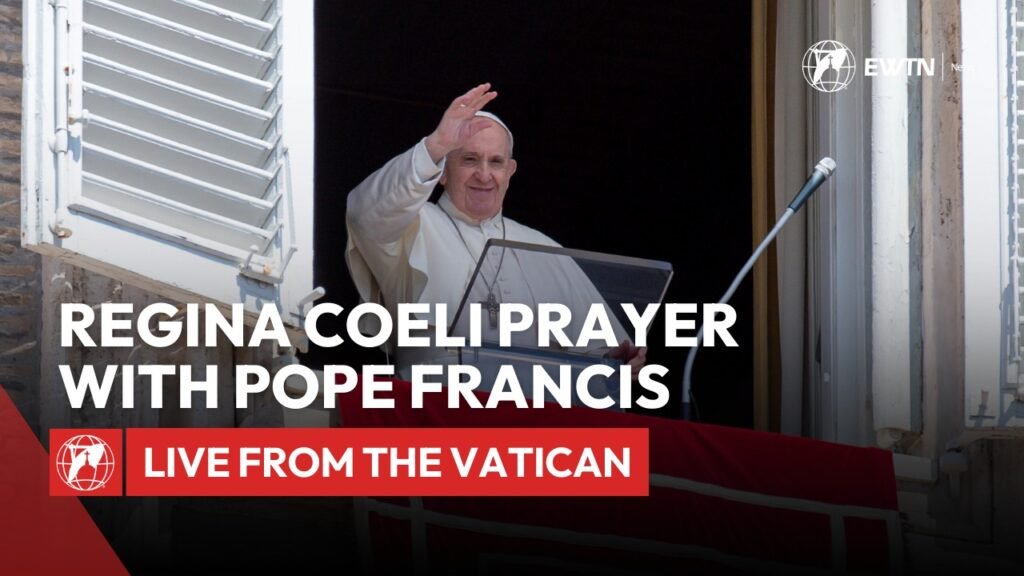
“To be credible as Christians,” he noted, “we must celebrate the Savior’s resurrection on the same day. Together with Pope Francis, we have appointed a commission to study the issue. However, there are differing sensitivities among the Churches, and we must avoid new divisions, not fuel more divisions.”
The Orthodox leader said this requires a joint effort: “The effort to find a common date for Easter is an important pastoral objective, especially for couples and families of different faiths, and given the great mobility of people, especially during the holidays.”
“With a common Easter date,” Bartholomew continued, ”the profound conviction of the Christian faith could be expressed even more credibly: that Easter is not only the oldest but also the most important feast of Christianity, and that the Christian faith stands or falls with the Paschal Mystery, as the early Church summed up this fundamental conviction with the phrase: ‘Take away the Resurrection, and you instantly destroy Christianity.’ The fundamental importance of Easter would be highlighted by a common date, which would also give new impetus to the ecumenical journey toward restoring the unity of the Church in East and West in faith and love.”
“Indeed, ecumenism also advances on the path toward recomposing the unity of the Church only if it is carried out jointly and, therefore, synodally. The fundamental importance of synodality for ecumenical commitment is clearly demonstrated by two important documents, such as the study ‘The Church Toward a Common Vision,’ which aspires to a multilateral and ecumenical vision of the nature, purpose, and mission of the Church,” the patriarch stated.
Bartholomew concluded by affirming the importance of the joint study: “This vision is also shared by the International Theological Commission in its programmatic document ‘Synodality in the Life and Mission of the Church,’ which notes that ecumenical dialogue has progressed to the point of recognizing synodality as a ‘revelatory dimension of the nature of the Church.’”
“This historical overview helps us understand that the development of synodality in the life of the Church and of ecumenism must be implemented with theological accuracy and pastoral prudence. This lesson can also be learned by studying the Council of Nicaea,” the Orthodox patriarch concluded.
SIGN UP FOR OUR NEWSLETTER HERE
This story was first published by ACI Stampa, CNA’s Italian-language news partner. It has been translated and adapted by ACI Prensa/CNA.