The Dicastery for the Doctrine of the Faith (DDF), the Vatican body responsible for questions of doctrinal orthodoxy in the Catholic Church, has a group of outside consultants. What is the role of these experts in one of the Roman Curia’s most prominent dicasteries?
This past September, Pope Francis appointed 28 new consultants for the dicastery, headed since July 2023 by Cardinal Víctor Manuel Fernández.
The majority of the latest crop of DDF consultants are Italian priests-theologians, experts in canon law and Scripture, as well as six women — two religious and four lay theologians — and two lay male theologians. Among those appointed is a Jesuit priest who holds a doctorate in sacred Scripture, Father Juan Manuel Granados Rojas.
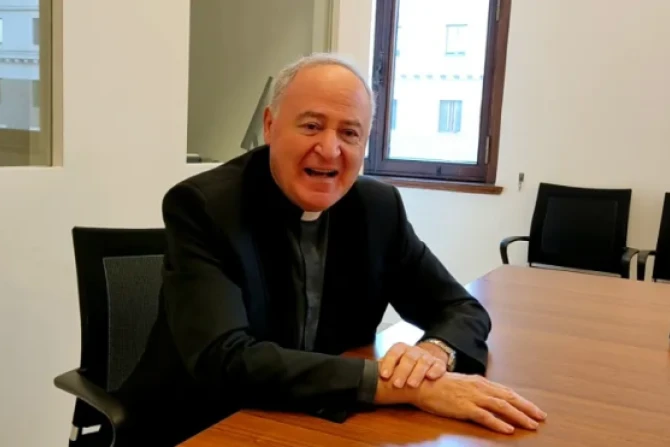
Speaking with ACI Prensa, EWTN Vatican’s Spanish-language news partner, Granados, a Colombian, explained the details of the new role that he is taking up as “a humble service” to the Catholic Church and the Holy Father.
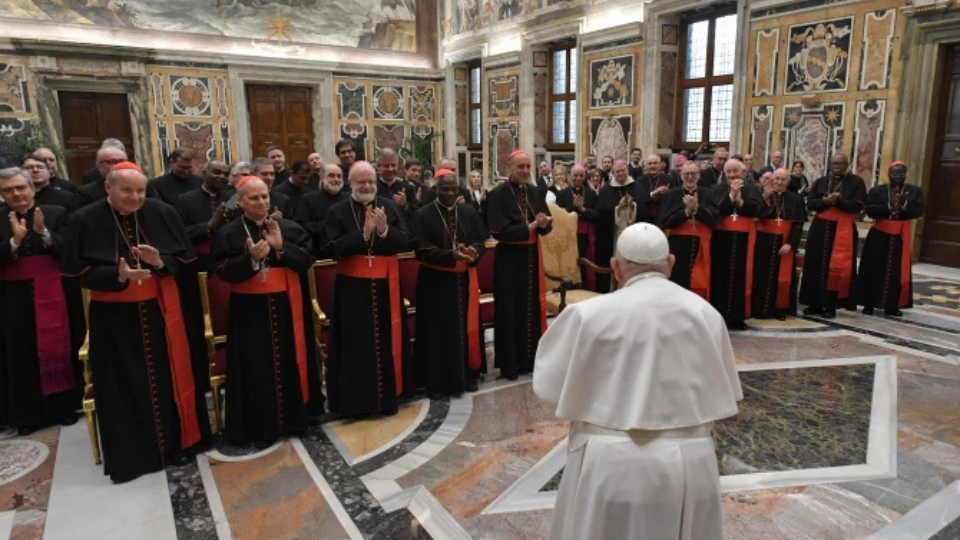
Granados explained that on Dec. 2, he and his fellow recently appointed consultors took the oath for their new service in a “simple ceremony” where they committed themselves “to safeguard the faith received from the apostles and to keep the pontifical secret.”
The event, said the professor at the Pontifical Biblical Institute and member of the Catholic Biblical Association, was presided over by the cardinal prefect (Fernández) and took place in a private chapel of the dicastery. Pope Francis was not present.
During the ceremony, the experts recited the Creed in Latin and read “a series of personal commitments to the Catholic Church,” added the Jesuit priest, who is also a member of the team of translators of the Bible of the Church in America (BIA, by its Spanish acronym).
“Consultants are appointed for a period of six years,” Granados explained, “and our role is to respond as quickly as possible to the questions that the dicastery sends us. The questions are asked ad hoc according to the competencies of each consultant.”
In this context, he noted that there are two branches in the DDF: the disciplinary and the doctrinal. He added that most of the new consultants have been appointed for consultations related to the dicastery’s disciplinary role.
In the case of Granados, he said he can expect “consultations that involve biblical material or where the doctrinal statements have to do with the holy Scriptures.”
He received the news of his new role, which he assures will be carried out with “due scientific rigor,” from the undersecretary of the DDF, Archbishop Philippe Curbelié.
“When I asked if I could decline the appointment, he respectfully informed me that by virtue of my fourth vow of obedience I could not do so,” the religious explained, in reference to the commitment of obedience to the pope that Jesuits make.
Granados also noted that almost all of the consultants are professors of ecclesiastical faculties and that the number of laypeople “is greater than in previous years.”
“During the explanation of our responsibilities, the cardinal prefect made us understand that the new group reflects, or is intended to reflect, the initiative of the Holy Father in favor of the synodal character of the Church,” he said.
Granados also emphasized that “the personal opinion of the consultants does not influence either the decisions or the documents issued by the DDF” and that their collaboration is done anonymously.
“We help the cardinal prefect and the other officials stay up to date on academic theological discussions. They will eventually ask us for summaries or opinions on the questions that other dicasteries or bishops address to the DDF,” the Jesuit explained.
In that case, he added, “we will have to give our professional opinion.”
“That doesn’t mean that it coincides or has to coincide with the opinion of the DDF, nor with the decision or document that the DDF subsequently works up. It’s a humble and anonymous service,” he said.
This story was first published by ACI Prensa, CNA’s Spanish-language news partner. It has been translated and adapted by CNA.