For centuries, the Catholic Church has been celebrated for the awe-inspiring realism captured by Renaissance masters like Michelangelo and Leonardo da Vinci. However, in the 17th century, a dramatic shift occurred in art, leading to the emergence of Baroque art. This transformative style sought to evoke spiritual emotions in response to the Protestant Reformation, employing vivid colors and elaborate movements to create a sense of ethereal grandeur.
The Optical Illusions of Baroque Art
To explore the mechanics behind this artistic phenomenon, we turned to Father Jean-Paul Hernandez, a theology and art professor, who highlighted the Baroque’s unique optical illusions. The art creates a mesmerizing illusion of three-dimensional objects on a two-dimensional canvas, allowing viewers to experience an otherworldly sense of wonder.
The Spiritual Significance of Chiesa del Gesù
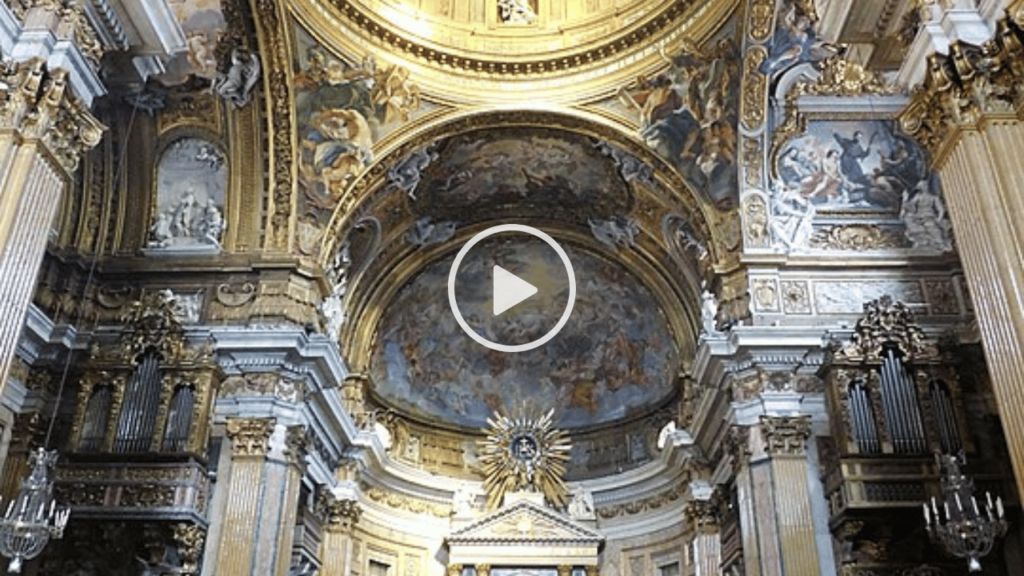
Amidst the grandeur of Rome’s city center, a humble yet profoundly significant church stands out – Chiesa del Gesù. As the mother church for the Jesuits, it was built in 1568 following the death of St. Ignatius. Here, the Baroque style delivered a precise message – to instill the name of Jesus as the path to intimacy with the Lord. Simply uttering the name of Jesus was seen as a form of prayer, fostering a personal connection with the divine.
The “Macchina Barocca” and Its Spiritual Message
One of the most captivating elements within Casa del Gesù is the altar and tomb of Saint Ignatius of Loyola. Crafted in 1695 by a Jesuit brother, Andrea Pozzo, the altar holds immense spiritual significance. The painting adorning it depicts Jesus Christ presenting the flag of his mission to Ignatius, the founder of the Society of Jesus.
But what sets this Church apart from others in Rome’s rich tapestry of religious sites? The answer lies in a fascinating 300-year-old Baroque tradition – the “Macchina Barocca.” As the clock strikes half-past five, the brilliance of lights captivates onlookers, and the painting begins to descend. Operated by a system of pulleys and ropes, this Baroque machine reveals a statue of Saint Ignatius rising to the heavens. The effect is awe-inspiring, as if Ignatius is ascending to the divine realm.
Father Hernandez explains the symbolism behind this artistic wonder – Ignatius climbing the steps to the sky, presented to the Lord by Saint Peter. The same image of Ignatius ascending is replicated on the dome and altar, reinforcing the powerful spiritual message.
Celebrating the Legacy of Saint Ignatius
The feast day of Saint Ignatius, celebrated on July 31st, holds deep significance as the patron saint of soldiers in war and soldiers for the Church. For visitors and faithful alike, Chiesa del Gesù serves as a beacon of Baroque art, instilling a profound connection to the divine and a reminder of the power of faith.
As the clock strikes half-past five, the painting ascends, and hearts are lifted with it, witnessing a centuries-old Baroque marvel that continues to awe and inspire. The spiritual journey continues within the walls of Chiesa del Gesù, where the name of Jesus echoes as a path to divine communion.