Who was Father Giuseppe Lais?
An Italian Oratorian, who lived from 1845-1921, he remained faithful to his dual vocation as a priest and scientist in difficult times.
The oldest of thirteen children, he was born in Rome in April 1845 to Giovanni and Elena Langeli. While still a student at the Roman College, he attracted the attention of the director of the astronomical observatory, the Jesuit Father Angelo Secchi (1818-1878), one of the pioneers of modern astrophysics. After completing his university studies with a degree in philosophy and mathematics and a diploma in engineering-architecture, he was immediately called by Secchi to serve as an assistant at the Observatory. During those years, he was also admitted to the Congregation of the Oratory of St. Philip Neri, and in April 1873, he was ordained a priest.
In 1879, after Secchi’s death, the Observatory of the Roman College was requisitioned by the Italian government. Lais then continued his observations in a small private observatory on Via del Corallo and actively dedicated himself to the education of young people. Among his spiritual children of that period, we particularly remember the young Eugenio Pacelli, who would later want him by his side when he celebrated one of the first Masses in the church of Santa Maria in Vallicella.
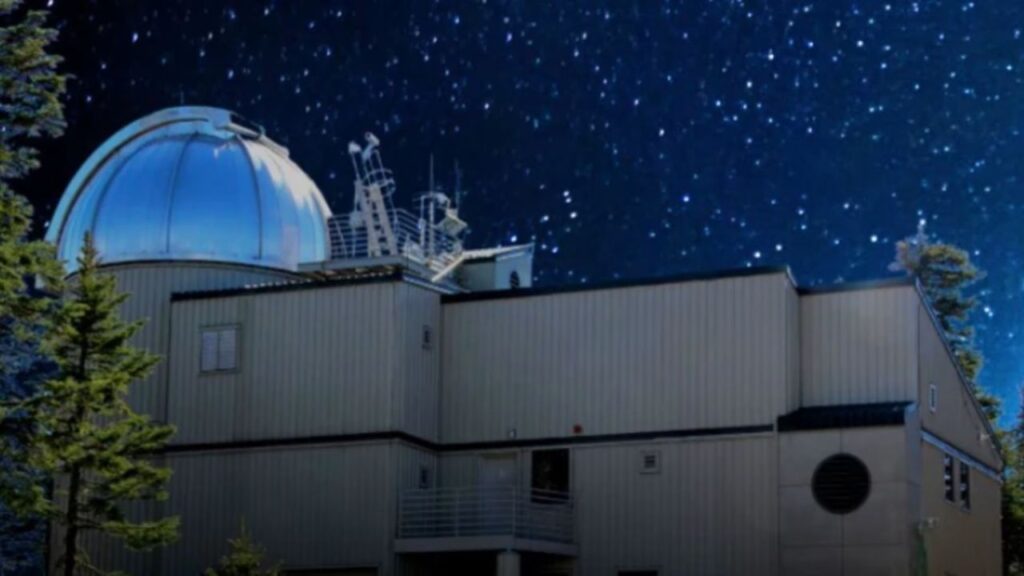
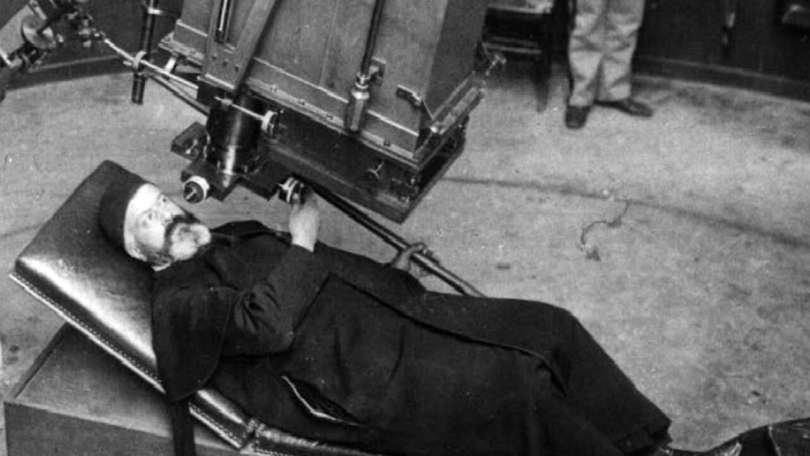
About ten years later, Pope Leo XIII decided to re-establish an astronomical observatory in the Vatican to show that “the Church and its pastors do not oppose true and solid science, both human and divine, but embrace it, encourage it, and promote it with all possible commitment” (motu proprio Ut Mysticam, March 14, 1891). The Barnabite Father Francesco Denza (1834-1894) was appointed director, and Lais was named vice-director. From this moment on, he became a key figure in the international program of photographic sky mapping that the Vatican had decided to join. His main task was photography. Thousands of photographic plates made by him are still preserved in the archives of the Vatican Observatory, and they have recently been digitized. Lais’s observations still provide astronomers with a reference point for the position of stars over a hundred years ago.
In addition to his work as an astronomer, we note that among the publications of the Pontifical Academy of the New Lynxes, of which he was president from 1905 to 1921, over ninety contributions can be found under his name, covering studies ranging from comets to meteorites, from meteorology to the history of astronomy.
Lais performed his valuable service as vice-director of the Vatican Observatory for more than thirty years. At the premature death of the first director, Father Denza, when the Observatory had been re-founded only a few years earlier, he effectively led the Observatory for four years. He continued his work during the difficult tenure of meteorologist Father Angelo Rodríguez de Prada (1859-1935) and maintained his position even when the Observatory was entrusted to the Society of Jesus under the direction of the astronomer Father Johann Hagen, SJ (1847-1930). With his work, as the last of Secchi’s disciples, he effectively ensured a continuity link between the Observatory of the Roman College and the Vatican Observatory.