Speaking on Pope Francis’ current health crisis, Jesuit Father Antonio Spadaro, a personal friend of the Holy Father, said in an interview on Wednesday that “the situation is delicate, but I [haven’t] seen any cause for alarm.”
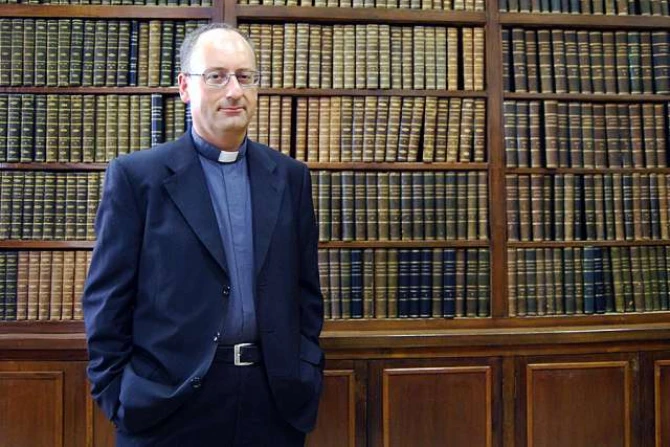
“Francis is an 88-year-old man who has had a serious problem but who is now undergoing treatment. It’s not a simple treatment and will require time,” said Spadaro, 58, who for 12 years was director of the Jesuit magazine La Civiltà Cattolica (Catholic Civilization) and is currently undersecretary of the Vatican Dicastery for Culture and Education. He emphasized that the pontiff has “an extraordinary vital energy.”
“He is not someone who lets go or gives in easily, and that’s a very positive aspect; we have seen this in the past as well,” he said in an interview with the Italian daily Il Corriere della Sera (The Evening Courier).
“My impression is that the situation has improved, and I hope that he will soon recover completely,” Spadaro continued. “Francis is a man of great intelligence, and he knows that he must take the necessary time to recover. He has been visibly affected in recent days. The important thing is that he now takes the necessary time in a protected environment.”
The pope’s state of health
Pope Francis was admitted to the Gemelli Polyclinic Hospital in Rome on Feb. 14 at 11 a.m. after having done everything on his schedule for that day. However, the Holy Father began to show the first symptoms of his illness at the beginning of the previous week. On Wednesday, Feb. 5, he announced that he was suffering from “a bad cold” and apologized for not being able to read his catechesis during the general audience in Paul VI Audience Hall.
Subsequently, on Thursday, Feb. 6, the Holy See confirmed that it was bronchitis, caused by inflammation of the lining of the bronchi, which made it difficult for him to breathe.
“Due to the bronchitis he is suffering from these days and in order to be able to continue with his activities, Pope Francis’ audiences on Friday the 7th and Saturday the 8th of February will take place at St. Martha’s House,” the Vatican said in a brief statement.
The delay in his hospitalization has caused some perplexity and has led to questions about how the medical team at the Vatican is managing his care.
A pope who never stops
Spadaro pointed out that, although Francis has been prescribed “absolute rest,” it is difficult for him to comply with it completely.
“Indeed, he has never allowed himself absolute rest. Since the 1970s, when he was a young priest in Argentina, he had difficulty disconnecting. Perhaps now he will take a few days to rest, but soon he will feel the need to do something, to occupy himself with something,” the priest commented.
However, he emphasized that the pope is striking a balance where “acceptance of the illness is essential.”
“Even these days, he continues reading the newspapers, taking care of some work, and making phone calls. He always shows extraordinary vital energy. Deep down, it’s typical of a Jesuit to keep working while he’s alive and die in the trenches,” he explained.
‘He never spares effort’
Spadaro emphasized that the Holy Father “never spares effort” and that, furthermore, “he has no problem letting his weak condition show.”
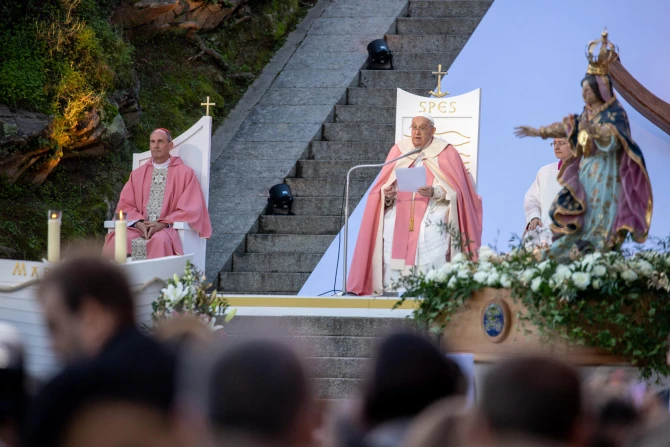
He was referring to Sunday, Feb. 9, when the pope celebrated the Mass for the Jubilee of the Armed Forces in St. Peter’s Square and, not feeling well, “had no problem reading only part of the homily.”
“He could have pretended that he was finished with his discourse, but he preferred to delegate it. He lives with great tranquility about his physical limitations. At the same time, he never stops giving himself completely in everything he does, because that is also the essence of his spirituality. In the past, when he had other health problems, he pressed on in the same way,” Spadaro said.
Could he resign like Pope Benedict XVI?
Asked whether Francis could make the same decision as his predecessor, Pope Benedict XVI, Spadaro answered clearly: “He is aware, as he has said in the past, that one governs with the head and not with the legs.”
“Certainly, it’s a question of taking stock of how much energy he can still exert. If he ever feels that he no longer has the strength to lead the Church, he will resign. But as long as he feels that he has the energy, a temporary health problem will not be an obstacle for him,” he explained.
Spadaro said that if Pope Francis feels he still has the strength, a passing illness will not stop him. “Benedict XVI opened up the possibility of resigning, and Francis has never excluded that option. He has thought about it, he has reflected on it, he has internalized the ministry of the pope and he lives it,” he said.
This story was first published by ACI Prensa, CNA’s Spanish-language news partner. It has been translated and adapted by CNA.