Peacemaking begins in our own hearts by reconciling with ourselves and God through the sacrament of confession, a Vatican cardinal said this week.
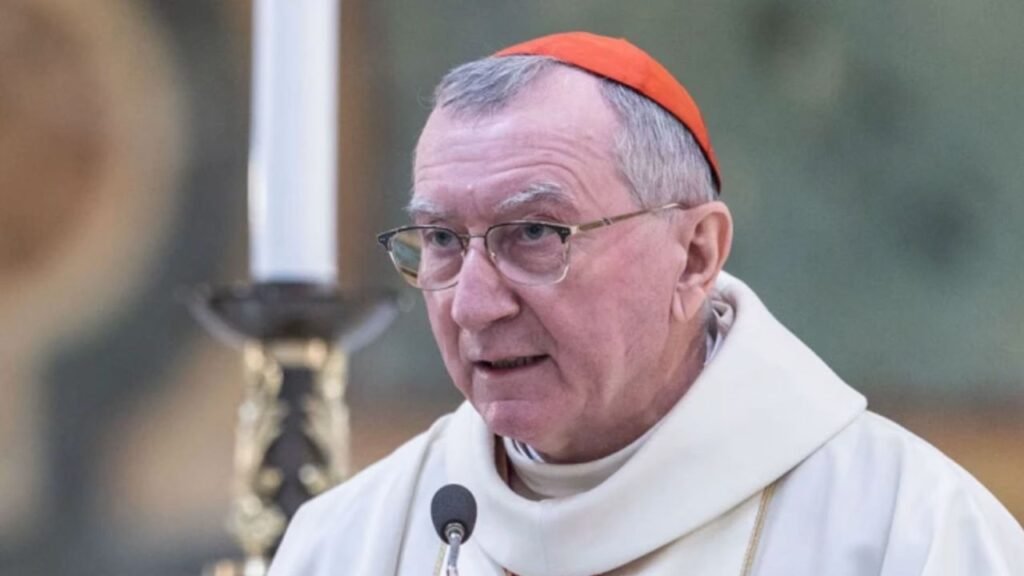
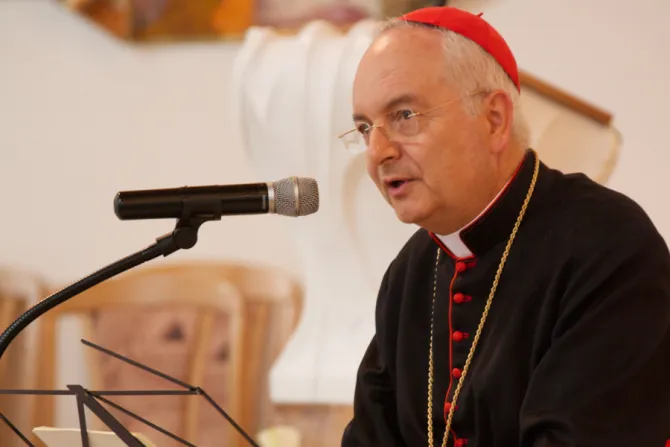
As we remember the innocent people who are dying in war during these days, we can take hope in the reconciliation, mercy, and peace of Christ in confession, Cardinal Mauro Piacenza said in a letter published ahead of the solemnity of All Saints.
Piacenza is the head of the Vatican’s Apostolic Penitentiary, the office of the Roman Curia responsible for issues related to the sacrament of confession, indulgences, and the internal forum, which is an extra-sacramental form of secrecy, or confidentiality, applied to spiritual direction.
“These are days, for the whole Church, of fond remembrance of those who have gone before us, and especially, in these tragic times of war, of all the innocents who still, without knowing why, continue to die,” the 79-year-old cardinal wrote.
“At the same time, however, may they be days illuminated by hope,” he encouraged, “indeed by the certainty that Christ’s arms, opened wide on the cross, powerfully invite all humanity to reconciliation, mercy, and peace.”
Piacenza recalled Christ’s words on the Mount of Beatitudes: “Blessed are the peacemakers.”
“[This is] a peace that is God-given and that demands to be built by people, beginning with the peace in their own hearts, because only those who are reconciled with God and with themselves can truly be peacemakers,” he said.
The cardinal also invited priests to practice “great generosity” in listening to confessions, “for in them is strengthened, and in the case of grave sin, recreated, that indispensable bond with Christ.”
The sacrament of confession — also known as penance or reconciliation — strengthens the body of Christ through the miracle of forgiveness, he continued, noting that as the “all” of the Church becomes fortified through forgiveness, this forgiveness can open to the whole world.
Reflecting on the Church’s celebration of All Saints’ and All Souls’ Days on Nov. 1 and 2, Piacenza recalled that “the Church is not only the one visible before our eyes, but it is also the ‘triumphant’ one in heaven, according to the communion of saints, and the ‘purgative’ one, on its way to full communion with God, for which we pray in the commemoration of the faithful departed.”
It is good to remember that the invisible Church is the majority, while the visible part is the minority, he said.
“The total body of Christ has a head, which is Christ himself, while his body, visible, tangible and audible, is made up of the concrete, sometimes shocking, brothers and sisters, who are next to us and who live the same membership in the mystery,” the cardinal added.
“The cross of Christ, which is sacramentally re-presented in the Eucharist and whose fruits extend to the sacrament of reconciliation, is for all,” Piacenza said, “and its gifts are poured into hearts through the Spirit. The Church offers all people the opportunity to be embraced by the mystery. The Church is for all, all, all, because she is Catholic, universal, and because she is one.”
This article was originally published on Catholic News Agency.