As the stories of many ancient things go, the relic of St. Mary Magdalene’s left foot had been lost to memory for centuries before it was rediscovered in the year 2000.
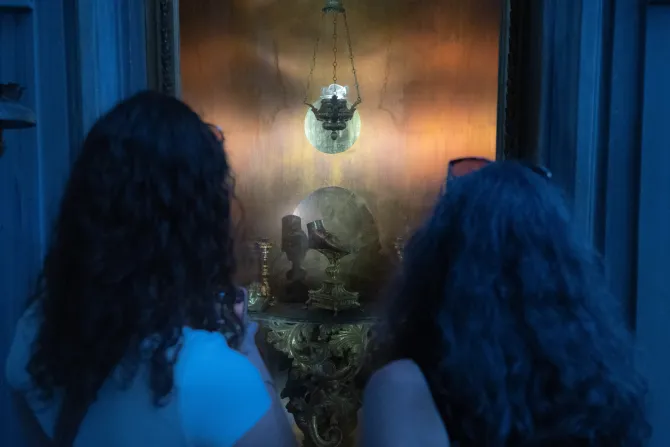
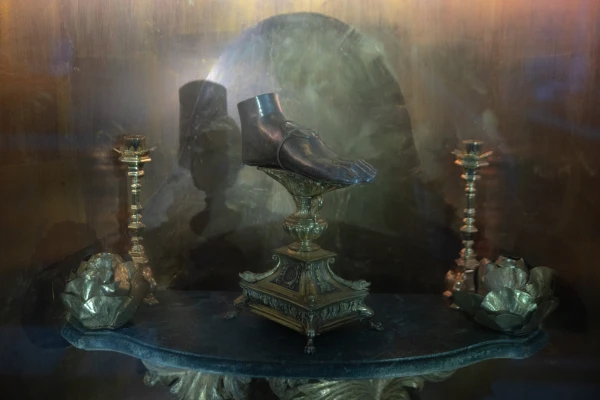
For a little over a decade now, the bone fragments, which rest in a silver foot-shaped reliquary, have been displayed for veneration in the Basilica of St. John the Baptist of the Florentines, a church just across the river from the Vatican.
A popular belief says most of the mortal remains of the woman who first saw the resurrected Christ are in various places in France, transferred there from Byzantium as a gift to the king of France from the king of Jerusalem in the ninth century.
Mary Magdalene’s body passed through Rome on the journey to France, the story goes, and bone fragments from her foot were given to the pope.
The relics, which are held to be from the foot that first entered Christ’s empty tomb, were placed for veneration in a chapel at the beginning of the Sant’Angelo Bridge.
At one time, crossing the ancient Sant’Angelo Bridge over the Tiber River was the fastest way for pilgrims to reach the old St. Peter’s Basilica from the center of Rome.
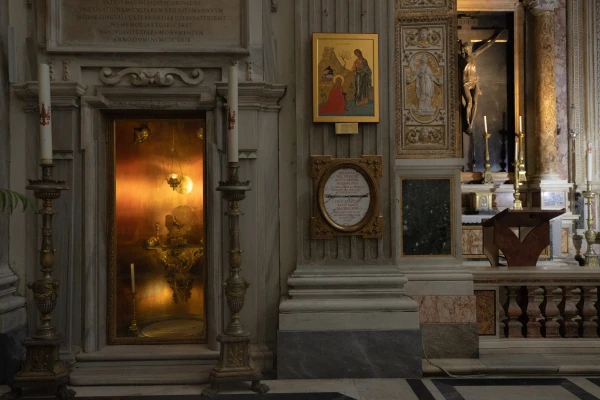
In that location, the foot of “the apostle to the apostles” was, therefore, a symbolic last relic for pilgrims to visit before arriving at the tomb of St. Peter.
The silver reliquary holding the relics is believed to be a work of Benvenuto Cellini and dates to the 16th century.
This is where the story of the relic gets lost — until the start of the new millennium when it was somehow rediscovered and placed in a small museum of sacred art opened at the parish of the Basilica of St. John the Baptist of the Florentines in 2001.
The basilica, which is not far from Sant’Angelo Bridge, was completed in the 17th century. One historic point of interest about the church is that St. Philip Neri was its rector for more than a decade before founding his society of priests, the Oratorians.
On May 24, 2012, St. Mary Magdalene’s relic was solemnly transferred from the basilica’s museum to a niche on the left side of the church nave.
Cardinal Carlo Caffarra, the basilica’s titular cardinal before his death in 2017, led the enthronement of the relic in its new place of veneration.
The evening included the praying of vespers and the cutting of a ribbon to signify the opening of a welcome point for pilgrims walking the medieval Via Francigena pilgrimage route.
Though the museum connected to the Basilica of St. John the Baptist of the Florentines is temporarily closed, the church continues to welcome locals and visitors alike to pray, worship, admire its artworks, and to venerate the relic of St. Mary Magdalene’s foot.
This article was already published on CNA.