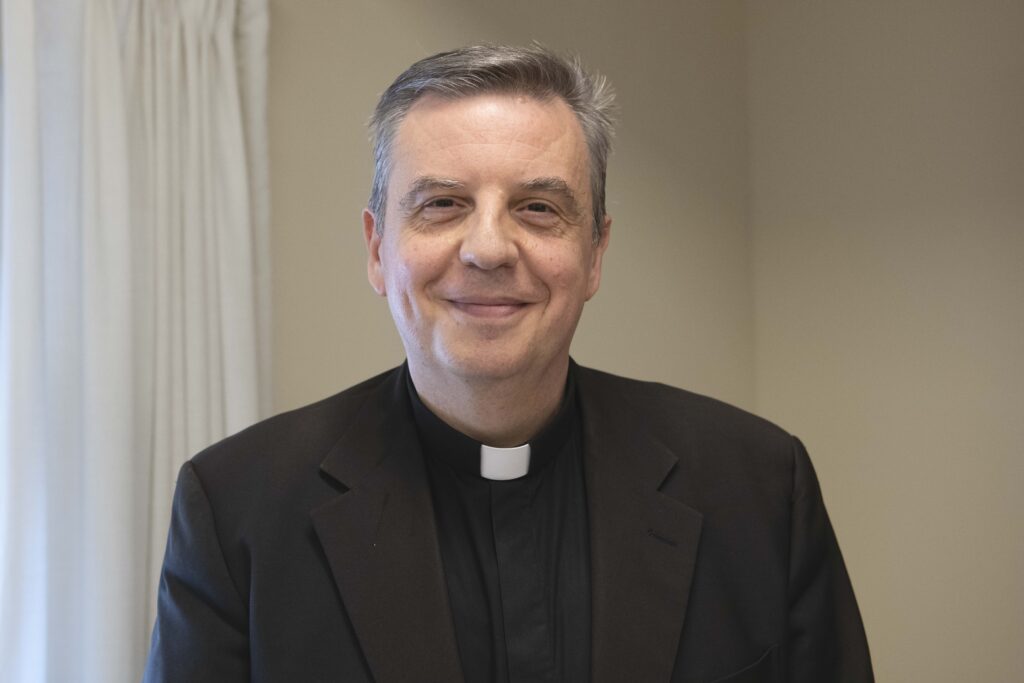
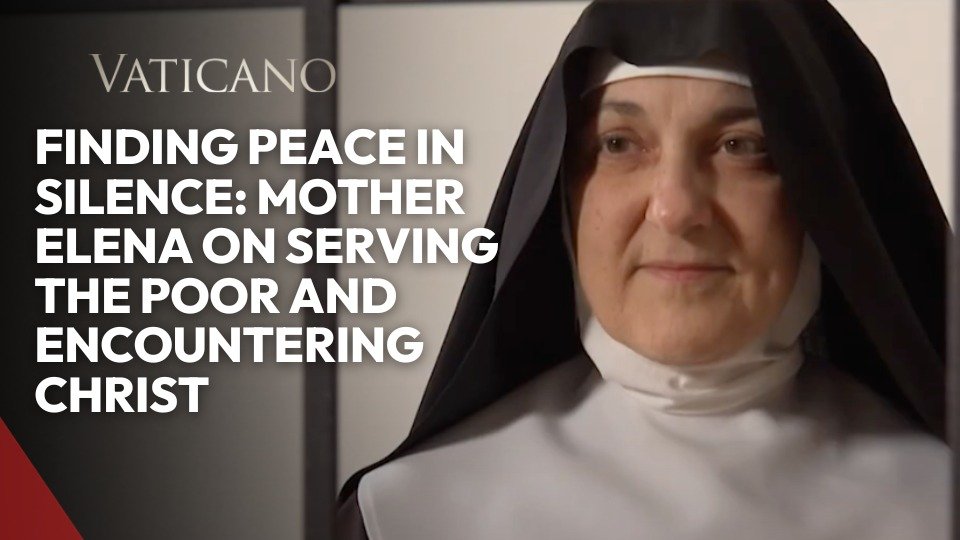
Sister Elena Francesca Beccaria is the Abbess of the Monastery of Saint Clare in Rome. Ary Ramos of EWTN Vatican sat down with her for a conversation on serving the poor, the importance of silence in our modern world, and helping people find Christ.
What is the meaning of the dilemma of not turning away from the poor, considering that there is also a poverty that is not only material?
Certainly, as I was saying, there is a material, spiritual, and moral aspect to keeping the monastery door open, in the sense of welcoming those in need of a listening ear. We see that it is difficult to find someone who listens today, and if someone does, they often charge for it. Therefore, we prefer to invest this listening with the mark of gratuitousness. However, I also want to emphasize that it is very important for us not to avert our gaze from the sister next to us who is in poverty. Our cloistered life involves very close relationships, always the same, without the possibility of escape, because we are here 365 days a year, 24 hours a day, together. And among us, too, there is poverty—poverty of character, moments of hardship that the sisters experience. At the moment, there are 26 of us, ranging in age from 29 to 97 years, each with her own challenges and life experiences. It is crucial to listen to each other, to mutually welcome and support one another. It would be trivial to welcome those who live outside and then turn away from the sister beside me who needs me in many ways. That’s it.
What advice would you give to people listening from home to improve our interpersonal relationships?
I speak as a contemplative, so I say, first of all, by listening to the Lord, dedicating time to listening to Him in prayer. We have a lot of communal prayer, but also many times of personal prayer that should never be neglected because they are important. The prayer that the Church gives us to celebrate is important, but so is personal dialogue. And there, in personal dialogue with Him, you also learn to see your brother, your sister, and to know how to listen to them. Silence is necessary. The silence you learn in prayer, which then allows you to remain silent in front of your brother or sister, without rushing to judgments and quick answers that are often not the right ones.
Sister, we live in a world where it’s challenging to find silence. From your perspective, even from the contemplative world, what advice can you give to people to take better care of this silence that helps them be in relationship with God and others?
Yes, I see that it’s difficult. I notice that those who come to pray with us often find it challenging; they say it’s like hard work. It takes them 2 or 3 days to learn to be silent. So, I imagine that silence is demanding because it confronts you with yourself. As I mentioned earlier, we are not always capable of listening to ourselves; we prefer not to listen and not to see what is inside us. The advice I give is to take it slowly, that is, don’t give up trying, perhaps with short periods, without expecting too much progress initially because it can be discouraging, it can be tiring. But a few extra minutes every day. And then, you learn to spend even an hour in silence before Him. Many laypeople who come to pray with us do it. We have an hour of adoration in the evening after the Rosary, Vespers, one hour of adoration, and there are people who experience it with us in the Church.
Sister, you spoke about people who may have considered taking their own lives or have lost a sense of purpose. Could you offer a word of comfort to these individuals?
The only hope is Jesus. I speak also from personal experience. The Lord gave meaning to my life. He allows you to glimpse a different, possible horizon. It’s the word of the Gospel and the person of Jesus entering your life. Otherwise, it’s very difficult because everything human disappoints, ends, has a limit, and gradually in life, you experience that relying on the goods of this world carries the risk of losing them. The only one who truly remains always is the Lord and what comes from Him. In other words, faith gives you a different perspective on life, and life is filled with hope because it gains a different depth, relying on values that do not fade away.