ANALYSIS: The Holy See and Iran have had a continuing dialogue in recent years. But the killing of large numbers of Iranian demonstrators by government forces is causing grave concern inside the Vatican.
On Jan. 9, Mohammad Hossein Mokhtari, Iran’s ambassador to the Holy See, took part in the traditional exchange of greetings of the diplomatic corps, briefly greeting Pope Leo XIV. At that time, the Holy See had not yet formally addressed the situation in Tehran, where protests and heavy repression were ongoing.
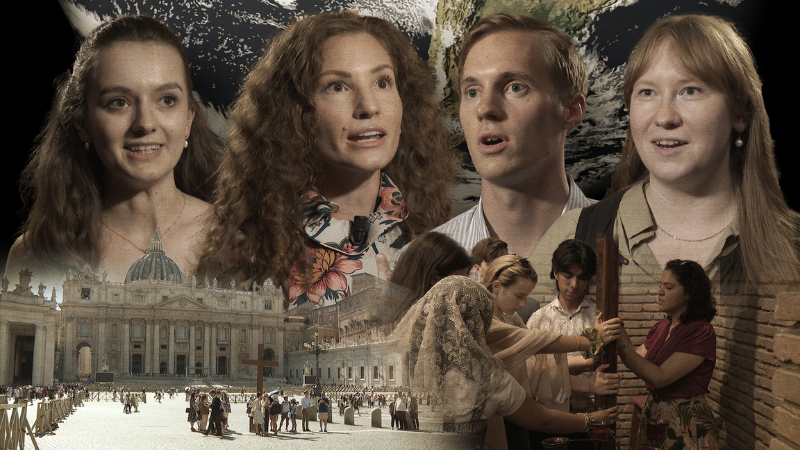
The only Vatican comment — informal but meaningful — came from Cardinal Pietro Parolin, the Vatican secretary of state. On Jan. 19, at a celebration for the exposition of a relic of St. Pier Giorgio Frassati, he remarked: “I wonder how it is possible to attack one’s own people, to the point of causing so many deaths.”
Cardinal Parolin’s words carry particular weight. The Holy See does not intervene directly in the internal affairs of states, carefully maintaining neutrality that is crucial to protecting the Christian flock and maintaining credibility in bilateral relations. Yet the Holy See’s concern about the situation is profound, especially amid recent reports that the total number of deaths is far greater than the 3,000 or so the Iranian government has acknowledged.
A Cardinal From Iran
The Holy See and Iran have, incredibly, several points of diplomatic contact.
At his last consistory on Dec. 7, 2024, Pope Francis created the Belgian missionary Dominique Joseph Mathieu, archbishop of Tehran-Isfahan, a cardinal. It was a significant appointment, part of a continuing dialogue between the Holy See and Iran.
On Nov. 20, 2024, Pope Francis met with participants in the 12th Colloquium of the Dicastery for Interreligious Dialogue with the Center for Interreligious and Intercultural Dialogue in Tehran. On that occasion, he said: “The fate of the Catholic Church in Iran, a ‘little flock,’ is very close to my heart. And the Church is not against the government — no, those are lies!”
The Holy See has looked to Iran as an interlocutor since the beginning of the conflict in Gaza. On Nov. 5, 2023, Pope Francis had a telephone conversation with President Ebrahim Raisi, who later died in a helicopter crash on May 19, 2024.
The meeting had been requested by the president himself, and Iranian statements stressed that Iran had always appreciated Pope Francis’ calls for a ceasefire in Gaza.
Before that telephone conversation, Archbishop Paul Richard Gallagher, Vatican minister for relations with states, spoke with his Iranian counterpart, Hossein Amir-Abdollahian, on Oct. 30, 2023. This conversation had also been requested by Tehran. The Holy See Press Office, on this occasion, handled the communication, emphasizing that “in the conversation, Archbishop Gallagher expressed the Holy See’s serious concern for what is happening in Israel and Palestine, reiterating the absolute necessity of avoiding the escalation of the conflict and of reaching a two-state solution for a stable and lasting peace in the Middle East.”
Each word of the statement was carefully chosen. In particular, the reference to the two-state solution emphasized that the Holy See would never accept, even as a possibility, the nonexistence of the state of Israel.
Archbishop Gallagher and Amir-Abdollahian met on Sept. 25, 2023, on the sidelines of the United Nations General Assembly in New York. On that occasion, Iran urged the Holy See to form an alliance of religions against the desecration of sacred texts.
Archbishop Gallagher, for his part, expressed appreciation for the new dialogue opened between Saudi Arabia and Iran.
On Aug. 13, 2024, Cardinal Parolin had a telephone conversation with newly elected President Masoud Pezeshkian. On that occasion, the Holy See Press Office emphasized that the secretary of state had expressed “the Holy See’s serious concern for what is happening in the Middle East, reiterating the need to avoid in every way the spread of the very serious ongoing conflict and preferring dialogue, negotiation, and peace instead.”
The Holy See’s View of the Middle East
In general, the Holy See has always favored the development of relations between Middle Eastern countries, looking favorably on both the approaches between Saudi Arabia and Israel and the Abraham Accords.
The Holy See was also among those who favored the Iran nuclear deal, an agreement it hoped would serve as a model for other similar agreements in the Middle East. When President Donald Trump decided to abandon the agreement in 2018, the Holy See expressed concern over the potential instability caused in the region by an increasingly isolated Iran.
Relations Between the Holy See and Iran
The number of exchanges in recent years, particularly regarding the Gaza crisis, indicates that the Holy See considers the Middle East an important partner and that relations are cordial. This is despite some problematic situations.
For example, in 2021, Iran denied a residence permit to a nun, Giuseppina Berti, who had been a missionary in Isfahan for nearly 30 years.
Relations are nevertheless good and have steadily improved since full diplomatic ties were established in 1966. A particularly flourishing period for Iran-Holy See relations occurred during the pontificate of Benedict XVI. In 2006, Mahmoud Ahmadinejad, then president of Iran, expressed in a letter to the Pope his desire to establish new human and political relations based on the “common teachings of the two prophets.”
In 2010, Cardinal Jean-Louis Tauran, then president of the Pontifical Council for Interreligious Dialogue, traveled to Iran and brokered a further exchange of letters.
In 2015, Shahindokht Molaverdi, vice president of Iran, visited the Vatican, met Pope Francis, and then went to the Pontifical Council for the Family, which immediately afterward announced the presence of an Iranian delegation at the World Meeting of Families in Philadelphia that same year.
Common Values
In the relations, some common values weigh heavily, to the point that, in 2014, the University of Religions and Confessions of Qom promoted a translation of the Catechism of the Catholic Church into Farsi.
Among the shared values, the role of the family and the shared commitment to combating the spread of assisted reproduction and gender ideology are particularly important. A central theme is also the fight against extremism and fundamentalism, with particular reference to the issue of human fraternity.
And, indeed, Iran is considered a bridge to Shiite Islam. Grand Ayatollah al-Sistani, whom Pope Francis met in Iraq in March 2021, was born in Iran and remains one of the greatest Islamic authorities.
This long history of dialogue also suggests that the Holy See will likely not take a clear stance on events in Iran. Diplomatic efforts are instead focused on maintaining relations with local authorities, encouraging peaceful transitions toward a more human-rights-respectful environment, without promoting any subversion.
For the Holy See, its relations with Iran are heavily influenced by the reality that the country is a crucial player in the Middle East.
This article was originally published by NCRegister.