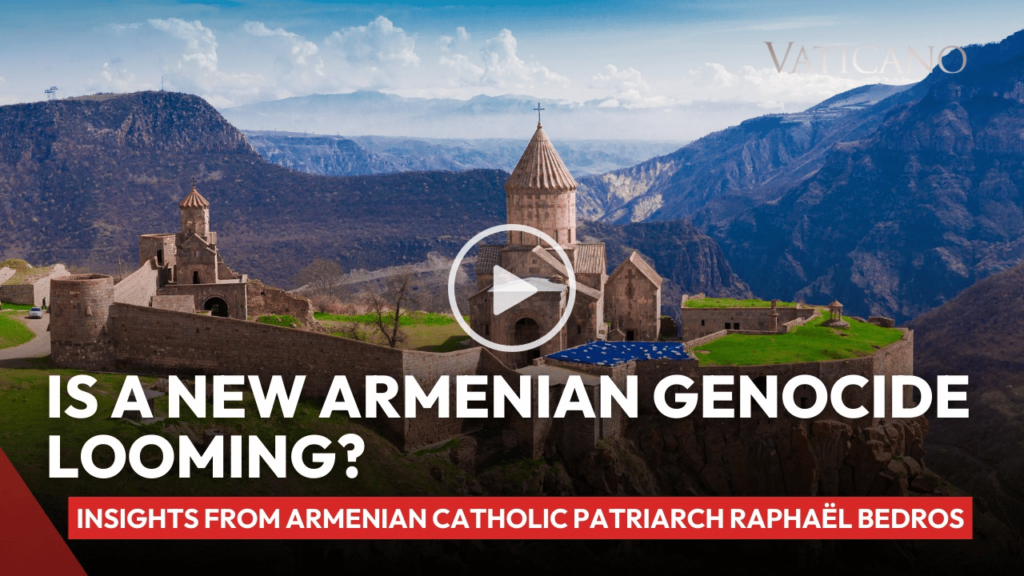
Armenia, known as “the first Christian country”, adopted the faith in 301 and has remained Christian ever since. Most citizens belong to the Armenian Apostolic Church tracing its roots back to the Apostles Barholomew and Thaddeus. The Armenian Catholic Patriarch Raphaël Bedros XXI Minassian is the head of the Catholic minority. There is a good relationship between the Christians and other religions in the country – a bond forged through suffering.
Over the centuries the Armenian people have faced many hardships. At the start of the 20th century, the Turkish state massacred millions of Armenians. Up to 1.5 million people died in the years 1915 to 1916 as the Ottoman Empire was disintegrating after the end of World War I. Many of the victims were civilians deported to barren desert regions where they were marched to death or left to die of starvation and thirst.
Not all have accepted the reality of this brutal genocide that primarily targeted Christians. Pope Francis’ statement on the genocide in 2015 sparked a diplomatic uproar with Turkey, including the recall of the Turkish ambassador to the Holy See in protest.
Today, international observers are warning again of genocide. Since December 12, 2022, Azerbaijan has blocked the Lachin Corridor, a mountain road which links the isolated mountain region of Nagorno-Karabakh to Armenia.
The Conflict between the majority Christian Armenia and the majority Muslim Azerbaijan dates back to the early 20th century, with the present conflict rooted in the late 1980s. Fighting is focused on the disputed Nagorno-Karabakh territory, which though located within Azerbaijan is populated by ethnic Armenians.
Around 120,000 Armenians live in the enclave. The road closure has isolated them from the world. They have no food, medicine, or basic necessities. Families are separated.
The Holy See is actively involved in resolving this situation before more atrocities will happen. Pope Francis said he was “concerned about the situation created in the Lachin Corridor”.
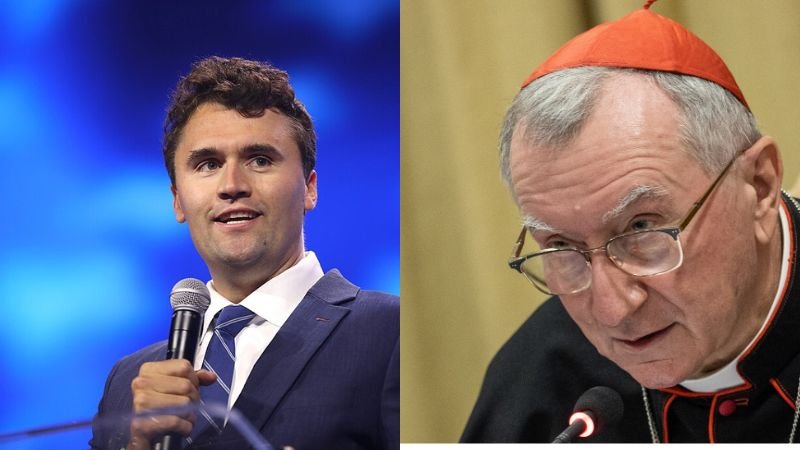
For that reason, the Vatican Secretary of State, Cardinal Pietro Parolin, visited Armenia and Azerbaijan in July 2023.
In late 2020, the “Second Nagorno-Karabakh War” erupted, resulting in thousands of casualties. Eventually a loose ceasefire was established but the terror and violence for the civilians continued.
Aid to the Church in Need, is one of the Church institutions which continue to help and push for humanitarian aid in the war-torn region.
Cardinal Parolin’s visit to Armenia and Azerbaijan is a further advancement of the Holy See‘s push to promote peace among the warring nations. And it is high time for the international community to act. Patriarch Raphaël Minassian found strong words, saying that the Armenian people do not need our sympathy they need peace.