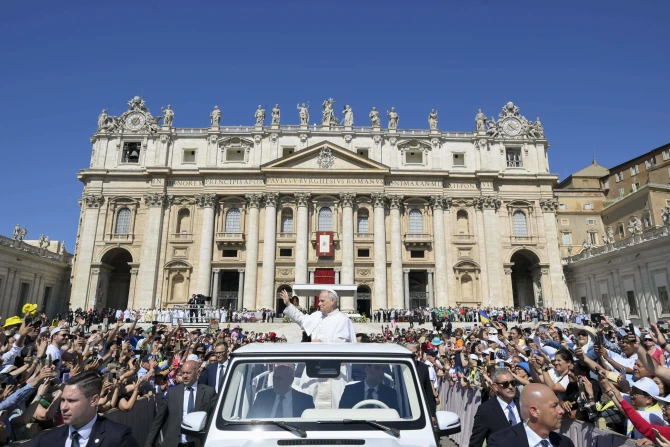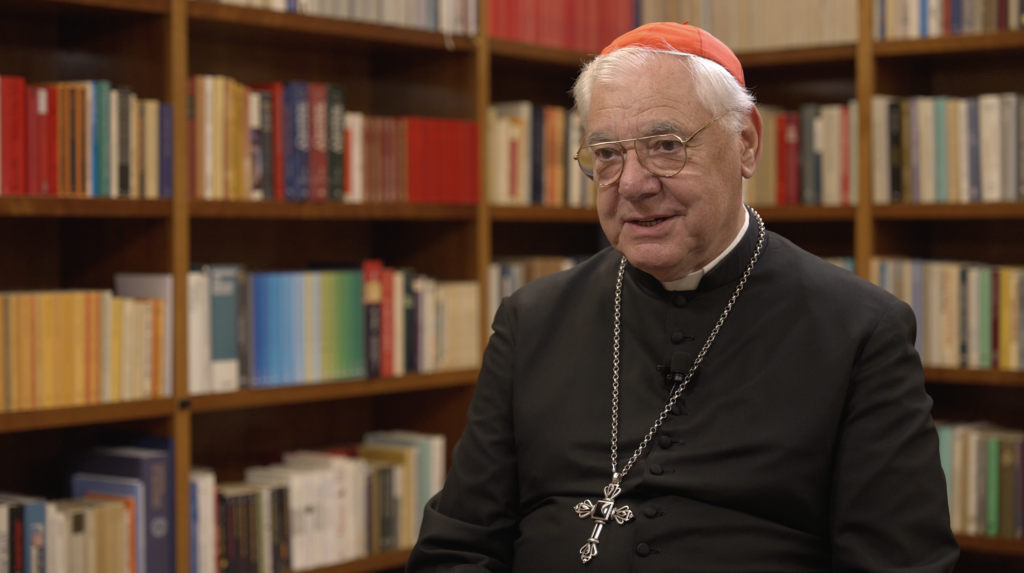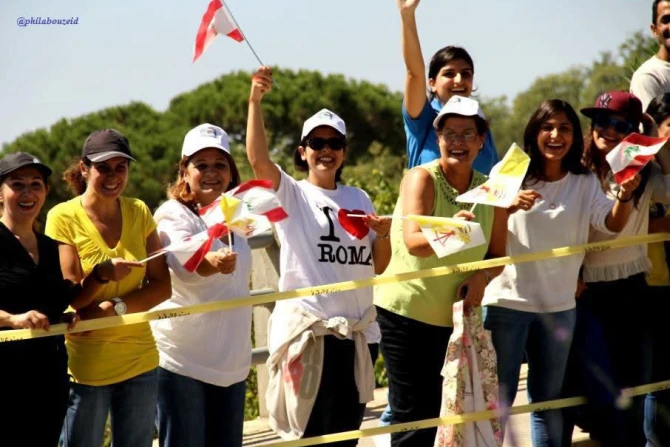
Anticipation is building across Lebanon as the country prepares to welcome Pope Leo XIV next week. The visit is not without precedent, however. Lebanon has received two other popes in recent history — John Paul II in 1997 and Benedict XVI in 2012. Both trips are remembered as milestones in a nation marked by conflict and resilience.
As preparations intensify, many of those who witnessed previous papal visits are reflecting on their impact and the memories they carry — memories that shape expectations for what Pope Leo’s visit may bring.
Remembering John Paul II in Lebanon
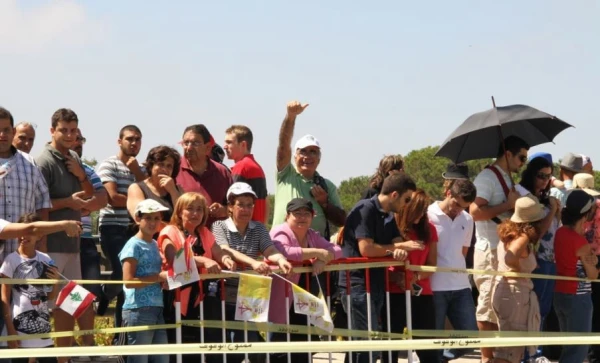
Pope John Paul II arrived in Lebanon in May 1997, carrying the apostolic exhortation “A New Hope for Lebanon.” Robert El Haybe, who was 33 at the time, shared with ACI MENA, CNA’s Arabic-language news partner, his memories of that trip. He remembers the warmth, the welcome, and the streets completely full of people.
“Everyone was there, including Muslims,” he said. “It was extremely beautiful.”
The visit took place during the height of the Syrian occupation of Lebanon, a period marked by political tension and tight control over public expression. At the time, there were concerns among Syrian authorities that the pope’s presence could spark a broader movement or escalate into protests. Many Lebanese Christians drew parallels between Lebanon under Syrian rule and Poland under the Soviet Union, recalling the pivotal role John Paul II played in mobilizing Polish society against communist control.
For this reason, Syrian officials insisted that the trip be strictly pastoral and not political. Yet even within those restrictions, the visit carried a powerful symbolic weight. The enormous crowds, the unity on the streets, and the overwhelming public response demonstrated the deep spiritual and national significance the pope’s presence had for the Lebanese people.
Although the Syrian occupation ended in 2005, not much has changed in Lebanon, El Haybe said. In his view, the war simply changes form: from military confrontation to financial collapse to political paralysis.
Opinions today are divided: Some believe a papal visit can bring real change, while others take a more measured view, seeing it primarily as a moment of prayer and pastoral support rather than an event that will alter political realities.
For El Haybe, the impact of St. John Paul II’s visit was clear: It offered support to Christians who felt abandoned. “Christians are forgotten; no one thinks about us except the pope,” he said, adding that while many countries claim to help Lebanon, “none actually do.” In his view, the pope’s presence, even within limited political influence, honors the people, carries a message of peace, and reminds others that Christians in Lebanon simply want to live together.
Memories of Pope Benedict XVI’s visit
Fifteen years later, Pope Benedict XVI visited Lebanon from Sept. 14–16, 2012. Elie Baroud, a Maronite who was 19 at the time, recalled the tense regional context: The Middle East was in turmoil, and the Syrian civil war had begun spilling over into Lebanon, marking the beginning of a difficult period. Against that backdrop, he said, Pope Benedict’s visit was seen as a light of hope and was eagerly anticipated by millions of Lebanese.
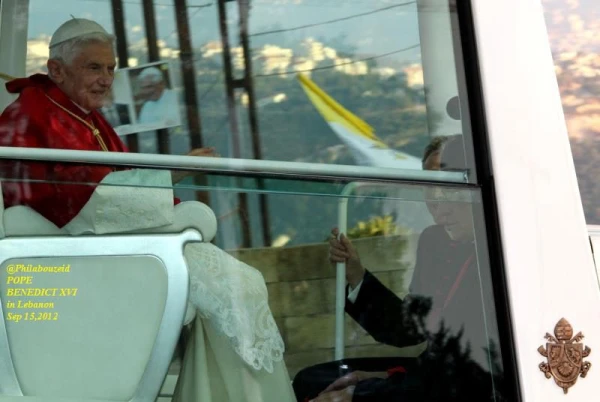
Baroud remembers seeing the pope on Sept. 15, the second day of the trip, when Benedict XVI visited the Synod of Bishops at the Armenian Catholic Patriarchate in Bzommar, the village where his extended family lived.
Baroud carries many beautiful souvenirs from that day. “Looking back now, I feel blessed that I was able to witness the same spiritual revival and hope in my heart as those who were old enough to remember Pope John Paul II’s visit,” he said, noting that John Paul II holds a special place in the heart of every Lebanese Christian.
Baroud noted that he was entering adulthood during an extremely unstable period, when terrorist forces, not yet known as ISIS, threatened to cross the Lebanese border, Hezbollah was actively engaged in the Syrian conflict, and the economy was already showing signs of severe fragility.
“It was an unsettling time; things could erupt at any second,” he said. In that context, Pope Benedict’s visit acted as a shield, a blessing, and a source of comfort, he said, reminding him that Lebanon, and especially its Christians, are not forgotten.
Parallels across eras
Baroud stressed that the parallels between Pope Leo XIV’s upcoming visit and Pope Benedict XVI’s visit in 2012 cannot be understated. He noted that Lebanon is once again suffering from regional conflict, with the Israeli-Gaza war spilling onto Lebanese territory, and the economy in an even worse state than it was a decade ago.
“Lebanon today still faces economic strains, intercommunal tensions, and a population exhausted and burned out,” he said. “In the last five years alone, we witnessed the Beirut Port explosion, one of the largest nonnuclear explosions in recorded history; we lived through the coronavirus pandemic, economic collapse, and people losing their life savings in banks, leaving families vulnerable and on the verge of bankruptcy. And just as things were beginning to look up, Hezbollah’s intervention in the Gaza war invited the Israelis to bomb Lebanon ferociously again, placing yet another roadblock before any hope of living a normal life in this country.”
Looking ahead, Baroud said he believes the contrast between the two visits will be reflected in the pope’s message. “Lebanon has always been presented as a model of coexistence for the world, and I am sure this message will return, as it did with Pope John Paul II and Pope Benedict XVI,” he said. “However, in my humble opinion, if coexistence were the only message, it would be redundant, and I do not believe it will be the only one.”
“I expect the pope to address our demands for peace in the region, the restriction of arms and artillery to the Lebanese Armed Forces alone, and the hope that millions of Lebanese expatriates, many of whom are Christians forced to leave because of the hostile environment, can one day return,” he continued.
“Lebanon has overpaid its dues as the carrier of the region’s conflicts. We deserve to know peace and stability. We need a state that protects everyone without favoritism, where our youth can build their lives here instead of boarding planes to exile. We need justice, a healed economy, security, and international pressure to enforce sovereignty. Only then can this wounded mosaic become whole again.”
Baroud emphasized the significance of the upcoming visit. “When the pope lands in Beirut, it’s a reminder to the world that our ancient community, battered by wars, economic collapse, and emigration, is still seen, still matters,” he said. “These moments rally our people, slow the exodus of our youth, boost morale, and force global powers and local leaders to remember that Lebanon’s Christians are not relics of the past but a vital thread in this nation’s future.”
Baroud added that it would have been “a blessing to witness a visit from Pope Francis,” noting that plans were beginning to take shape before the deterioration of his health and his passing. “May he rest in peace,” he said.
This story was first published by ACI MENA, CNA’s Arabic-language news partner, and has been translated for and adapted by CNA.