The pope reflected on the Jesuits’ four Universal Apostolic Preferences to address todayʼs challenges: the Spiritual Exercises, walking with the poor, a hope-filled future, and the care of creation.
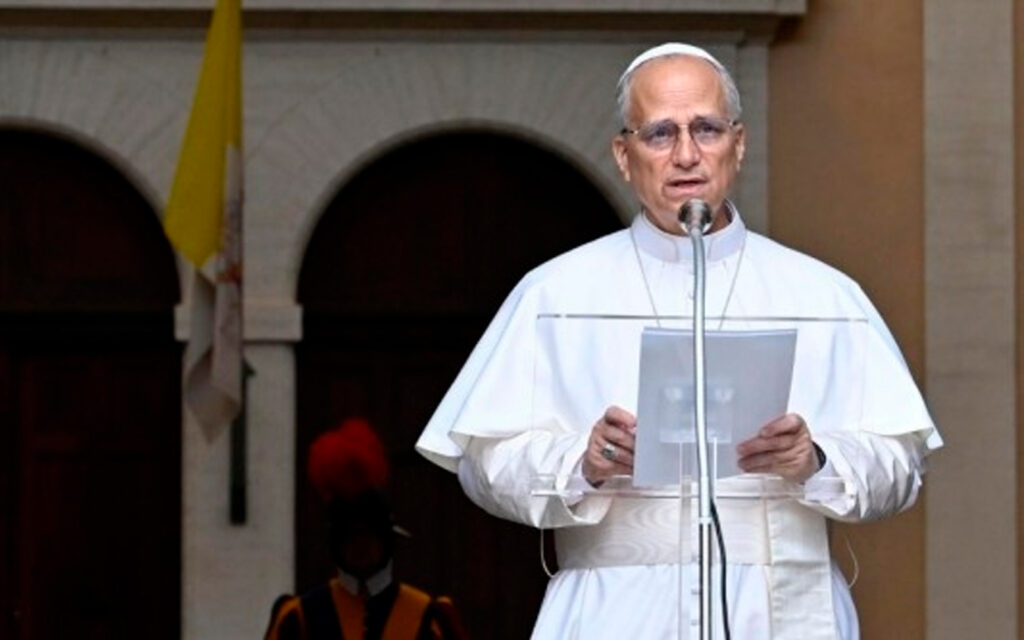
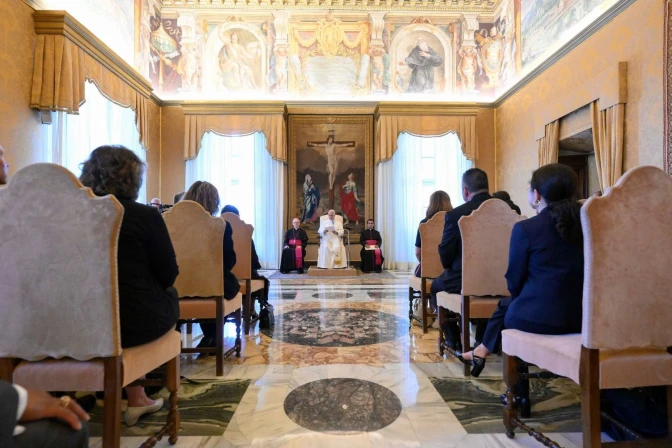
In an audience with representatives of Jesuit colleges and universities in North America, Pope Leo XIV proposed four ways to address current challenges.
In his address on June 25, the Holy Father referenced several of the major challenges facing humanity, which he said is undergoing an “epochal change.” Specifically, he pointed to the secularization of societies, where many people are “seeking to push any mention of God out of the public sphere and beyond popular culture.”
In addition, he pointed to the failure of political systems to address the needs of migrants and the marginalized, as well as the lack of hope among young people, the degradation of the planetʼs resources, and the challenges posed by artificial intelligence.
The pope encouraged representatives of Jesuit colleges and universities to confront these challenges by looking to the Society of Jesus’ four Universal Apostolic Preferences, which are four focus areas that are to guide the Jesuits’ mission worldwide from 2019 to 2029. They were developed through a two-year global discernment process involving Jesuits and their lay partners, then confirmed by Pope Francis in 2019.
The four Universal Apostolic Preferences are to show the way to God through the Spiritual Exercises and discernment; to walk with the poor, the outcasts, and those whose dignity has been violated in a mission of reconciliation and justice; to accompany young people in the creation of a hope-filled future, and to collaborate in the care of our common home.
First, the pontiff reflected on the Spiritual Exercises of St. Ignatius and the importance of discernment, encouraging members of academic communities to have the opportunity to participate in them and thus come to know “the One who is Truth.”
“Those who conduct research, those who pursue studies and those who seek the truth are ultimately seeking God, whether they realize it or not,” he emphasized.
He also referred to the “thirst for God” that is increasingly palpable among young people, something he noted he had witnessed firsthand during his recent visit to Spain. Consequently, he encouraged them to offer the Spiritual Exercises to young people on university campuses.
The pope also pointed out that it is essential to “walk with the poor and the outcasts of the world.” For this reason, he urged them to “offer opportunities for immigrants, refugees and those of a lower socioeconomic status to have the benefit of an advanced education.”
“The resurrection of Christ is the ultimate source of hope.”
Pope Leo XIV
He emphasized that Jesuit schools and universities must be places where young people find “a hope-filled future,” and thus must foster opportunities for dialogue, service, and prayer, “remembering always that the resurrection of Christ is the ultimate source of hope.”
As another urgent duty, the pontiff underscored the need to educate about the care of creation, primarily due to the effects of climate change as well as “the exploitation of resources by a few at the expense of the common good.”
Finally, in citing the advances in artificial intelligence, he appealed to the essential role of colleges and universities and noted that it is “important to begin now to address the consequences, both positive and negative, that come from these advances.”
“With the help of the prayers of St. Ignatius of Loyola, may you continue the Jesuit tradition of forming those entrusted to your care to be ‘men and women for others,’” the Holy Father encouraged.
This story was first published by ACI Prensa, the Spanish-language sister service of EWTN News. It has been translated and adapted by EWTN News English.