‘The faith here is amazing. Yes, we have less than 1% Catholics in the country, but when they commit themselves, they do it fully… That is the most beautiful part…’

We had already been driving for two hours en route to the town of Arvaikheer, the closest town to the Mongolian capital of Ulaanbaatar. Looking out the window, cameraman Patrick and I took in the sheer beauty of this vast country. Along the drive, we would see majestic horses galloping in the fields; we often had to stop the car to allow cows, sheep and goats to cross the road. At one small patch of desert land, we stopped to see the camels.

We were on our way to film with a family of herders who live a nomadic life on the land. We drove off-road through fields to a small yurt or ger, a large circular tent made from wood and felt. Inside, the elderly couple (both in their 70s, extremely gentle and shy) were proud to present to us, the guests, their freshest horse milk. “Herding has been in our families for generations,” the woman explained. Her husband rarely spoke, but when I asked him if he liked herding, he told me he liked working with the animals. His wife chimed in, “It’s all we know.”

By the wall of the yurt was a small Buddhist altar. Around 51% of Mongolians are Buddhist, with others practicing Shamanism (3.2%) and Islam (2.5%). Catholics make up less than 1% of the population — only about 1,400 in the entire country, a number so small they would all fit into St. Patrick’s Cathedral in New York, and there would still be 1,000 seats free.
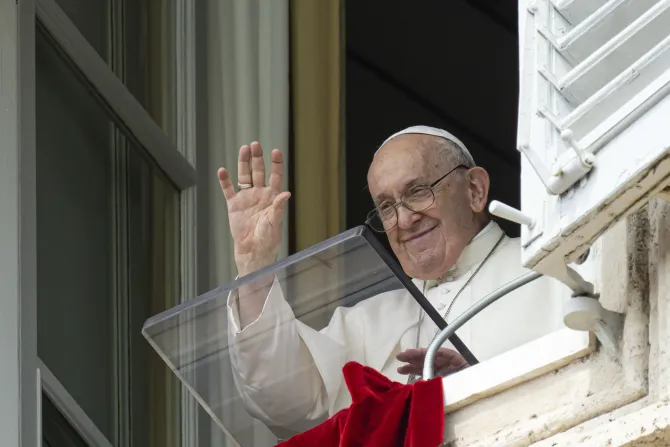
I asked the couple if they have ever heard of Pope Francis or the Catholic Church. “No,” replied the woman. “We’ve never been to any of those foreign churches.”
“Foreign church” is how most people in Mongolia view the Catholic Church.
In Arvaikheer, there is one parish, with just 50 members — where Mass is celebrated in a traditional yurt. The parish priest, Father Dido, is from Kenya.
Even though his flock is small, he’s not phased. “The faith here is amazing. Yes, we have less than 1% Catholics in the country, but when they commit themselves, they do it fully,” he said. “That is the most beautiful part.”

Back in Ulaanbaatar, Father Ronald Doloso Magbanua oversees Good Shepherd parish. He is the superior of the Congregation of the Immaculate Heart of Mary (CICM) congregation in Mongolia, the same missionaries who first came here in 1992, after the Vatican reestablished diplomatic relations with Mongolia. Under Soviet rule and communism, religion had been completely wiped out, and so when three Catholic missionaries eventually entered the country and had to rebuild the Church, they were “starting from scratch. Zero. There was nothing here,” Father Magbanua reported. “They had this come-and-see method, and if you like, you stay, and many people were attracted.”

Mongolia has only one cathedral, dedicated to Sts. Peter and Paul. There, one of the country’s only two Mongolian priests, Father Saanjaajav Tserenkhand, was busy running around with workers from Mongolian National Broadcaster to pick the best vantage points to put their TV cameras for Pope Francis’ meeting with the country’s religious on Saturday.
“The modern Catholic Church has a history of 31 years, but if you think about the history of Mongolia, in my opinion, God has always been present in nomadic culture,” Father Tserenkhand explained. “If you think about Abraham, the ancestor of our faith, he was nomadic, as well.”

The Augustina family live in a high-rise apartment building in Ulaanbaatar. They are Mongolian but converted to the Catholic Church in 1995. With a warm welcome, they covered their kitchen table with food and treats for the EWTN crew. The mother, Tseynnorov, and father, Jalsaw, are economics and science professors at a university, and their daughter was on a break from studying in Taiwan. Their son is still in high school. Over delicious meat dumplings they explained why they converted. Jalsaw answered first: “To get closer to God. And the Catholic Church has its own theology and a rich history, so it wasn’t a random choice that I got baptized as a Roman Catholic.” Then Tseynnorov said, “In 1992, the constitution was written, and freedom of religion was declared in Mongolia. And a person seeks truth. So what is truth? In science, we do a lot of research to find the truth, looking into the meaning of truth. So that’s why it’s easy for us to believe.”

Church leaders speak of the challenges or, as Father Tserenkhand put it, “misunderstandings” the Church faces when dealing with the government and the general perception of the Catholic Church among the public. “Since most of the religious Mongolian people are foreigners, there are problems sometimes obtaining visas and with permits for the church. Every year we have to apply for a new permit and give a report, but we are trying to work through it step by step. But we are just trying to be ourselves, and whatever the government requires from us, we try to give truthfully.”
Local driver Chris made reference to the early ’90s, when some cults formed. At that time, a group of young people from one of these so-called religious groups took their own lives, shocking Mongolia as a whole. Chris said he believed most Mongolians do not distinguish between the Catholic Church and cult churches, a problem he hopes the visit of Pope Francis will help address.

Despite the challenges the Church has to endure, it carries out its mission. In a country where an estimated 22% of the population live in poverty, there are many problems. The Verbist orphanage is run by the CICM congregation. The youngest in this orphanage is 2 years old, and the oldest is 20. Brothers Rikardus Gabut and Willibaldus Koban manage the orphanage and show me around. “The children don’t have parents,” Brother Rikardus said. “You can see when they come here that they really need help.” Brother Willibaldus added, “We provide them the basic needs: education, health and food. We want them to have a better future, as I believe everyone deserves a good future.”

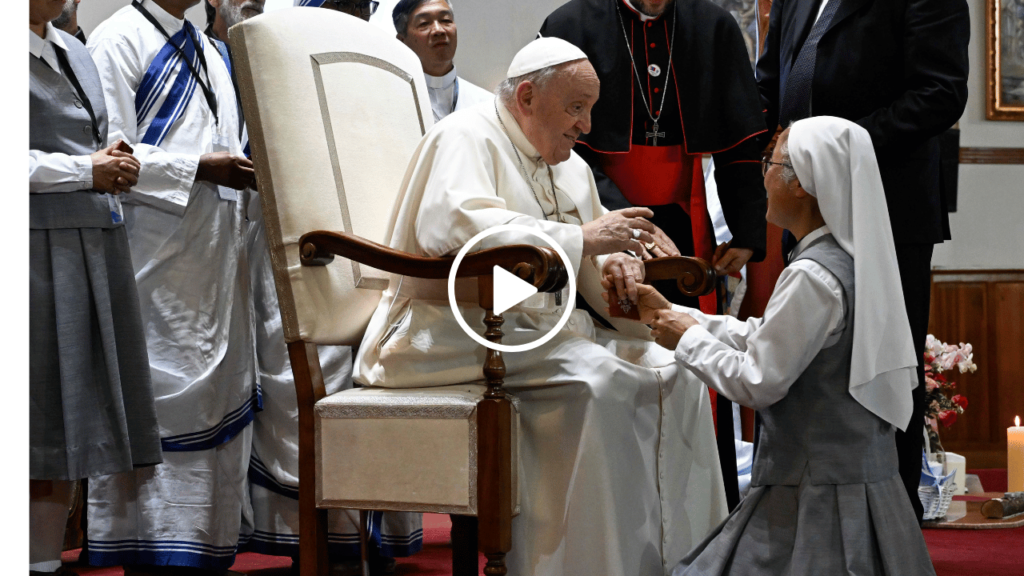
In a neighborhood on the outskirts of the capital city, the Sisters of Charity run a care center for women with disabilities and other medical and memory concerns, including those who have experienced trauma and abuse, providing music therapy and outstretched hands. With Christian love, these sisters care for women who are too often forgotten or ignored by society, offering compassionate companionship.
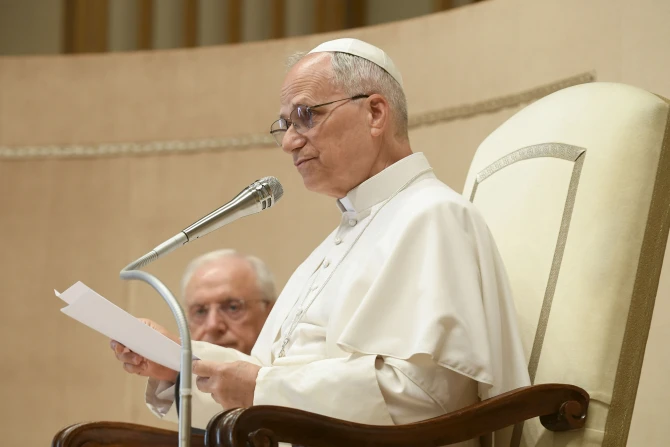
As with Pope Francis’ previous trips, he likes to go to where the Church is not mighty and powerful, but humbly working, out of the way and on the margins, and trying to change lives bit by bit. To have the papal presence felt in this part of the world, one hopes, will help to change hearts and minds.
As Father Tserenkhand said of his expectations of what the papal visit will do for the Church here: “This is a very happy and historical event. If you think about the history, there was a connection between Genghis Khan and a Roman pope [letter exchanged with Pope Innocent IV, 1245-1246], and now it is becoming a reality. It is a symbol that God has been present with us in our lives.”