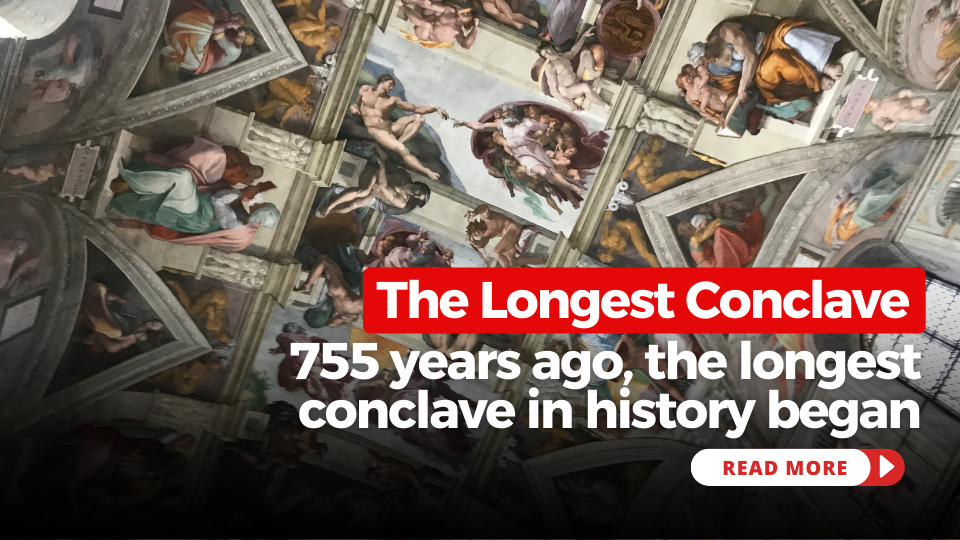
On November 29, 1268, exactly 755 years ago, the longest conclave in history began, lasting 34 months, nearly three years, culminating in the election of Pope Gregory X.
What is a Conclave?
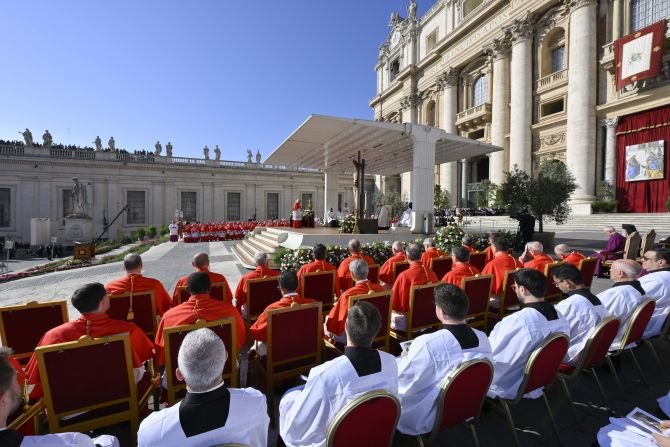
A conclave is an assembly of cardinals convened to elect the Roman Pontiff. The cardinals must meet 15 days after the death or resignation of the Holy Father, although the College of Cardinals has the authority to set another date, not to be delayed more than 20 days. The usual location for the conclave is the Sistine Chapel in the Vatican, though in the past, it has been held in the Quirinal Palace in Rome. The last conclave held outside the Eternal City took place in Venice, in March 1800, following the death of Pope Pius VI.
For the election of the new Successor of Peter to be valid, he must receive two-thirds of the votes.
After each vote, the ballots are burned. If the smoke seen coming from the chimney is black, it indicates that a new Pope has not yet been elected. If the smoke is white, a new Successor of Saint Peter has been chosen.
The Longest Conclave in History
The history of this conclave is directly related to its name, which etymologically comes from two Latin words: cum (with) and clavis (key).
This term has been used since the 13th century, after nearly three years of Sede Vacante, when the governor of Viterbo decided to effectively lock the cardinals inside to choose the new Pope, starting in the European summer of 1270.
As recounted by the Catholic Encyclopedia (EC), “the cardinals gathered in Viterbo were divided into two factions, the French and the Italian. Neither could secure the two-thirds majority of the vote nor wanted to yield to the other to elect a papal candidate.”
“At last, a compromise was reached through the redoubled efforts of the kings of Sicily and France. The sacred College, then consisting of 15 cardinals, appointed six to agree and cast a final vote,” recalls the EC.
Thus, the six cardinals “convened on September 1, 1271, and united their votes in electing Teobaldo Visconti, Archdeacon of Liege, who was not a cardinal, nor even a priest.” When elected, he was with Prince Edward of England on a pilgrimage to the Holy Land.
Visconti received a request from the cardinals to return immediately. He arrived in Viterbo several months later, in March 1272, where he accepted the election and took the name Gregory X. His pontificate concluded on January 10, 1276.
On the opposite end of conclave durations, the one in 1503 lasted only a few hours, in which Pope Julius II was elected.