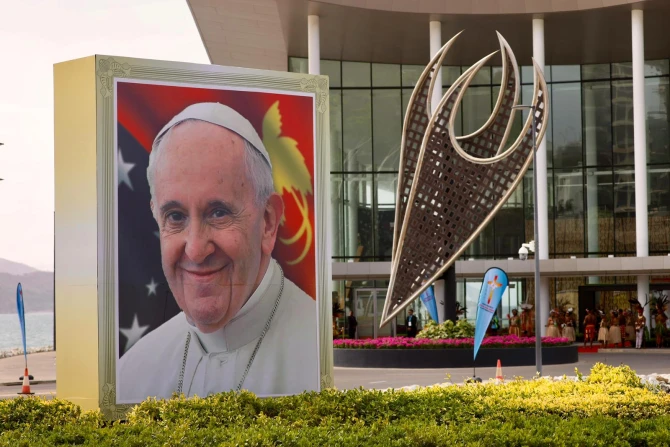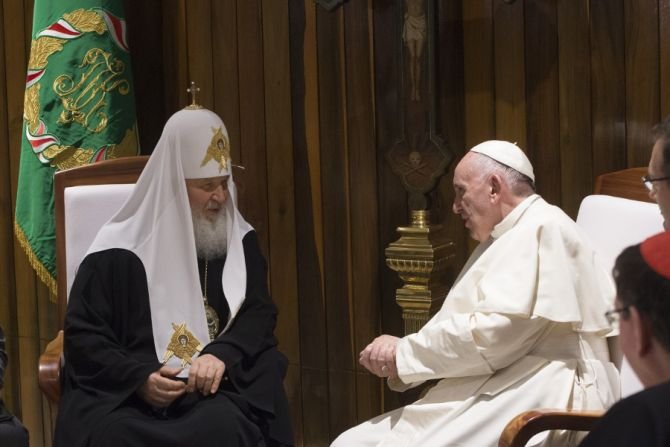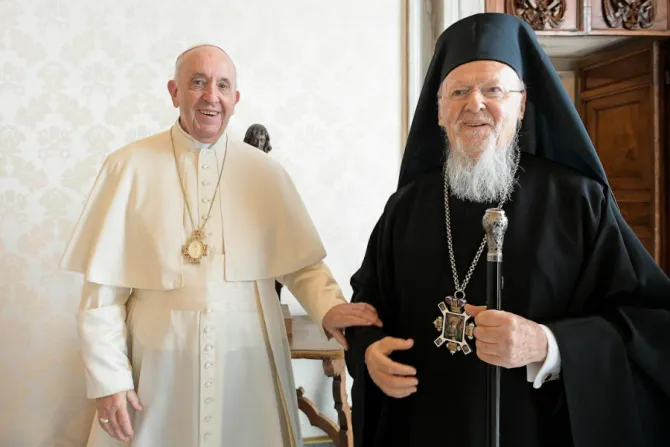
Pope Francis might be traveling to Turkey next year for the 1,700th anniversary of the First Council of Nicaea, according to Eastern Orthodox Patriarch of Constantinople Bartholomew in comments he made on Thursday.
Although the Holy See has not confirmed any travel plans, the ecumenical patriarch told a group of reporters that a committee is being established to organize a visit, according to the Orthodox Times. The referenced council took place in the ancient city of Nicaea in 325 A.D. in the former Roman Empire, which is now the present-day city of İznik in Turkey.
“His Holiness Pope Francis wishes for us to jointly celebrate this important anniversary,” Bartholomew said.
The Council of Nicaea was the first ecumenical council in the Church. It is accepted by the Catholic Church, the Eastern Orthodox Church, the Oriental Orthodox Church, and other Christian communities that accept the validity of early church councils. It predates the Chalcedonian Schism — which separated the Oriental Orthodox communion from Rome — by more than 100 years and predates the Great Schism — which separated the Eastern Orthodox Church from Rome — by more than 700 years.
During the council, the bishops condemned the heresy of Arianism, which asserted that the Son was created by the Father. Arius, a priest who faced excommunication for propagating the heresy, did not accept that the Son was coeternal with the Father.
According to the council, Jesus Christ is “begotten; not made” and is “of the same substance with the Father.” It affirms that the Son is coeternal with the Father and condemns any heresies that assert “the Son of God is created, or mutable, or subject to change” and heresies that assert “there was a time when [Christ] was not [in existence].”
The council was convened by Emperor Constantine the Great, who is venerated as a saint in some Eastern Catholic, Eastern Orthodox, and Oriental Orthodox traditions.
This article was originally published on Catholic News Agency.