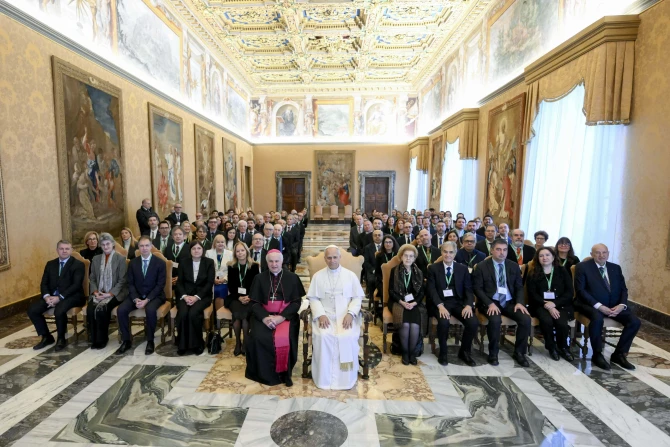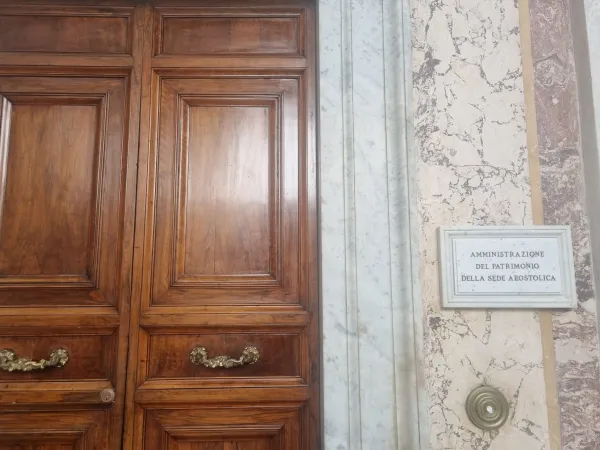
The Vatican’s financial institution, often referred to as the “central bank” of the Vatican, has a new leader. Bishop Nunzio Galantino’s five-year term as president of the Administration of the Patrimony of the Apostolic See (APSA) came to an end in August, and his successor is none other than Father Giordano Piccinotti, a Salesian priest who has been serving as an undersecretary since January.
Father Giordano Piccinotti’s appointment as president of APSA is noteworthy as he becomes the first non-bishop or non-cardinal to hold this position. Born on February 23, 1975, in Manerbio, Italy, Piccinotti has a strong background within the Salesian community. He made his perpetual profession in the Salesian Society of St. John Bosco in 2004 and was ordained as a priest on June 17, 2006. Additionally, he holds a License in Spiritual Theology from the Pontifical Salesian University in Rome, Italy.
Piccinotti’s previous roles include serving as an economist for Salesian houses in Lugano from 2007 to 2011 and from 2016 to 2017. He also managed financial matters at “San Carlo” in Milan from 2011 to 2015 and held the position of Provincial Economist from 2011 to 2017.
His extensive experience also extends to directorship roles in various Salesian foundations, including the “Fondazione Opera Don Bosco nel Mondo” in Lugano, Switzerland, and the “Fondazione Istituto Elvetico Opera Don Bosco” in Lugano. He has been an Executive Director at the “Fondazione Opera Don Bosco onlus” in Milan, Italy, and a Member of the Council at the “Stiftung Don Bosco in Der Welt” in Schaan, Liechtenstein. Piccinotti has also served as the Treasurer of the Board of Directors of the NGO “Volontariato Internazionale per lo Sviluppo” (VIS).
The appointment of Don Giordano Piccinotti marks a significant transition for APSA, the Administration of the Patrimony of the Apostolic See. Traditionally responsible for managing the Vatican’s financial assets and properties, APSA has evolved over the years. In recent times, it has taken on roles akin to both a central bank and a sovereign investment fund, particularly following the economic reforms initiated by the Vatican.
APSA’s functions mirror those of a central bank, and its current structure, established in 2017, includes a sub-secretary and a management control executive. The institution employs approximately 95 permanent staff members, supplemented by around ten temporary collaborators.
APSA’s portfolio comprises numerous real estate properties, including over 4,000 units in Italy, covering an extensive commercial area of approximately 1.47 million square meters. These properties include residential, commercial, ancillary, and those with reduced profitability. Interestingly, APSA has chosen to invest in real estate properties both within Italy and internationally, a strategy attributed to reduced exposure to exchange rate fluctuations and geographic diversification of investments.
Moreover, APSA manages its foreign properties through wholly-owned companies that are 100% controlled by APSA. These include British Grolux Investment Limited in the UK, founded in 1932; Sopridex SA in France, also established in 1932; and Profima SA in Switzerland, which was founded in 1933 and underwent a consolidation in 2019 by merging ten real estate management companies to optimize costs.
Father Giordano Piccinotti’s appointment concludes Bishop Nunzio Galantino’s five-year tenure at APSA, which saw significant reforms aimed at streamlining and professionalizing the administration. Notably, this period also witnessed the appointment of the first lay secretary, Fabio Gasperini, tasked with overseeing these transformative changes.