Following Pope Francis’ death at age 88 on Easter Monday, the Vatican carried out the first stage in the papal funeral rites, called “the rite of the ascertainment of death and deposition in the coffin.”
SIGN UP FOR OUR NEWSLETTER HERE
Cardinal Kevin Farrell, the camerlengo, presided over the rite in the chapel of Pope Francis’ Vatican residence, the Casa Santa Marta, just a little over 12 hours after the pontiff’s death, at 8 p.m. Rome time.
According to the Vatican, the rite took under one hour and the pontiff’s remains will stay overnight in the chapel of Casa Santa Marta.
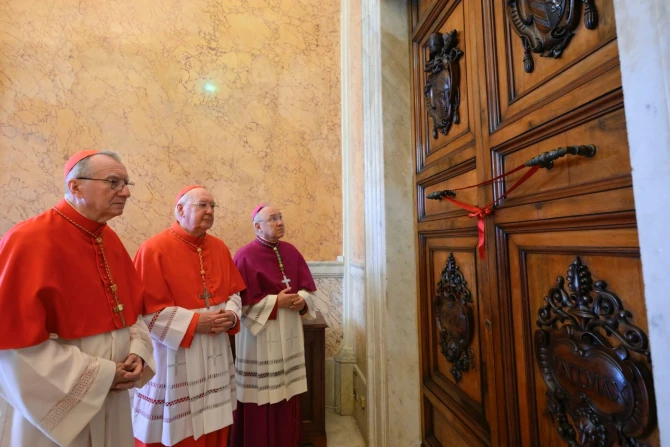
Farrell — along with Vatican Secretary of State Cardinal Pietro Parolin and his deputy Archbishop Edgar Peña Parra — also closed and sealed the papal apartment in the Apostolic Palace, as called for by protocol, though Pope Francis chose not to live in the apartment during his pontificate.
The rite on Monday evening was attended by some of Pope Francis’ family members, the director and vice director of the Vatican’s health and hygiene department, and dean of the College of Cardinals, Giovanni Battista Re.
After Francis died on the morning of April 21, the director of the Vatican’s health services, Dr. Andrea Arcangeli, examined the pontiff’s body and prepared the death certificate, which said the late pope died from a stroke, coma, and irreversible cardiovascular collapse. The certificate was read during the attestation rite.
Arcangeli also arranged for the proper preservation of the corpse so that its public exposition can be carried out “with the greatest decorum and respect.”
The remains of the deceased Francis were then dressed in his white cassock and moved to the private papal chapel of his Vatican residence for the first part of the funeral rites, which were held at 8 p.m. local time.
During the “rite of the ascertainment of death and deposition in the coffin,” Farrell led the prayers, according to the Ordo Exsequiarum Romani Pontificis, and then the pope’s body was dressed in red liturgical vestments with the miter and pallium and placed in a simple wooden coffin with a zinc lining.
The paschal, or Easter, candle was placed nearby and lit for the next part of the rite, which includes sprinkling holy water on the body. The casket with the pope’s remains was placed within the chapel of the Casa Santa Marta for visitation and prayer until it will be moved for public viewing.
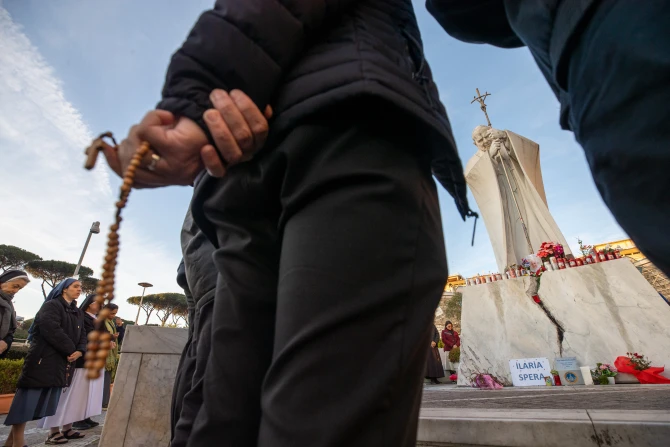
Cardinal Mauro Gambetti, archpriest of St. Peter’s Basilica, led a rosary for Pope Francis in St. Peter’s Square on the evening of April 21.
According to the Holy See Press Office, Francis’ remains may be brought to St. Peter’s Basilica for public exposition on the morning of April 23. The exact date and time will be confirmed by the Vatican on April 22.
The College of Cardinals will meet beginning April 22 to make decisions for the running of the Vatican during the “sede vacante,” the period without a pope, and to decide the date and time of Francis’ funeral and burial.
This article was originally published on Catholic News Agency.