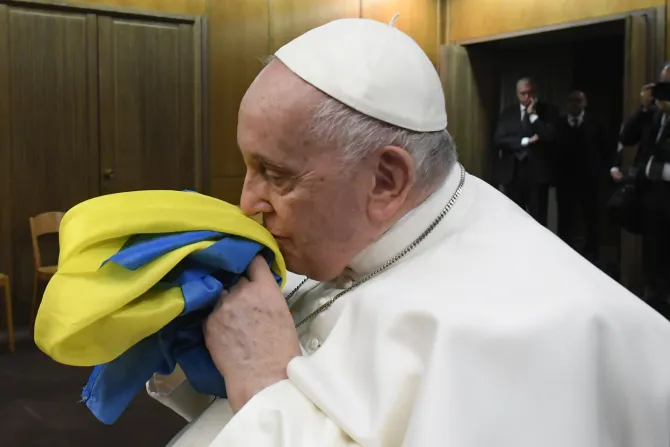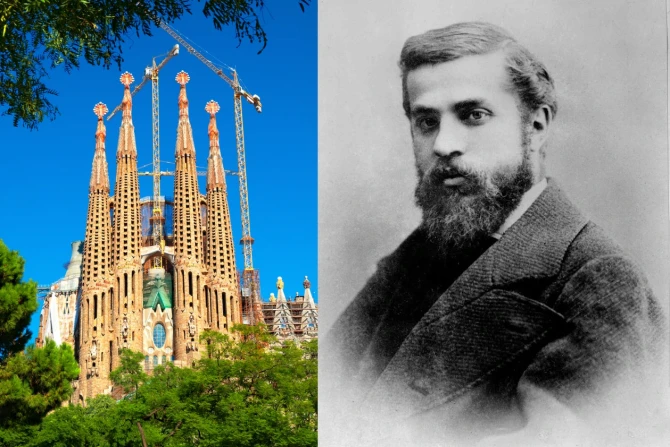
Pope Francis on Monday declared Spanish architect Antoni Gaudí “venerable,” bringing the designer of Barcelona’s iconic Sagrada Familia basilica one step closer to sainthood.
The Vatican announced April 14 that Pope Francis has formally recognized Gaudí’s “heroic virtue,” a key step in the canonization process. Two miracles attributed to Gaudí’s intercession are now required for his canonization.
Known as “God’s architect,” Gaudí died in 1926 at age 73. A leading figure in modernist and naturalist architecture, he is best known for designing the Basilica de la Sagrada Familia, a massive basilica still under construction more than 140 years after work began.
The basilica, with its distinctive spires and blend of Gothic and modernist styles, has become one of the most visited churches in the world. It was consecrated as a minor basilica by Pope Benedict XVI in 2010. At the dedication, Pope Benedict praised Gaudí for uniting nature, Scripture, and liturgy in a way that “brilliantly helped to build our human consciousness, anchored in the world yet open to God, enlightened and sanctified by Christ.”
Though not initially devout, Gaudí is said to have undergone a spiritual conversion while working on the Sagrada Familia. As the work on the basilica progressed, Gaudí became known for his fasting, asceticism, and devotion to God. In the final 14 years of his life, he devoted himself entirely to the basilica and rejected all other commissions. He was struck by a tram in Barcelona on June 7, 1926, while walking to confession and died three days later.
Gaudí is buried in the crypt of the Sagrada Familia. Of the basilica’s three main facades, only the Nativity Façade was completed during his lifetime. The Passion Façade was built later based on his designs, and the Glory Façade remains unfinished.
The basilica is expected to be completed next year in 2026, marking the centenary of Gaudí’s death.
Efforts to advance his sainthood cause began in 1992, led by a group of lay Catholics. The Vatican officially opened the cause in 2003. In 2015, Pope Francis reportedly expressed support for advancing the process, calling Gaudí “a great mystic,” according to the Association for the Beatification of Antoni Gaudí.
The pope’s Monday decree came following a meeting with Cardinal Marcello Semeraro, head of the Vatican’s Dicastery for the Causes of Saints, amid the pontiff’s ongoing recovery from illness.
Miracle, martyr, and heroic virtue
In the same decree, Pope Francis also recognized a miracle attributed to Eliswa Vakayil (1831–1913), an Indian religious sister later known as Mother Eliswa of the Blessed Virgin Mary who founded the first Indigenous Carmelite congregation for women in Kerala in 1866.
Before entering religious life, Vakayil was married and had a daughter named Anna. After her husband suddenly fell ill and died when her daughter was 18 months old, Vakayil dedicated herself to a life of silent prayer and service.
Praying before the Blessed Sacrament more than a decade later, Vakayil felt called to consecrate her life to God. Her daughter Anna and her sister felt inspired to join her and the three family members were officially received together into the Carmelite order four years later.
The recognized miracle paves the way for Vakayil’s beatification.
The pope also recognized the martyrdom of Italian missionary priest Father Nazareno Lanciotti, who was killed in Brazil in 2001. Lanciotti spent 30 years in missionary work near Brazil’s Bolivian border, founding a hospital, a home for the elderly, a school, a minor seminary, and 57 rural faith communities where he instituted daily Eucharistic adoration.
Lanciotti was known for opposing injustice, including drug trafficking and exploitation, which reportedly made him a target. On Feb. 11, 2001, two masked assailants entered his rectory and shot him. He died 11 days later after forgiving his attackers.
The Vatican recognized his death as martyrdom, citing both his forgiveness of his killers and the premeditated nature of the killing. His beatification may now proceed, though canonization will require a confirmed miracle. With the recognition of his martyrdom, Lanciotti can now be beatified, but a miracle attributed to his intercession is still required for him to be canonized as a saint.
In addition to Gaudí, the Vatican also recognized the heroic virtue of three more priests: Canon Petrus Joseph Triest (1760–1836) of Belgium and Italians Father Agostino Cozzolino (1928–1988) and Father Angelo Bughetti (1877–1935).
This article was originally published on Catholic News Agency.