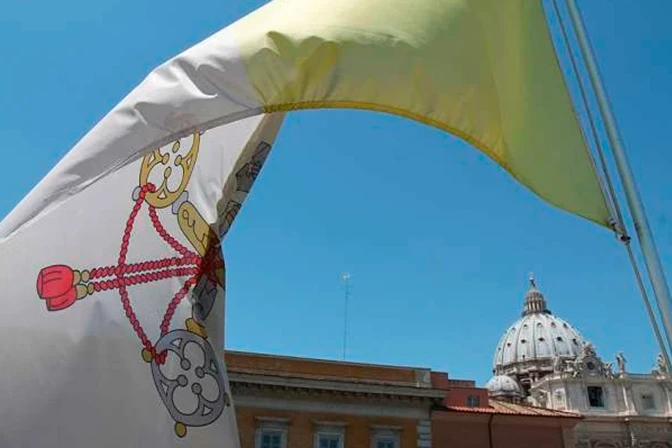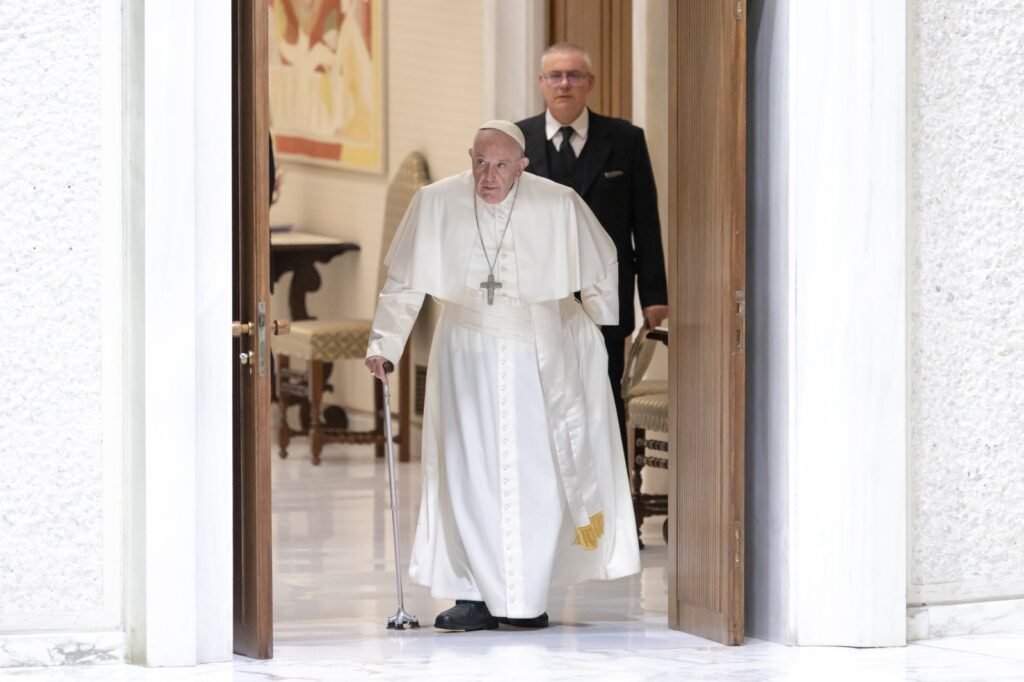
First we should acknowledge that this is a rare occasion. The last time the fundamental law of the Vatican City State was changed, was in the year 2000 by Pope Saint John Paul II. The first constitution was issued in 1929 following the Lateran Pacts, which stayed in place until the turn of the millennium. But there are other factors that make the decision of Pope Francis to update this law remarkable. It will be in effect 7 June 2023.
The new constitution empowers the laity by allowing lay persons to become part of the governing commission of the Vatican. Previously, only Cardinals were allowed to be members.
Also, it emphasizes the sovereign power of the Pope over the Vatican City State. This should not come as news, as it has always been clear that the Vatican is not a democracy but an absolute monarchy with the Holy Father as its ruler.
Yet, the new constitution has another objective: to establish greater transparency, a goal that has been central to Pope Francis’s reform of the Curia one year ago.
In a statement issued along with the new constitution, Pope Francis justified this new legal framework with the idea of modernization. He said that he issued it to “meet the needs of our time.”
This is quite understandable. The needs of a modern government have changed dramatically since the turn of the Millennium. In the end, the Vatican is a state that faces all the challenges other states are facing today, from digitalization to money flows, international transparency, governance requirements and many more.
At the same time, it is important to remember that this new law is not a revolution but rather a renovation.
It re-emphasizes the old idea that the City State and its Governorate is at the service of the Successor of Peter and His mission to preserve and promote the Word of God to all people. The Vatican City State does not exist for its own purpose, but is instead an instrument for evangelization.
This thought is consistent with what we have also seen in the new constitution for the Roman Curia. His emphasis on evangelization is also seen in his decision to merge the Congregation for the Evangelization of Peoples with the Pontifical Council for Promoting the New Evangelization into one big Dicastery of Evangelization, which he heads directly.
Another objective was greater transparency when it comes to financial assets. All were placed under one central management, the Apostolic Patrimony of the Holy See, or APSA.
And this push for transparency is much needed as the latest report of the Vatican Supervisory and Financial Information Authority for the year 2022 proves: there were still 128 cases of suspicious activity reported that led to five suspensions.
Another remarkable aspect of the reform: it allows also women religious or lay persons to be named to the helm of the Vatican City State. While the current head and president is Cardinal Fernando Vergez Alzaga, from the Legionaries of Christ, the fairly new Secretary General is a woman, namely Sister Raffaella Petrini. With the new constitution in place, there would be no obstacles left that one day it could also be her to head the Governorate.
(Edited by Matthew Santucci)