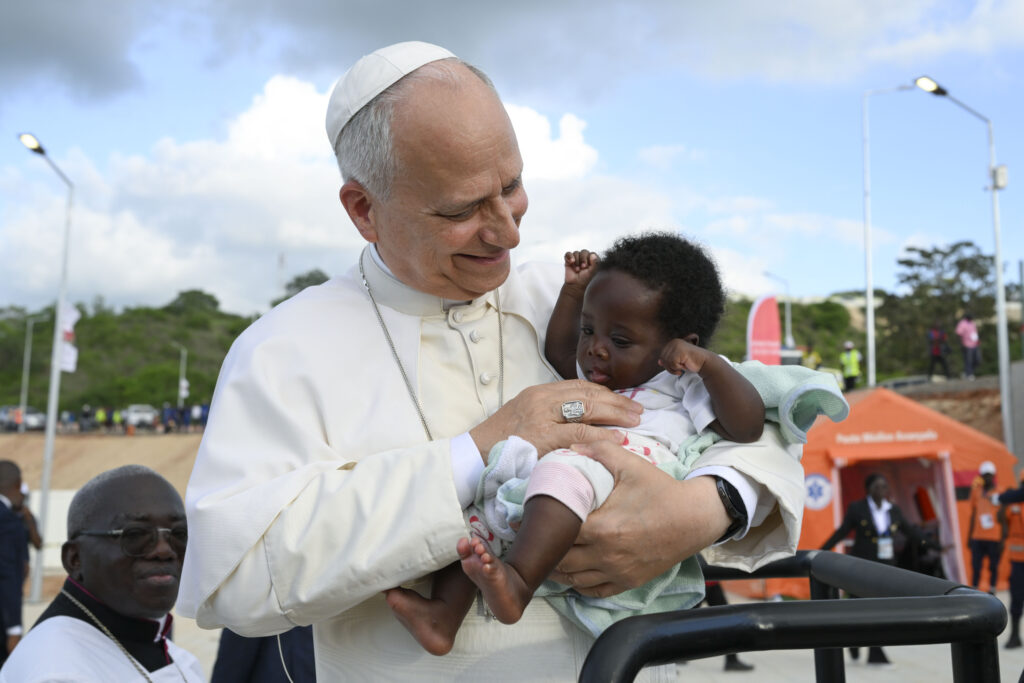
In a new letter released Sunday, Pope Francis touts the benefits of reading literature for priests and all those seeking to enrich their lives as Christian believers.
Though he said his letter was originally intended for men receiving priestly formation, he said all Christians — not just those involved in ministry — would benefit from incorporating poetry and literature into their personal times of study or leisure.
“Time spent reading may well open up new interior spaces that help us to avoid becoming trapped by a few obsessive thoughts that can stand in the way of our personal growth,” he writes in his letter, which is dated July 17 and comes at the height of the summer when many people are taking time off to rest and recreate.
The 87-year-old pontiff believes reading literature enables individual people to learn the art of reflective personal discernment, empathy with others, as well as entering a dialogue with the culture of our times, in a more profound way than modern audio-visual media.
“We are enriched by what we receive from the author and this allows us in turn to grow inwardly, so that each new work we read will renew and expand our worldview,” he writes.
In his letter, the Holy Father praises seminaries that incorporated times dedicated to the reading of literature and poetry, countering the current “obsession with ‘screens’ and with toxic, superficial and violent fake news.”
Reading, the pope insists, should not be approached with an arduous or rigid “sense of duty,” but rather with a flexibility, openness, and “readiness to learn.”
“Everyone will find books that speak to their own lives and become authentic companions for their journey. There is nothing more counterproductive than reading something out of a sense of duty, making considerable effort simply because others have said it is essential,” he shares.
Drawing upon the example of St. Paul who “gathered the seeds of pagan poetry,” the pope said Christians who are knowledgeable of the literary works of their times can bring others closer to God through the person of Jesus Christ.
“We must always take care never to lose sight of the ‘flesh’ of Jesus Christ: that flesh made of passions, emotions and feelings, words that challenge and console, hands that touch and heal, looks that liberate and encourage, flesh made of hospitality, forgiveness, indignation, courage, fearlessness; in a word, love,” Pope Francis writes.
Through “listening to the voice of others” and “seeing through the eyes of others,” Pope Francis believes there is a kind of wisdom and richness instilled in readers of the literary word that seeks truth, broadens perspectives, and enhances critical and cognitive thinking.
“It opens our human words to welcome the Word that is already present in human speech, not when it sees itself as knowledge that is already full, definitive and complete,” he observes, “but when it becomes a listening and expectation of the One who comes to make all things new (cf. Rev 21:5).”
This article was originally published by CNA.