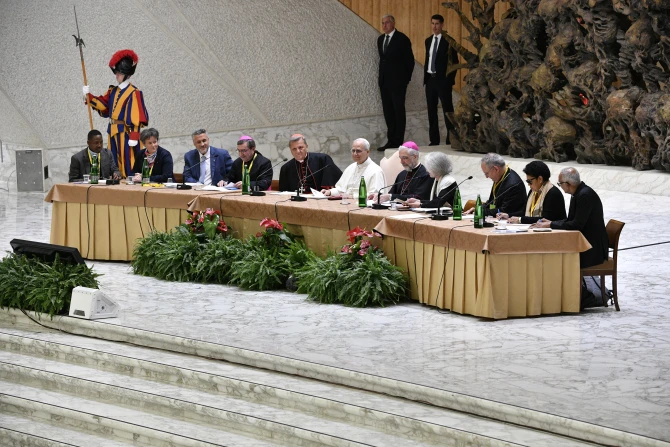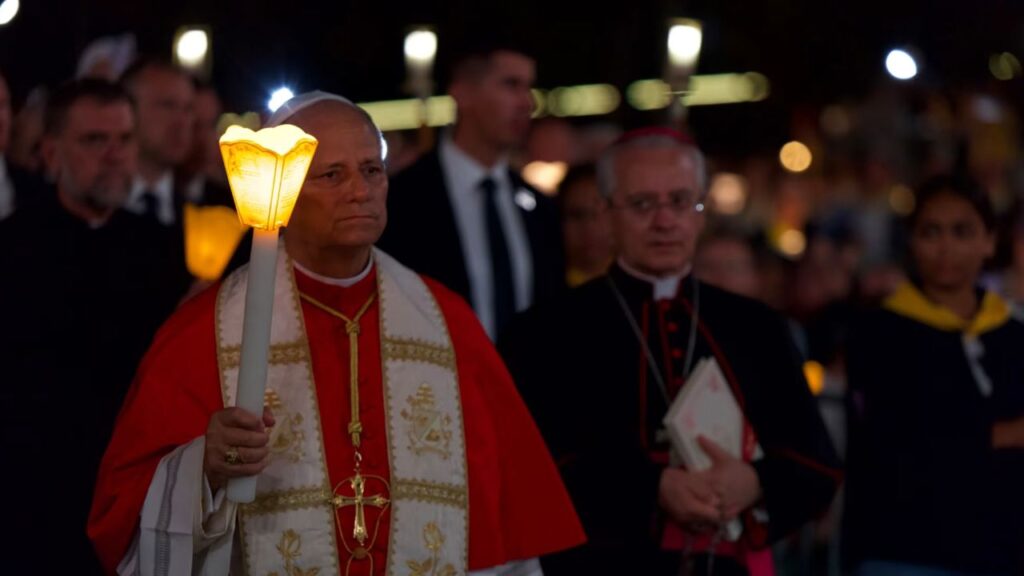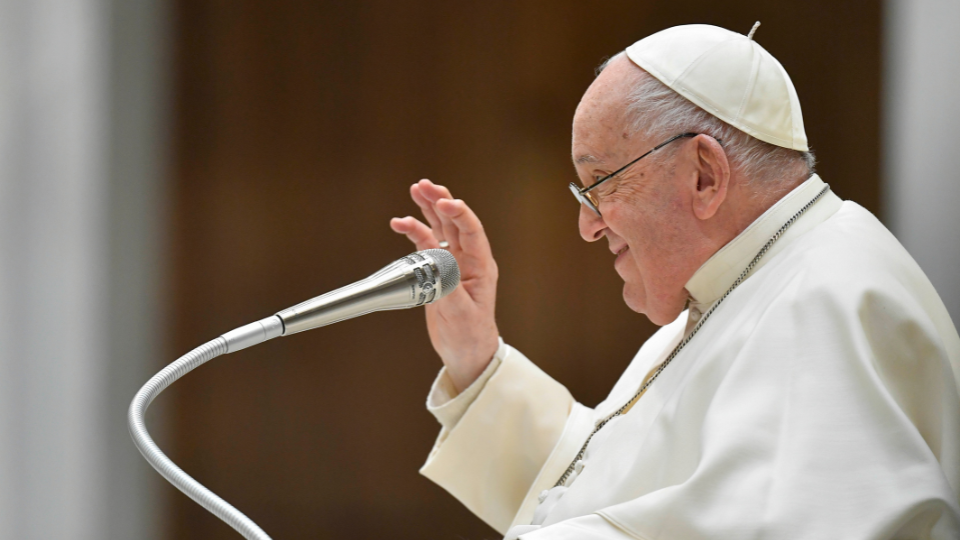
During his Feb. 14 Wednesday general audience — which this year coincided with Ash Wednesday and the beginning of Lent — Pope Francis reflected on the human dimension of the vice of acedia, more commonly known as sloth, observing that it is “an effect more than a cause.”
Remarking that it is a “very dangerous temptation,” the pope reflected on how acedia, which is a Greek word meaning “lack of care,” encompasses a “psychological and a philosophical” dimension and can be linked to apathy — and even absentmindedness — which can have serious ramifications in our personal as well as our spiritual lives.
“It is as though those who fall victim to it are crushed by a desire for death. They feel disgust at everything, the relationship with God becomes boring to them, and even the holiest acts, those that in the past warmed their hearts, now appear entirely useless to them,” the pope observed to the faithful gathered in the Paul VI Audience Hall.
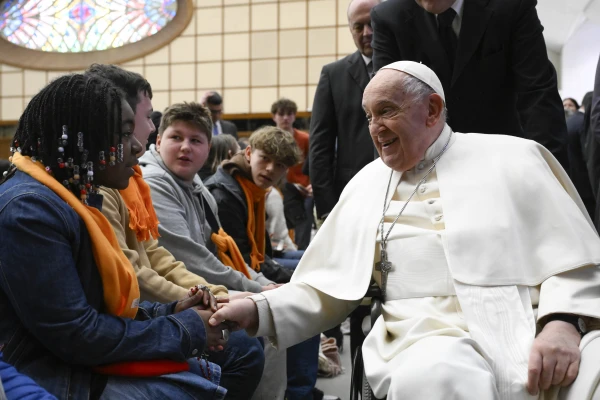
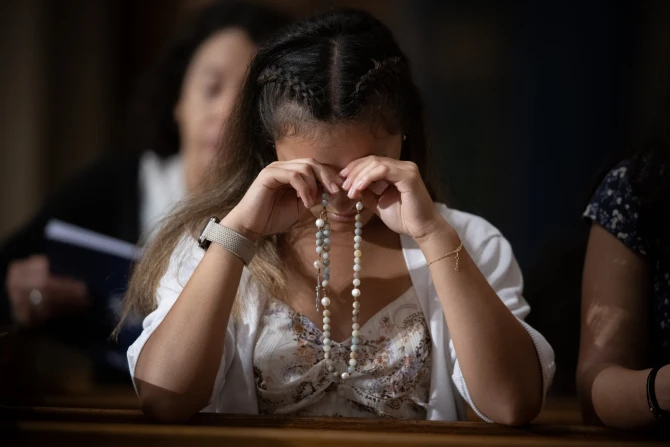
Building upon the human dimension of this vice, the pope outlined how in a contemporary understanding it can be closely associated with “the evil of depression,” noting that for those afflicted with acedia “life loses its significance, prayer becomes boring, and every battle seems meaningless.”
For the pope, this apathetic attitude, or indifference, also begins when “a person begins to regret the passing of time and the youth that is irretrievably behind them.”
“If in youth we nurtured passions, now they seem illogical, dreams that did not make us happy. So, we let ourselves go, and distraction, thoughtlessness, seem to be the only ways out: One would like to be numb, to have a completely empty mind… It is a little like dying in advance,” the Holy Father added.
The pope drew upon the example of the ancient desert fathers for inspiration, looking specifically at the fourth-century hermit Evagrius Ponticus, who referred to this vice as the “noonday demon.”
Reflecting on the monk’s account of this phenomenon, the pope said: “‘The slothful man does not do God’s work with solicitude,” adding that “it grips us in the middle of the day, when fatigue is at its peak and the hours ahead of us seem monotonous, impossible to live.”
However, for the pope the “most important” antidote to this tendency is what he described as “the patience of faith.”
Developing this patience on a personal level is predicated upon resisting the temptation to be “elsewhere” or the desire to “to escape from reality,” the Holy Father explained.
“One must instead have the courage to remain and to welcome God’s presence in the ‘here and now,’ in the situation as it is,” the pope continued.
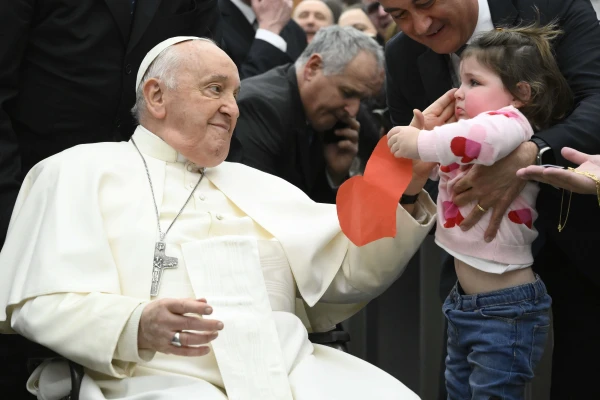
Francis warned against the “demon” of this vice by emphasizing that it “wants to make you believe that it is all in vain, that nothing has meaning, that it is not worth taking care of anything or anyone.”
“How many people, in the grip of acedia, stirred by a faceless restlessness, have stupidly abandoned the good life they had embarked upon,” the pope lamented.
Stressing that it is a “battle that must be won at all costs,” the pope drew upon the example of the saints where “in many of their diaries” we can see that they faced “terrible moments of genuine nights of the faith, when everything appears dark.”
The example of the saints shows us how to “get through the night in patience” and “maintain a smaller measure of commitment, to set goals more within reach, but at the same time to endure, to persevere by leaning on Jesus, who never abandons us in temptation.”
“Faith, tormented by the test of acedia, does not lose its value. On the contrary, it is the true faith, the very human faith, which despite everything, despite the darkness that blinds it, still humbly believes,” the pope said.
This article was originally published on Catholic News Agency.