Economics, international relations, and other social sciences may have not existed in their contemporary form when St. Thomas Aquinas died 750 years ago. But according to Pope Francis, experts in these fields should turn to the 13th-century theologian for help in answering some of today’s most dire social challenges.
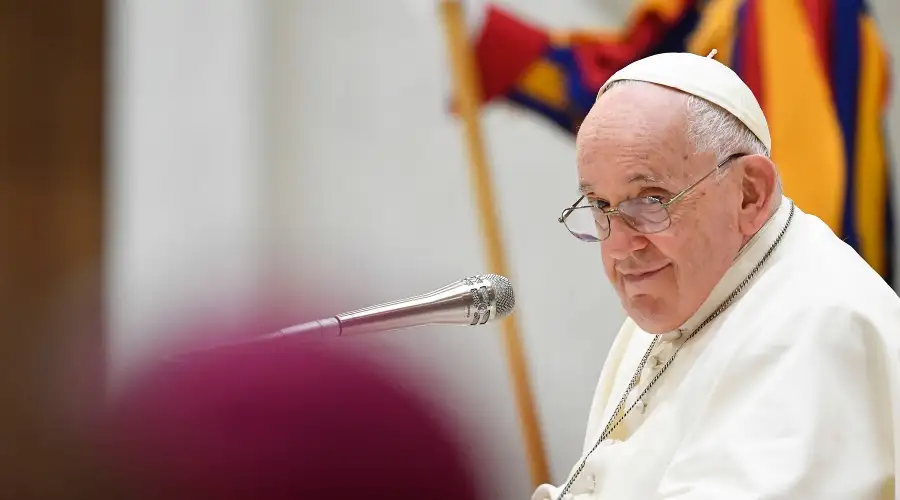
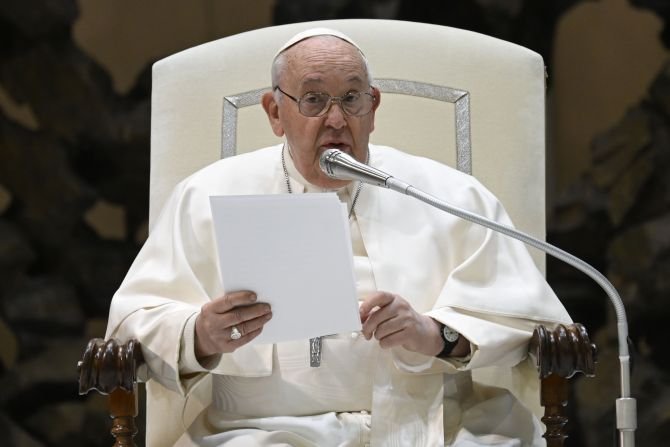
In a letter to a Vatican gathering of social scientists on March 7, the anniversary of Aquinas’ death, the pope said the Angelic Doctor’s “rigorous study” of the philosophical and theological implications of the fact that man is made “in the image of God” was not only a precursor to the development of the social sciences but also can be an invaluable aid to them today.
“While his influence in shaping the moral and legal thinking of modernity is beyond doubt, a recovery of the philosophical and theological perspective that informed his work could prove quite promising for our disciplined reflection on the pressing social issues of our own time,” said Pope Francis, adding that the social sciences “should be grounded in the irreducible reality and dignity of the human person.
The pope’s remarks were sent to participants in a two-day workshop on “Aquinas’ Social Ontology and Natural Law in Perspective: Insights for and from the Social Sciences.”
Sponsored by the Pontifical Academy for Social Sciences, the event is one of many being held in Rome and beyond this year to celebrate the legacy of St. Thomas Aquinas, the Italian Dominican friar and doctor of the Church who died in 1274.
In particular, Pope Francis highlighted the importance of Aquinas’ articulation of man’s social character and ability to discern the natural law through the use of reason as especially relevant to addressing contemporary social challenges.
“Today it is essential to recover an appreciation of this ‘natural inclination to seek the truth about God and live in society’ to shape social thought and policies in a way that fosters rather than impedes the authentic human flourishing of individuals and peoples,” said Pope Francis, quoting from Aquinas’ “Summa Theologiae.”
The concept of the natural law has been criticized by some in the West as effectively a religious framework used to influence society. A recent report in Politico, for instance, described it as “a core pillar of Catholicism” that is being used to advance “Christian nationalist” causes such as protecting the sanctity of life or promoting sexual ethics consistent with human nature.
But Pope Francis offered a very different perspective, emphasizing that natural law is for everyone. In fact, the pope said the Angelic Doctor’s articulation of natural law is accessible to all — regardless of whether they are Catholic or not — maybe even more important now, precisely because the world is increasingly interconnected and Western society is marked by cultural diversity and religious pluralism.
“Thomas’ confidence in a natural law written within the human heart can thus offer fresh and valid insights to our globalized world, dominated by legal positivism and casuistry, even as it continues to seek solid foundations for a just and humane social order,” Pope Francis observed.
With his “remarkable openness to every truth accessible to human reason,” St. Thomas Aquinas showed there can be “no ultimate contradiction” between faith and reason, the pope emphasized.
He added that the Dominican theologian also demonstrated how grace elevates wounded human nature, with “rich implications for an understanding of the dynamics of a sound social order grounded in reconciliation, solidarity, justice, and mutual concern.”
The pope ended his letter by encouraging participating social scientists to delve deeply into “the rich patrimony of religious, ethical, and social thought bequeathed to us by St. Thomas Aquinas.”
“I am confident that you will find inspiration and enlightenment for your own contributions to the various social sciences in full respect for their proper methods and objectives,” he observed.