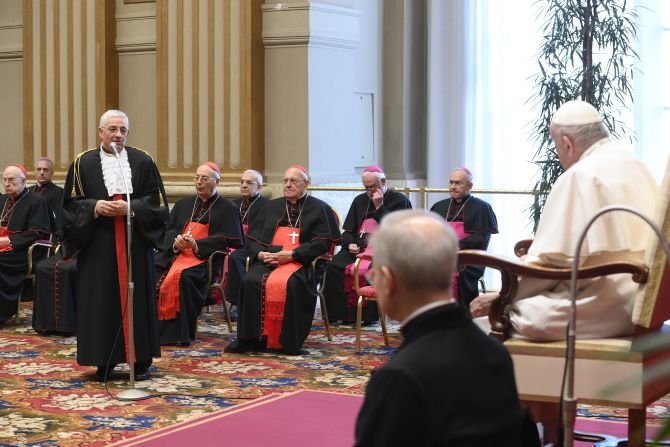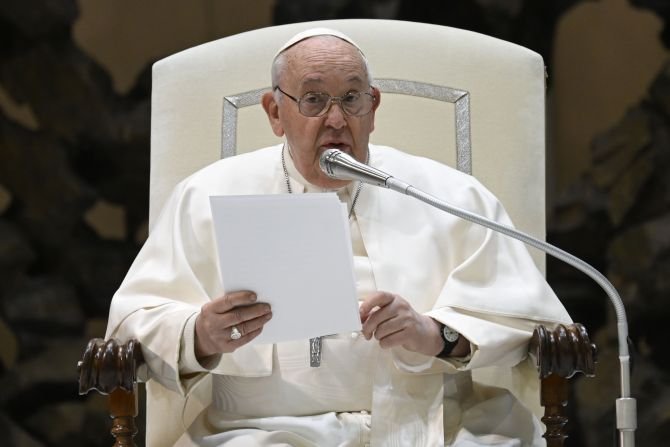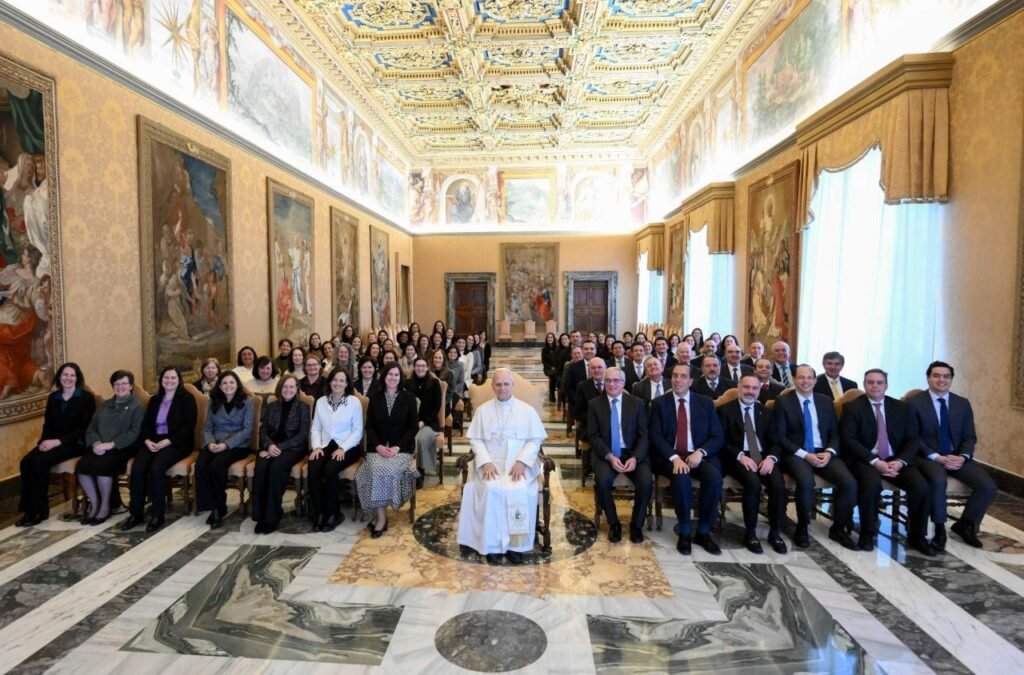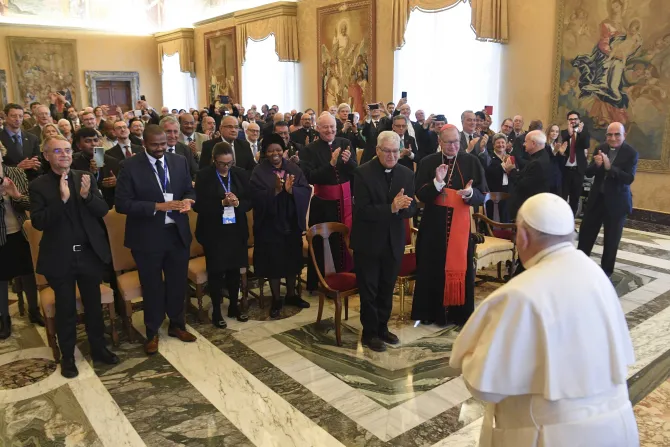
Pope Francis addressed members of the Pontifical Academy for Life at the Vatican on Monday, stressing the importance of integrating “the resources of science and technology” while “promoting the human being in his or her irreducible specificity.”
The pope’s comments come as members of the academy are meeting in Rome from Feb. 12–14 for their general assembly, focusing this year on the theme of “Human: Meanings and Challenges.”
Noting that the academy will be looking at the fundamental question of “what is distinctive about the human being,” the pope opened his speech by underscoring the complexity of evaluating this question, especially against the backdrop of exponential developments in science and technology.
These considerations, which the academy will discuss over the course of the upcoming days, present a fundamental understanding of “how the creativity entrusted to human beings can be exercised responsibly,” the pope observed.
Stressing that this is fundamentally an “anthropological” task, the pope stressed that today “we are challenged to develop a culture that, by integrating the resources of science and technology, is capable of acknowledging and promoting the human being in his or her irreducible specificity.”
“There is a need to explore whether this specificity is to be found even upstream of language, within the sphere of pathos and emotions, desire and intentionality, which only human beings can perceive, appreciate, and convert into positive and beneficial relationships with others, aided by the grace of the Creator,” the pope said. “This is ultimately a cultural task, since culture shapes and directs the spontaneous forces of life and social mores.”
The pope commended the work of the academy, which represents a plurality of voices in approaching ethical and social questions through the prism of “dialogue” and “a cross-disciplinary exchange.”
“I can only encourage this kind of dialogue, which allows each person to offer his or her own reflections while interacting with others in a mutual exchange of views,” the pope said. “This is the way to overcome the mere juxtaposition of disciplines and to undertake a revision of our knowledge through reciprocal listening and critical reflection.”
The pope also commended the group for what he saw as their “synodal method of proceeding,” noting that it is a “demanding” process as it involves “careful attention and freedom of spirit, and readiness to set out on unexplored and unknown paths, free of useless attempts to ‘look back.’”
Placing this relationship within the broader context of the Christian tradition, the pope observed that Christianity “has always offered significant contributions, absorbing meaningful elements from every culture where it has taken root and reinterpreting them in the light of Christ and the Gospel, appropriating the linguistic and conceptual resources present in various cultural settings.”
Noting that this process of inculturation is “lengthy” and requires “an intellectual approach capable of embracing numerous generations,” the pope added that “it can be compared to the wisdom and vision of those who plant trees knowing that their fruit will be consumed by their children, or those who build cathedrals knowing that they will be completed by future generations.”
During a Monday press conference after the audience with the pope, the academy’s president, Archbishop Vincenzo Paglia, noted that “the urgency of the theme was imposed by thinking about our future as a human species, which today presents the risk of disappearing through self-destruction or overcoming.”
“We have therefore placed the anthropological question at the center of this year’s work in a direct way, not least because it is becoming more and more insistent in public debate, not only in the ecclesial and academic spheres.”
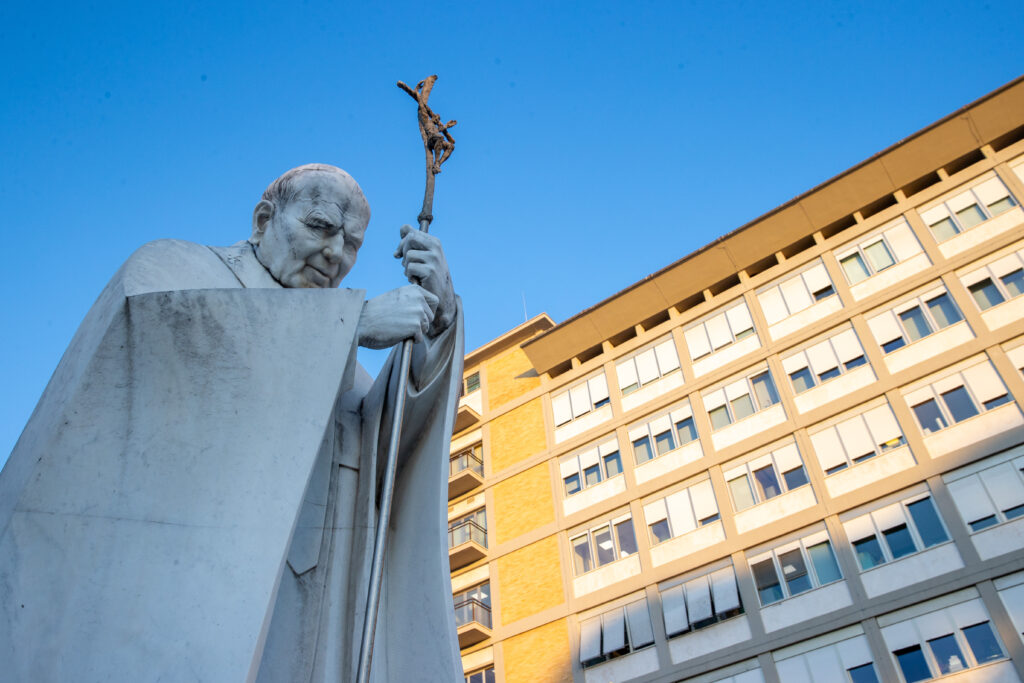
The Pontifical Academy for Life was established by St. John Paul II in his 1994 apostolic letter Vitae Mysterium as a way to study “the principal problems of biomedicine and of law, relative to the promotion and defense of life, above all in the direct relation that they have with Christian morality and the directives of the Church’s magisterium.”
In recent years the academy has been at the center of controversy as some of its members have advocated views that are inconsistent with traditional Church teaching.
In April 2023, Paglia spoke in support of medically assisted suicide, calling it “feasible” despite the Church’s unambiguous stance against the practice.
In October 2022, Pope Francis appointed the pro-abortion economist Mariana Mazzucato to the academy to serve a five-year term as an ordinary academic. Mazzucato has frequently expressed her support for abortion.