The pontiff’s Aug. 26 general audience addressed the reasons for the Church’s recent liturgical reforms.
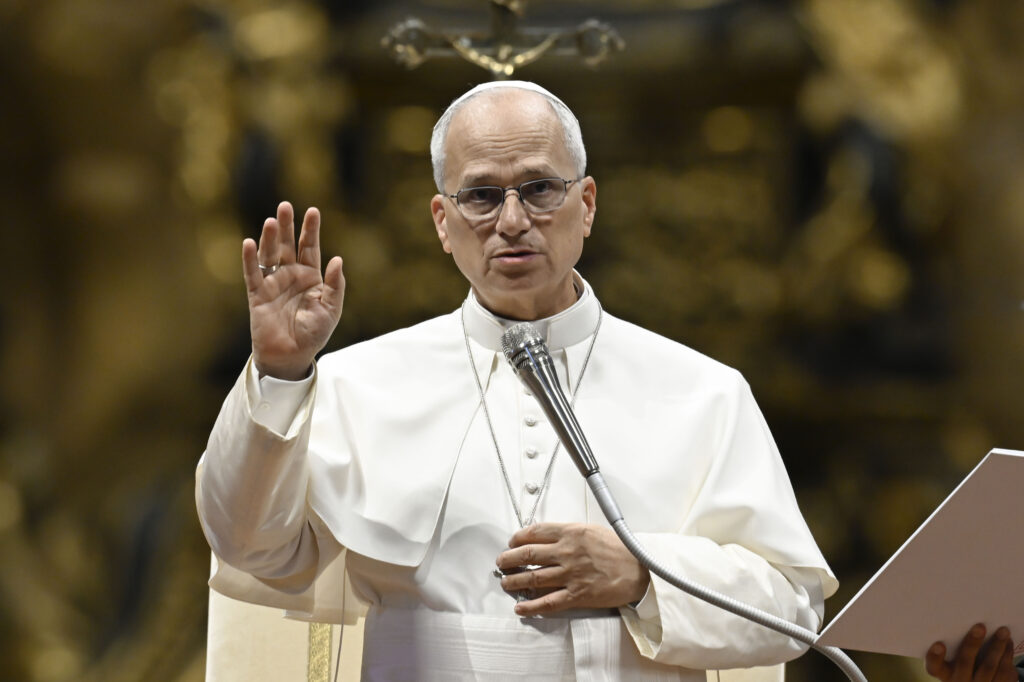
VATICAN CITY — Pope Leo XIV has described the liturgical reforms following the Second Vatican Council as necessary to encourage active participation by the faithful.
“Since the gestures and words of the sacred liturgy are critical to realizing this experience, the participation of the faithful cannot be passive,” Leo said. “The liturgical reform promoted by the Second Vatican Council is thus firmly rooted in the living tradition of the Church.”
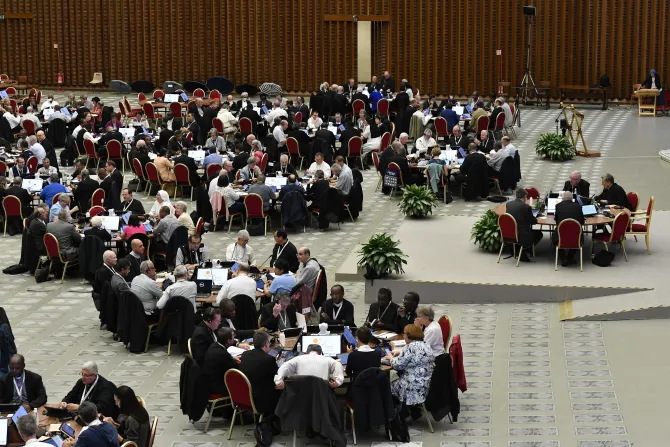
During his general audience at the Vatican on Aug. 26, the pontiff concluded his summer catechesis on the Second Vatican Council’s constitution on the liturgy, Sacrosanctum Concilium. The audience was held in St. Peter’s Basilica because of Rome’s high summer temperatures.
The faithful cannot be passive during the liturgy
Leo defended the council fathers’ decision at the Second Vatican Council to reform the liturgy, citing a letter St. Paul VI wrote as archbishop of Milan to encourage the faithful’s participation.
“Motivated by these convictions, the future Pope St. Paul VI affirmed that the faithful ‘cannot and must no longer remain silent and passive. Their physical presence cannot be reconciled with their spiritual absence,’” Leo said.
The pope also explained that the liturgy has divine aspects that cannot change and human elements that can change to promote the faithful’s participation.
“When the Church carries out a reform of the liturgy — a constant process of development across the centuries — there is an important distinction to be made between the divine, immutable elements, and the human elements, which may undergo various modifications.”
“The need arose for the faithful to celebrate the liturgies more consciously and actively, not ‘as strangers and silent spectators’ but participating fully in the salvific mystery,” Leo added.
Liturgical reform began long before Vatican II
The Church’s present liturgy was established in 1969 following the Second Vatican Council. It replaced the older Tridentine liturgy, standardized since the Council of Trent in 1570.
The Tridentine liturgy, also called the Traditional Latin Mass, was largely replaced after the council. Pope Benedict XVI allowed greater access to it in 2007, but Pope Francis restricted access in 2021.
The pope also explained that the liturgical reform began long before the Second Vatican Council, under several popes.
“The assertion that the faithful should not attend celebrations ’as strangers or silent spectators’ had already been raised in Pius XI’s apostolic constitution Divini Cultus.”
Pope Leo XIV concluded his series of catecheses on Sacrosanctum Concilium, the Second Vatican Council’s Constitution on the Sacred Liturgy. At his General Audience, the Pope reflected on the reasons behind the Council’s liturgical reform, stressing that the faithful should never… pic.twitter.com/UnzXMZv6SX
— EWTN Vatican (@EWTNVatican) August 26, 2026
Leo also recalled Pope Pius XII’s reform of the Tridentine Holy Week liturgy in 1955, in which he “rescheduled to the hours corresponding to the events of Easter, after they had for centuries been brought forward to the morning hours.”
The pope also recalled the interventions of St. John XXIII, who called for the Second Vatican Council in 1959. Leo explained that John XXIII contributed to the Church’s liturgical reform by simplifying “the rubrics of the breviary and the missal … in which he referred the proposal of fundamental principles for a reform of the liturgy.”
“Indeed, since the liturgy is a living entity, throughout the centuries it has always been subject to developments and changes,” Leo added.
This article was originally published by EWTN News English.