Since Friday, rebel groups have carried out more than two dozen attacks on civilians and military bases, just ahead of the presidential elections scheduled for May 31.
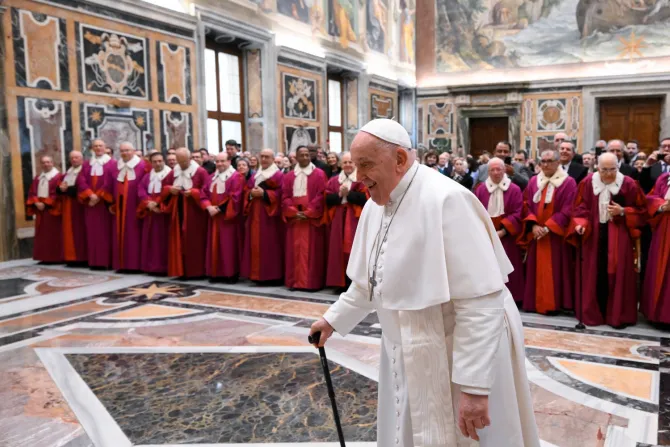
Pope Leo XIV on Wednesday condemned a surge of violence in Colombia following a weekend of deadly attacks in the southwest part of the country.
Since Friday, rebel groups have carried out more than two dozen attacks on civilians and military bases, just ahead of the presidential elections scheduled for May 31.
The deadliest incident took place when a bomb exploded on the Pan-American Highway in the department of Cauca as an intercity bus was passing by. The attack occurred in one of the regions that has suffered most from violence in recent weeks amid an escalation of armed assaults.
It is the bloodiest massacre of civilians recorded in the country in more than a decade, when the Colombian state and specialized nongovernmental organizations began officially identifying episodes involving the simultaneous deaths of three or more people as massacres.
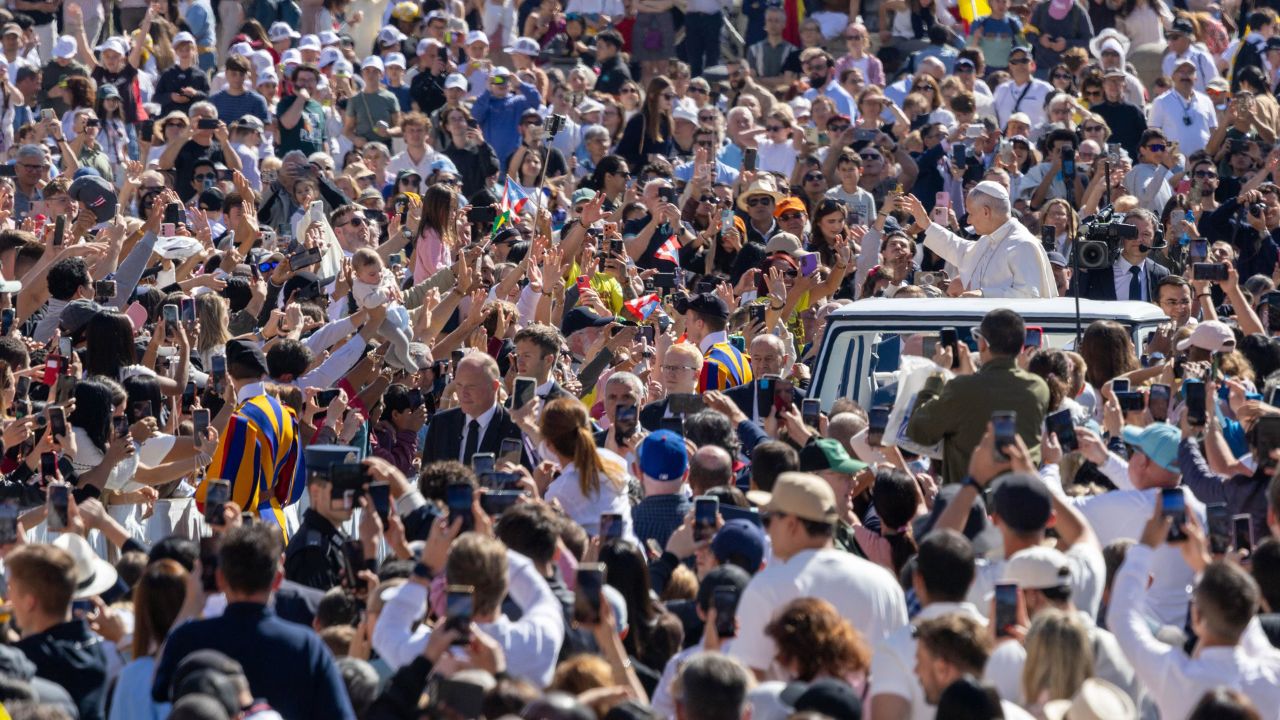
Before thousands of people gathered in St. Peter’s Square, the pontiff expressed his condemnation of the renewed wave of violence affecting the South American country.
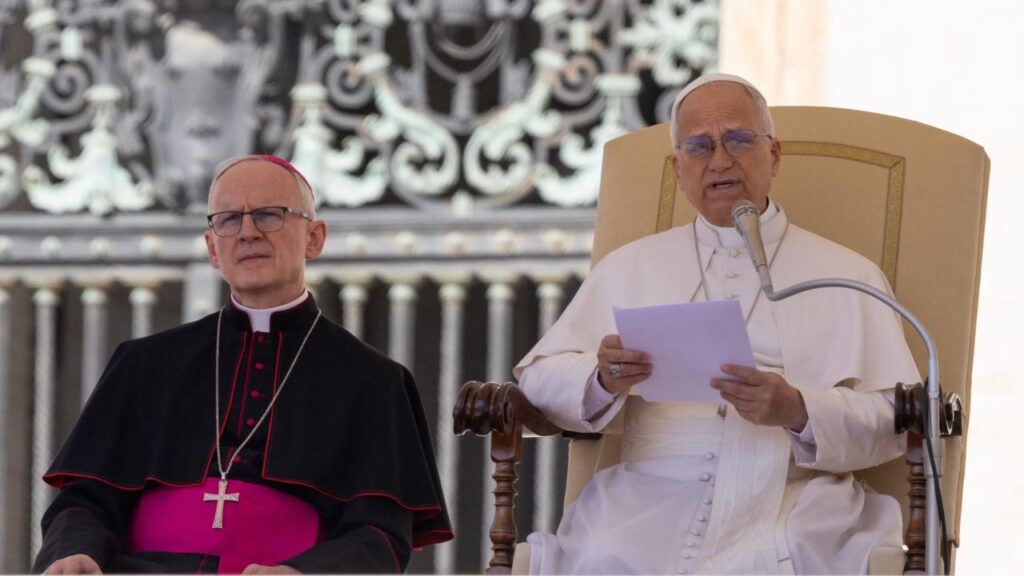
“With sorrow and concern, I have learned of the tragic situation of violence afflicting the southwestern region of Colombia, which has caused grave loss of human life,” he said, addressing Spanish-speakers.
“I express my closeness in prayer to the victims and their families, and I urge everyone to reject every form of violence and to choose decisively the path of peace,” the pope said in Spanish.
Colombia is once again experiencing some of the darkest episodes of its armed conflict. Since January, 48 massacres have been recorded. At least 229 people have been killed in the incidents, making it the most violent start to a year since the signing of the 2016 Peace Agreement.
The wave of violence extends from north to south across the country in a context marked by an increasingly tense electoral climate.
Message of peace in Africa
As is customary after apostolic journeys, Pope Leo XIV devoted his main address during the general audience to a reflection on his April 13–23 trip to Africa: 11 days of pastoral pilgrimage during which he traveled to four countries — Algeria, Cameroon, Angola, and Equatorial Guinea — including taking 18 flights and stops in 11 cities.
“From the very beginning of my pontificate, I have thought about a journey in Africa. I thank the Lord for granting me the opportunity to undertake it, as shepherd, to meet and encourage the people of God; and also to experience it as a message of peace at a time in history marked by wars and serious and frequent violations of international law,” he said.
Alongside this call to peace, he added, he also wished to draw attention to “the grave injustices that exist in these countries, so rich in natural resources,” and he urged the international community to overcome “neo-colonial attitudes” in order to commit to an “authentic collaboration” with the African continent.
Pope Leo XIV also highlighted the value of the trip as a platform for giving voice to the African people. According to the pope, the apostolic visit allowed those communities “to make their voices heard, to express the joy of being God’s people and the hope for a better future, of dignity for each and every one,” amid complex social and political contexts.
In a personal tone, the pontiff expressed his gratitude for what he received during the pastoral journey. “I thank the Lord for what they have given me, an inestimable treasure for my heart and my ministry.”
The assessment of the trip, he explained, is not limited to the pastoral sphere but also constitutes a call to international responsibility and a reminder of the dignity of African peoples.
At the start of his catechesis, the pope explained the reasons that led him to choose Algeria as the first stage of the journey, a country that preserves sites linked to St. Augustine.
“Thus, I found myself, on the one hand, revisiting the roots of my spiritual identity and, on the other, crossing and strengthening bridges that are very important for the world and the Church today: the bridge with the very fruitful age of the Fathers of the Church; the bridge with the Islamic world; and the bridge with the African continent,” he said.
After Algeria, the pontiff visited Cameroon, Angola, and Equatorial Guinea — three countries that, unlike Algeria, where Islam is practiced by the vast majority of the population, have a predominantly Christian population. There, he noted, “I therefore found myself immersed in an atmosphere of celebration of the faith and warm welcome, enhanced also by the characteristic traits of the African people.”
Like his predecessors, he said he experienced something of what Jesus lived with the crowds in Galilee: “He saw them thirsting and hungry for justice,” and proclaimed to them: “Blessed are the poor, blessed are the meek, blessed are the peacemakers,” and, recognizing their faith, said: “You are the salt of the earth and the light of the world.”
Among the most striking moments, he recalled the visit to the prison in Bata, Equatorial Guinea, where inmates asked him to pray “for their sins and their freedom.”
“I had never seen anything like it,” the pope said. They prayed the Our Father together in heavy rain — “a genuine sign of the kingdom of God!”
This story has been updated with the popeʼs reflection on his apostolic journey in Africa.
This story was first published in two parts by ACI Prensa, the Spanish-language sister service of EWTN News. It has been translated and adapted by EWTN News English.