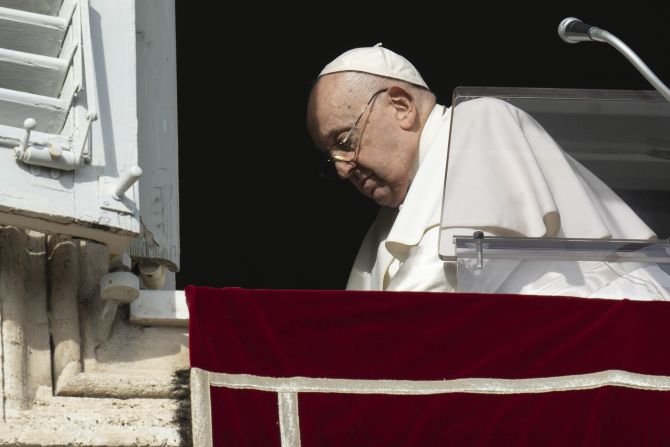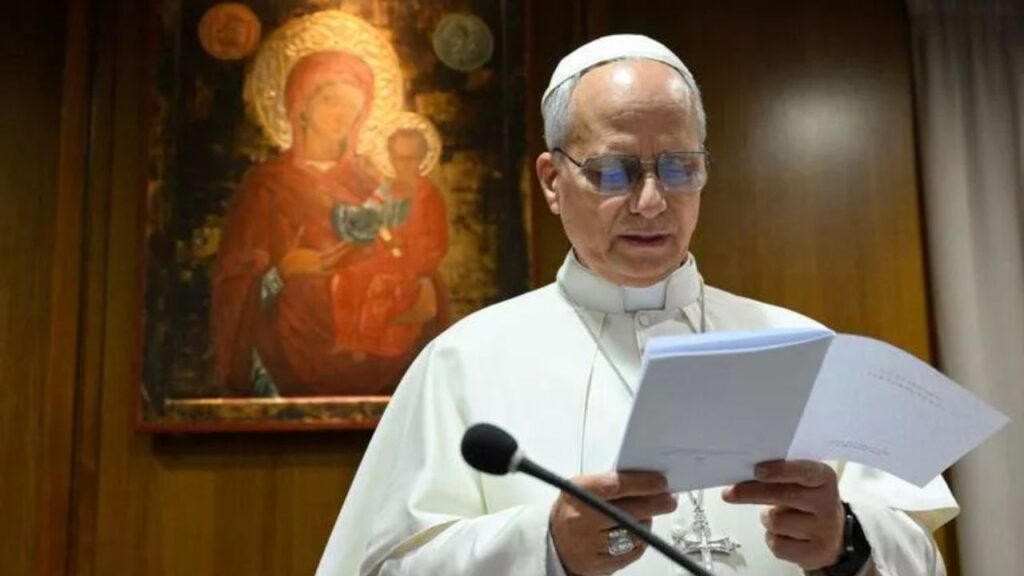
Pope Leo XIV has created a new Catholic diocese in northern China with the same name as one established decades ago by Beijing without Vatican approval, underscoring ongoing tensions over how China has redrawn Catholic diocesan borders independently of Rome.
The Vatican announced Wednesday that the pope has suppressed two historic dioceses of Xiwanzi and Xuanhua — both erected in 1946 by Pope Pius XII — and replaced them with the Diocese of Zhangjiakou. The see of the new diocese is based in the city of Zhangjiakou, where China’s state-controlled Catholic association set up its own diocese in 1980 using boundaries never recognized by the Holy See.
Notably absent from the Vatican’s announcement was any mention of Bishop Augustine Cui Tai, 75, the longtime underground bishop of Xuanhua, the diocese Pope Leo XIV suppressed. Cui has been subjected to repeated detention, house arrest, and forced labor over the past three decades, according to a recent report.
Pope Leo XIV appointed a new bishop to lead the Diocese of Zhangjiakou in Hebei province, Father Joseph Wang Zhengui, who was selected within the framework of the Holy See’s provisional agreement with the Chinese government on the appointment of bishops, also referred to as the Vatican-China deal.
The Vatican announcement came hours after Wang, 62, was consecrated bishop of Zhangjiakou on Sept. 10 in a Mass at the Church of the Holy Family in Zhangjiakou attended by about 300 Catholics, 50 priests, and senior Chinese Patriotic Catholic Association leaders. The Vatican said that Pope Leo had appointed Wang on July 8.
“In order to promote the pastoral care of the Lord’s flock and to attend more effectively to its spiritual welfare, on July 8, 2025, Pope Leo XIV decided to suppress the dioceses of Xuanhua and Xiwanzi in mainland China, which were established on April 11, 1946, by Pope Pius XII,” the Holy See Press Office said in its announcement. “In this way, the territory of the Diocese of Zhangjiakou corresponds to that of the capital city of Zhangjiakou.”
The new diocese covers 14 districts and counties around the city of Zhangjiakou, an area of 14,000 square miles with a population of just over 4 million people, including about 85,000 Catholics served by 89 priests. It will be a suffragan diocese of the Archdiocese of Beijing.
No mention of persecuted bishop
The Holy See’s announcement conspicuously omitted mention of the current underground bishop of the suppressed Diocese of Xuanhua. Bishop Cui has been detained four times since the 2018 China-Vatican agreement was signed and had not been seen since he was taken into police custody in April 2021, according to a 2024 report by the Hudson Institute. His diocese had repeatedly called for his release from detention but to no avail. Asia News reported that Catholic clergy in Hebei were informed that a “retirement” ceremony for Cui, who is currently 75 years old, will take place on Sept. 12.
China’s disputed diocesan borders
The announcement highlights the long-standing issue in Vatican-China relations: The government-sponsored Chinese Patriotic Association redrew diocesan borders to align with state administrative divisions. This redrawn diocesan map does not match the Vatican’s canonical jurisdictions.
The Chinese Patriotic Catholic Association is a state-run body under the control of the Chinese Communist Party’s United Front Work Department.
Prior to Pope Leo’s decision, Beijing recognized 104 dioceses while the Holy See had 143 Catholic dioceses in China. While the 2018 Vatican-China deal — renewed by Pope Francis in October 2024 — aims to fill vacant sees through a shared process of bishop appointments, its details remain secret. Vatican officials have previously acknowledged that Beijing violated the agreement multiple times.
Pope Leo XIV on China
The Vatican came under criticism during Pope Francis’ pontificate for what some saw as a muted response to China’s human rights abuses, including the internment of Uyghur Muslims and the imprisonment of Catholic pro-democracy activist Jimmy Lai in Hong Kong.
On May 1, new restrictions from China’s United Front came into force banning foreign clergy from presiding over religious activities for Chinese people without the invitation of the Chinese government, severely limiting foreign missionary activity in the country. Meanwhile, state-sanctioned Catholic institutions in China offered little acknowledgement of Pope Francis’ death.
Pope Leo XIV, who inherited the Vatican-China deal from Francis, has retained Cardinal Pietro Parolin, the architect of the deal, as his secretary of state, yet it remains unclear how Vatican-China relations might shift under the new pontiff.
Cardinal Stephen Chow, the bishop of Hong Kong, who met with Pope Leo XIV on Sept. 2, told his local diocesan newspaper, the Sunday Examiner, that “the Holy Father is not entirely unaware of the Church in China, as he has already gathered insights from multiple sources and through the Sino-Vatican agreement.”
Leo XIV also visited mainland China before his election as pope when he served as superior general of the Augustinian order.
“He recognizes the importance of dialogue between the Church and the mainland authorities, and considers respectful communication as the priority in addressing challenges in China-Vatican relations,” Chow said.
SIGN UP FOR OUR NEWSLETTER HERE
This article was originally published on Catholic News Agency.